
Scroll Top
4801 Bennett Rd. Toledo, Ohio 43612

Why Choose a Cut to Length Machine for Your Business?

Manufacturers increasingly need faster cutting, stable quality, and less material waste. A cut to length machine can support these goals by feeding coils, flattening material, measuring exact lengths, and producing repeatable blanks. The process is visible on the factory floor: fewer manual measurements, cleaner stacking, and more consistent sheet dimensions.

The International Federation of Robotics reported 541,302 industrial robots were installed worldwide in 2023. Its World Robotics 2024 report also recorded more than 4.2 million robots operating in factories globally. These figures show a wider movement toward automated production. Meanwhile, the U.S. Census Bureau continues to identify labor costs, equipment investment, and productivity as important manufacturing concerns. A cut to length machine does not solve every problem. It can, however, reduce repetitive handling and improve production control when properly specified.

Lean manufacturing expert Jeffrey K. Liker offers a useful principle: “There is no substitute for direct observation.” That advice matters here. Buyers should inspect coil width, material strength, target tolerance, line speed, and actual operator workflow before choosing equipment. A glossy specification sheet is not enough.

The right machine may shorten setup time, reduce scrap, and make planning more predictable. Yet the wrong configuration can create jams, inaccurate cuts, or expensive downtime. This is where experience matters. Business owners should compare supplier support, maintenance access, training, and verified customer results—not only the purchase price. The decision is practical, but not always simple.
Why Choose a Cut to Length Machine for Your Business?

What Is a Cut-to-Length Machine? From Coil Processing to Flat Sheets

Why Choose a Cut to Length Machine for Your Business?

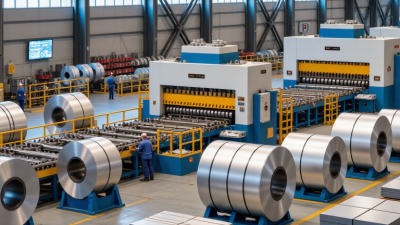
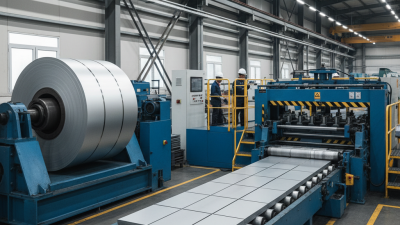
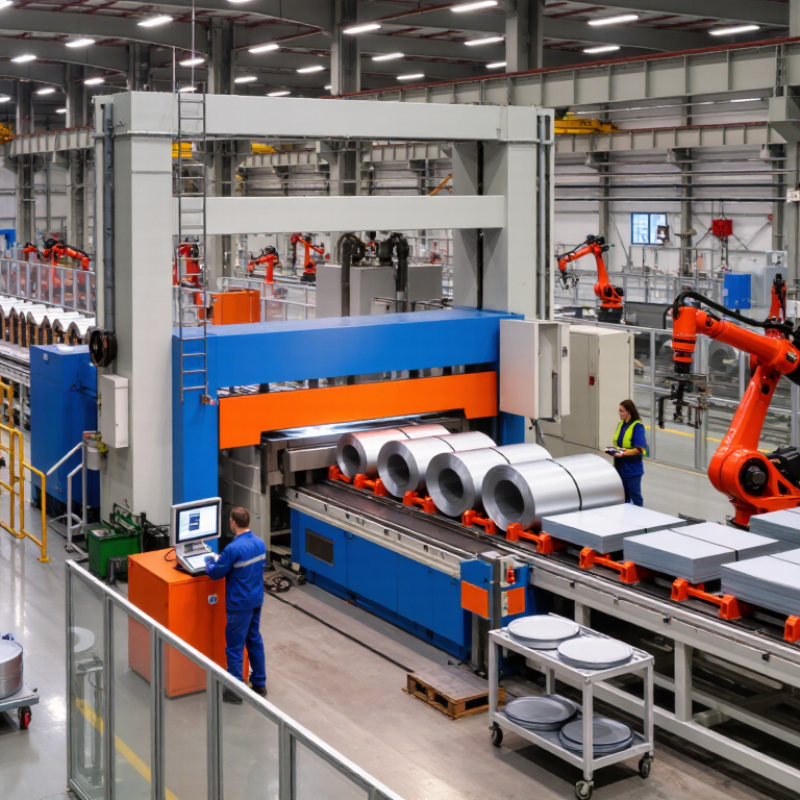
A cut-to-length machine converts metal coil into precise, flat sheets. It unwinds the coil and guides the strip through leveling rollers. These rollers remove bends, waves, and surface tension. A measuring system then controls the required sheet length. The shear cuts the material cleanly at programmed intervals. Finished sheets can be stacked automatically for easier handling. This process suits steel, aluminum, and other coil-based materials. It also supports construction, appliance, automotive, and fabrication work.

Businesses choose this equipment for consistent output and reduced manual handling. Accurate feeding can limit length variation between batches. Automated stacking may improve floor safety and production flow. However, a cut-to-length line is not a cure-all. Material thickness, coil weight, surface condition, and target speed affect performance. Poor setup can still create scratches or uneven cuts. That detail is easy to overlook.

Tips: Check the material range before selecting a machine. Confirm its leveling capacity and cutting tolerance. Test sample coils during commissioning. Keep rollers clean and inspect blades regularly. Record actual results, not only displayed settings. Small errors often become expensive waste. A careful operator still matters.

How CTL Lines Work: Leveling, Measuring, Cutting, and Stacking

A cut-to-length machine earns its place by turning coiled metal into accurate, usable sheets. The process starts with decoiling, where the strip enters the line smoothly. Rollers then level the material and remove coil memory. This step matters. Poor leveling can create waves, stress, or uneven edges later.

After leveling, a measuring system tracks the strip length continuously. The control system signals the shear at the correct position. The blade makes a clean cut without stopping the entire line. Sheets then move toward the stacking area, where guides align each piece into a stable pile. In daily production, operators should watch speed, thickness, surface marks, and pile alignment. Small changes can affect final quality. It is not always perfect.

Tips:

Keep measuring sensors clean and calibrated. Check roller pressure before each shift. Operators should inspect the first few sheets manually, even when the settings look correct. A short inspection can prevent a tall stack of rejected material. Also, record recurring errors. The machine may be reliable, but setup habits sometimes need improvement.

Which Metals and Thickness Ranges Can CTL Systems Process?

Why Choose a Cut to Length Machine for Your Business?

A cut to length machine can process many metals, but its range depends on machine design. Common materials include carbon steel, stainless steel, aluminum, galvanized steel, and some coated alloys. Standard systems often handle thicknesses from about 0.3 to 6 millimeters. Heavy-duty lines may process material up to 12 millimeters. Precision systems can handle thinner strip, sometimes below 0.2 millimeters. These figures are not universal. Coil width, tensile strength, hardness, and surface finish also affect performance.

In a working facility, a leveler must remove coil memory without marking the sheet. A shear must create clean, square cuts with minimal burrs. Thin aluminum may scratch easily, while stainless steel can demand greater cutting force. A machine built for one material may perform poorly with another. That detail is often underestimated. It is also worth checking whether the line supports different coil weights, widths, and production speeds. A wider range is not always better if accuracy suffers.

Tips: Match the machine to your actual materials, not an ideal future list. Ask for test cuts using your own coil samples. Review thickness tolerances, maximum yield strength, and allowable burr height. Operators should inspect the first sheets from every new coil. Even reliable equipment needs adjustment, and small errors can become costly across a full production run.

How 60–120 m/min Speeds and ±0.5 mm Tolerance Improve Output

Why Choose a Cut to Length Machine for Your Business?

A cut-to-length machine can turn continuous coils into repeatable sheets for fabrication, distribution, and service work. Its value becomes clearer when speed and accuracy are measured together. Running at 60–120 m/min can increase hourly output, especially with stable material and planned coil changes. At 100 m/min, a small delay compounds quickly. Loading, alignment, and recipe checks therefore matter.

The ±0.5 mm tolerance helps sheets fit more consistently during forming, stamping, or assembly. Operators can reduce trimming, rejected parts, and manual measurement at the packing table. In practice, tolerance depends on material thickness, tension, straightener settings, and blade condition. A clean encoder signal matters too. Small errors appear quickly. I have seen a fast line produce inaccurate blanks after one loose guide shifted. Speed did not solve that problem.

A practical setup records actual length, batch count, and scrap rate each shift. These figures support production planning and show whether advertised speed suits the shop. Higher speed may also increase vibration, noise, and maintenance needs. That trade-off deserves attention. Start with a controlled run. Check ten consecutive sheets with calibrated tools. If results drift, slow the line, inspect the setup, and correct the cause before chasing output.

Why Choose a Cut to Length Machine?

Higher line speeds can increase theoretical cutting capacity, while a ±0.5 mm tolerance supports consistent finished lengths.

Theoretical output is calculated at a 1 m cut length: line speed × 60. Actual production depends on material, setup time, acceleration, loading, and downstream handling.

When Scrap, Labor, and Throughput Data Justify CTL Investment

A cut-to-length (CTL) machine earns its place when production data shows recurring losses, not just occasional inconvenience. Track coil weight, usable sheet output, trim scrap, changeover time, and labor hours across several weeks. For example, if operators repeatedly spend time measuring and cutting blanks by hand, compare those hours with the time needed to load, set, and monitor a CTL line. Include setup delays and maintenance, too. The numbers may be less tidy than expected.

Scrap is worth measuring by material grade and thickness, since a small trim loss on costly stock can outweigh larger losses elsewhere. Then compare output per shift with actual demand. A faster line brings little value if downstream forming cannot keep pace or orders are irregular. Review safety procedures, floor space, coil handling, and operator training before estimating payback. A spreadsheet can help, but it may miss awkward coil changes or brief stoppages. Ask production staff to check the assumptions against daily work. If savings remain clear under conservative estimates, the investment has a stronger case. If not, improve scheduling or cutting practices first.