

Top 10 Decoiling Machine Cut to Length Types?
Choosing the right decoiling machine cut to length system affects accuracy, output, labor, and material waste. This decision deserves more than a catalog comparison.
The World Steel Association reported global crude steel production of about 1.89 billion tonnes in 2023. That scale keeps demand high for reliable coil-processing equipment. Meanwhile, the International Energy Agency continues to emphasize efficiency and resource productivity across industrial manufacturing. These pressures make every cut meaningful, especially when processing wide steel, stainless steel, aluminum, or coated coils.
This guide examines ten common cut-to-length types, including guillotine shear, rotary shear, flying shear, and multi-blanking systems. Each design suits different thickness ranges, line speeds, tolerances, and production volumes. A guillotine shear may deliver clean, controlled cuts for medium-speed lines. A flying shear can reduce stopping time during continuous operation. Small details matter. Coil width, yield strength, leveling performance, and stacker design can change the real result.
Industry reports, including data from the World Steel Association and market studies by Grand View Research, provide useful context. However, published market figures rarely reveal maintenance delays, operator learning curves, or unstable material quality. That limitation deserves attention. A machine that looks efficient on paper may perform differently beside a noisy decoiler and a crowded coil yard. The following ranking combines engineering principles, practical operating experience, and measurable selection factors. It is not a universal verdict. Your material, capacity target, and tolerance requirements should decide the final choice.
Decoiler Functions in Modern Cut-to-Length Production
Top 10 Decoiling Machine Cut to Length Types?
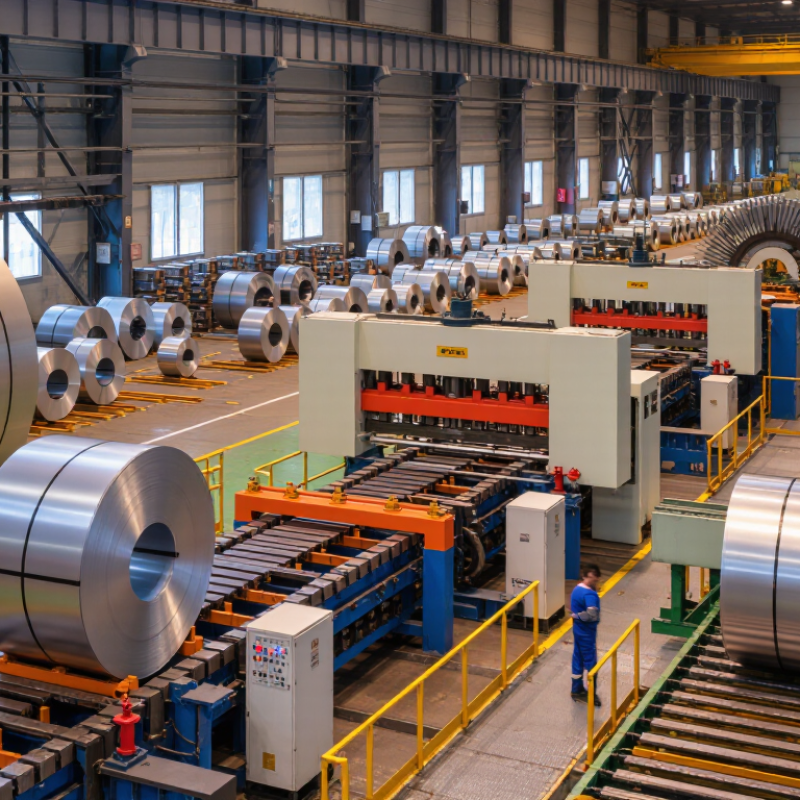
A decoiler is the first control point in modern cut-to-length production. It unwinds steel, aluminum, or coated coil with steady tension. That task sounds simple. It is not.
Common designs include single-end, double-end, hydraulic expansion, and motorized decoilers. Each type supports different coil weights, widths, and changeover demands. Hydraulic expansion grips the inner coil diameter firmly. Motorized units improve feeding control during acceleration and braking. Double-end models can reduce loading delays between production runs.
Experienced operators watch more than speed. They check coil alignment, mandrel pressure, surface damage, and strip tracking. A misaligned coil can create edge waves before the leveler corrects anything. Sensors may monitor loop height, rotation, and strip presence. These signals help the line adjust tension before defects grow.
Small details matter. I have seen clean-looking coils produce unstable feeding after poor storage. Dust, uneven packaging, and incorrect expansion pressure can affect results. Engineers should match the decoiler to the material, not only the maximum coil weight. A heavier machine is not automatically better. Maintenance teams also inspect bearings, brakes, hydraulic hoses, and safety guards at scheduled intervals. Some setups still rely too much on manual judgment. That weakness deserves review, especially when product tolerances are tight.
Top 10 Decoiling Machine Cut to Length Types? - Decoiler Functions in Modern Cut-to-Length Production
| No. | Cut-to-Length Type | Typical Material | Typical Thickness | Typical Width | Typical Line Speed | Decoiler Function | Best-Suited Applications |
|---|---|---|---|---|---|---|---|
| 1 | Stop-and-Go Shear Line | Carbon steel, galvanized steel, pre-painted steel | 0.30–3.00 mm | 600–2,000 mm | 20–60 m/min | Expands inside the coil, supports the strip, and uses a brake or motorized drive to maintain stable tension during intermittent feeding. | General-purpose flat blanks requiring reliable dimensional accuracy. |
| 2 | Flying Shear Cut-to-Length Line | Carbon steel, stainless steel, aluminum | 0.30–2.50 mm | 800–2,000 mm | 60–120 m/min | Provides powered unwinding and closed-loop tension control so the strip can remain continuously moving while the shear travels with it. | High-volume blank production where reduced stop-and-start time is important. |
| 3 | Rotary Shear Line | Thin-gauge steel, aluminum, stainless steel | 0.20–1.50 mm | 600–1,600 mm | 50–100 m/min | Maintains smooth strip payoff and synchronized speed while rotating knives make continuous cuts with limited impact loading. | Thin-sheet blanks, appliance panels, electrical enclosures, and lightweight components. |
| 4 | Guillotine Shear Line | Carbon steel, stainless steel, aluminum | 0.50–6.00 mm | 800–2,500 mm | 15–45 m/min | Uses a heavy-duty expansion mandrel, hydraulic or pneumatic braking, and tension control to feed thicker strip consistently. | Medium- and heavy-gauge sheets, structural parts, and fabrication blanks. |
| 5 | Servo Feeder and Shear Line | Carbon steel, galvanized steel, coated steel | 0.40–3.00 mm | 500–1,800 mm | 30–80 m/min | Delivers controlled coil unwinding and synchronized servo feeding for programmable lengths, acceleration, and registration. | Mixed-length orders, repeat production, and applications needing flexible recipe control. |
| 6 | Multi-Blanking Cut-to-Length Line | Cold-rolled steel, galvanized steel, aluminum | 0.50–3.00 mm | 1,000–2,200 mm | 40–90 m/min | Handles continuous coil payoff while coordinating leveling, feeding, shearing, stacking, and sometimes blank nesting. | High-output automotive, appliance, and panel manufacturing. |
| 7 | Trapezoidal or Shape-Blanking Line | High-strength steel, galvanized steel, aluminum | 0.60–2.50 mm | 800–2,000 mm | 20–60 m/min | Maintains precise strip tension and lateral tracking before programmable angled or shaped cuts are made. | Roofing panels, tapered parts, agricultural equipment, and lightweight structural blanks. |
| 8 | Slitting and Cut-to-Length Combination Line | Carbon steel, stainless steel, aluminum, coated steel | 0.30–3.00 mm | 600–2,000 mm | 30–80 m/min | Provides controlled unwinding for both full-width processing and multiple narrow strips before cut-to-length operations. | Service centers requiring width conversion and sheet blanking in one production route. |
| 9 | Heavy-Gauge Plate Cut-to-Length Line | Hot-rolled steel, pickled and oiled steel, stainless steel | 3.00–12.00 mm | 1,000–2,500 mm | 8–30 m/min | Uses a high-capacity mandrel, hydraulic expansion, heavy braking, and powered pinch rolls to control high coil weight and strip inertia. | Construction, machinery, transportation, and general metal fabrication plates. |
| 10 | Precision Thin-Strip Cut-to-Length Line | Stainless steel, aluminum, electrical steel, copper alloys | 0.05–0.80 mm | 300–1,500 mm | 20–70 m/min | Provides low-tension unwinding, sensitive braking, edge guidance, and accurate coil centering to minimize scratches and shape defects. | Electrical components, precision hardware, lighting parts, and thin decorative panels. |
Note: Capacity, speed, thickness, and width ranges are typical engineering reference values. Actual performance depends on material grade, coil weight, yield strength, required tolerances, leveling configuration, shear design, and stacking requirements.
Related Posts
-
Why Choose a Cut to Length Machine for Your Business?
-

China Top Cut to Length Machine Manufacturers How to Choose?
-
Top 10 Coil Cut to Length Machine Types for Global Buyers?
-
2026 Best Type of Metal Cut to Length Machine?
-
What is a Metal Processing Machine and How Does It Work?
-
Coil Cut to Length Machine Tips for Optimal Performance?