
Scroll Top
4801 Bennett Rd. Toledo, Ohio 43612

2026 Best Type of Metal Cut to Length Machine?

Choosing the best metal cut to length machine in 2026 requires more than comparing speed, price, or brochure specifications. Steel service centers now demand tighter flatness, cleaner edges, faster changeovers, and reliable automation. World Steel Association data recorded approximately 1.88 billion tonnes of crude steel production worldwide in 2024. That scale creates constant pressure to process coils efficiently and reduce avoidable scrap.

Market reports from Grand View Research and MarketsandMarkets identify automation, precision control, and energy efficiency as major drivers in metal-processing equipment. A modern line may include a decoiler, leveler, shear, stacking system, and digital quality monitoring. Each component matters. A powerful shear cannot compensate for poor leveling. Small alignment errors can become visible across a full sheet stack.

No single machine is best.

Taiichi Ohno, the Toyota production pioneer, stated, “Without standards, there can be no improvement.” That principle fits every metal cut to length machine evaluation. Buyers should compare actual strip thickness, coil weight, material grade, line speed, tolerance, floor space, and maintenance access. A machine rated for 120 meters per minute may not deliver that speed with thick, high-strength steel. The detail is easy to miss.

Energy use also deserves closer attention. The International Energy Agency continues to identify steelmaking as one of the largest industrial sources of carbon emissions. Therefore, efficient drives, reduced idle time, and lower scrap rates are not merely environmental features. They affect operating cost.

This guide examines the best machine types for 2026. It also questions a common assumption: faster always means better. In real production, stability often wins.

2026 Best Type of Metal Cut to Length Machine?

What Is a Metal Cut-to-Length Machine?

2026 Best Type of Metal Cut to Length Machine?

What Is a Metal Cut-to-Length Machine?

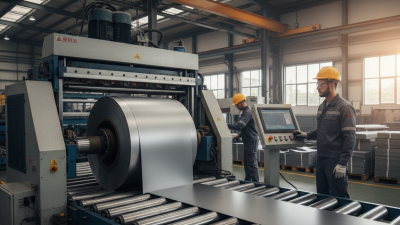
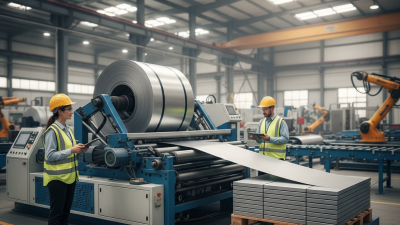
A metal cut-to-length machine converts coiled strip into flat sheets with controlled lengths. It usually includes a decoiler, straightener, feeder, shear, and stacking system. The coil unwinds gradually. Rollers remove curvature and reduce coil memory. A shear then cuts each sheet according to the programmed measurement. The stacker places finished sheets in an orderly pile.

These lines process materials such as carbon steel, stainless steel, aluminum, and coated sheet. The suitable machine depends on material thickness, coil weight, width, production speed, and required tolerance. A heavier line may handle thick plate, while a precision line suits thinner material and tighter measurements. In real production, the best setting is rarely perfect on the first attempt. Small changes in roller pressure can affect flatness. Operators should check the first sheets with calibrated tools before continuing.

Tips: Confirm the actual coil range before choosing equipment. Test several cut lengths during commissioning. Inspect sheet edges, flatness, and stacking alignment. Keep records of adjustments. This simple habit can reveal problems early. Also, do not judge a machine by speed alone. A fast line with unstable feeding may create more waste and rework. That part is easy to underestimate.

2026 Best Type of Metal Cut-to-Length Machine?

A metal cut-to-length machine decoils, levels, measures, and shears metal strip from a coil into flat sheets. The best machine type depends mainly on material strength, thickness, coil width, required accuracy, and production speed.

The chart uses representative yield-strength values for commonly processed coil materials. Higher-strength materials generally require a more rigid leveling system, stronger shear capacity, and higher line power. For mixed materials and demanding production targets, a servo-controlled cut-to-length line with a flying shear is commonly selected; intermittent guillotine systems are suitable for lower-speed applications.

How Metal Cut-to-Length Machines Work Step by Step

2026 Best Type of Metal Cut to Length Machine?

A metal cut-to-length line turns a coiled strip into precise, flat sheets. The process begins when the decoiler releases the coil under controlled tension. A leveler then bends the strip repeatedly, removing coil memory and edge waves. This step is easy to underestimate. Poor leveling can ruin accurate cutting later.

The servo feeder measures each programmed length and advances the strip through the line. Sensors check position, width, and possible slippage. A flying shear cuts moving material without stopping production. A stop-to-cut shear pauses the strip, but it can deliver tighter lengths at lower speeds. The best choice depends on thickness, alloy, width, tolerance, and monthly volume. World Steel Association data reports about 1.88 billion tonnes of crude steel production in 2024. That scale keeps productivity important, but speed alone is not the answer.

After cutting, a conveyor transfers sheets to the stacking table. Magnetic or vacuum systems may separate sheets, depending on surface condition. Operators inspect burrs, squareness, flatness, and stack alignment. The International Energy Agency identifies steelmaking as responsible for roughly 7% of global energy-related emissions. Efficient drives, shorter setup times, and reduced scrap therefore matter in real factories. I would not specify a machine from a brochure alone. Trial coils reveal more. Even experienced teams sometimes overlook maintenance access, noise, or unstable thin-sheet feeding. A reliable line needs documented tolerances, verified test cuts, and trained operators.

2026 Best Type of Metal Cut to Length Machine? - How Metal Cut-to-Length Machines Work Step by Step

No. Machine Type or Process How It Works Typical Material and Operating Range Best Use and Main Considerations
Part 1: Selecting the Most Suitable Metal Cut-to-Length Machine
1 Standard Shear Cut-to-Length Line A decoiler feeds a continuous metal coil through a leveler. A measuring system positions the strip, and a guillotine shear cuts the strip into individual sheets without creating a saw kerf. Carbon steel Stainless steel Aluminum
Typical thickness: approximately 0.3–6 mm
Typical line speed: approximately 20–80 m/min
Best general-purpose choice for high-volume rectangular sheets. It offers high productivity and low material waste, but the cut length and thickness must remain within the shear capacity.
2 Flying Shear Cut-to-Length Line The shear head travels with the moving strip during the cut. Because the strip does not need to stop for every cut, the line can maintain continuous feeding at higher production rates. Coil-fed sheet Thin to medium gauge
Commonly used when continuous production and short cycle times are more important than frequent product changes.
Best for high-speed, repetitive production. It requires accurate synchronization between feed speed, encoder feedback, and shear movement.
3 Rotary Shear Cut-to-Length Line Rotating knives cut the moving strip continuously. The rotary tooling reduces the need for repeated stopping and starting and can support consistent cutting at elevated speeds. Thin sheet Aluminum Electrical steel
Most suitable for stable coil specifications and repeated cut-length programs.
Best for continuous, high-throughput production. Tool setup and clearance must match the material thickness and hardness to control burrs and edge deformation.
4 Servo Shear Cut-to-Length Line Servo drives control the feed rolls and cutting motion. The control system uses encoder feedback to correct strip position and repeat programmed lengths. Multiple product sizes Frequent changeovers
Suitable where length accuracy, recipe storage, and rapid adjustment are required.
Best for flexible production and mixed orders. It normally costs more than a basic mechanical line but can reduce setup time and operator adjustment.
5 Slitter-and-Cut-to-Length Combination Line The coil is first divided into narrower mults by circular knives. The slit strips are then leveled, measured, and cut into customer-specified lengths. Width variation Multiple strip sizes
Requires slitting knives, spacers, recoiling or strip separation, and downstream cut-to-length equipment.
Best when one master coil must produce several widths and lengths. It provides flexibility but has more tooling, setup, and scrap-control requirements.
6 Precision Blanking Line The line combines high-accuracy feeding, leveling, and shearing to produce flat blanks with controlled length, squareness, and surface quality. Automotive sheet Appliance sheet Decorative sheet
Commonly selected for strict flatness and dimensional requirements.
Best for applications where blank quality is more important than the lowest initial equipment cost. Leveler design and material handling are critical.
Part 2: How a Metal Cut-to-Length Machine Works Step by Step
1 Coil Loading A crane, coil car, or loading table places the metal coil onto the decoiler mandrel. The mandrel expands inside the coil to hold it securely. Check coil outside diameter, inside diameter, width, weight, material grade, and thickness before production. A correctly centered and supported coil ready for controlled unwinding.
2 Coil Unwinding The decoiler releases the strip while braking or drive control maintains suitable tension. A hold-down arm can help prevent coil loops from opening suddenly. Monitor strip tension, coil alignment, mandrel expansion, and loop control. A continuous strip entering the processing line without uncontrolled slack or lateral movement.
3 Threading and Pinch Feeding The leading end is guided through entry rolls and pinch rolls. The rolls grip the strip and transfer it toward the leveler. Adjust roll pressure and alignment to avoid slipping, surface marks, or strip wandering. Stable strip feeding at a controlled speed.
4 Leveling Upper and lower leveler rolls apply alternating bending to reduce coil set, crossbow, and residual curvature. The strip is progressively flattened rather than sharply bent in one location. Set roll penetration according to material thickness, yield strength, and required flatness. Flatter strip with improved suitability for accurate cutting and stacking.
5 Edge Guiding and Alignment Side guides or an automatic centering system keep the strip on the programmed centerline before it reaches the measuring and cutting section. Use guide adjustment, photoelectric sensors, or edge-position feedback where required. Reduced lateral deviation and improved sheet squareness.
6 Length Measurement An encoder connected to a measuring roll tracks the strip travel distance. The PLC or motion controller compares the measured length with the programmed target. Check encoder calibration, measuring-roll contact, feed-roll slip, and length compensation. A controlled trigger point for the cutting cycle. Actual accuracy depends on machine condition, material behavior, and setup.
7 Cutting A guillotine, flying shear, or rotary shear separates the sheet when the target length is reached. Cutting clearance and blade condition influence the edge quality. Set blade gap, shear timing, cutting force, and material-specific operating parameters. Individual sheets with a defined length and cut edge. Proper settings help limit burrs, distortion, and angular error.
8 Sheet Transfer Conveyor rolls, belts, or magnetic transfer equipment move the cut sheet away from the shear while maintaining orientation and spacing. Adjust conveyor speed, transfer timing, sheet support, and contact pressure. Controlled movement of sheets toward the stacking station without scratches or overlap.
9 Stacking Sheets are aligned against front and side stops or positioned by an automatic stacker. The stack table lowers as the pile height increases. Set stack dimensions, sheet count, alignment mode, table height, and anti-collision protection. A uniform, countable, and forklift-ready sheet bundle.
10 Inspection and Quality Control Operators or sensors check sheet length, width, diagonal difference, flatness, edge burr, surface condition, and stack alignment. Use calibrated measuring tools and sampling procedures based on the customer specification and applicable material standard. Verified sheets and production records. Out-of-tolerance material can be isolated before shipment or downstream forming.
Part 3: Practical Selection Criteria for a 2026 Cut-to-Length Line
A Material Compatibility Select the line according to material grade, yield strength, thickness range, coil width, surface finish, and sensitivity to marking. Confirm maximum shear force, roll load, blade material, leveler capacity, and surface-contact design. Reliable processing without excessive edge damage, slippage, or premature tool wear.
B Required Accuracy Accuracy requirements should be defined for cut length, width, squareness, flatness, and burr height rather than by cut length alone. Consider encoder resolution, mechanical backlash, feed-roll condition, temperature, and material springback. A machine configuration matched to the real tolerance requirements instead of an unnecessarily expensive specification.
C Production Volume Line speed, coil-change time, cut-length mix, sheet size, and stacking time determine actual output more reliably than the advertised maximum speed alone. Compare usable production speed, cycle time, changeover time, and planned operating hours. A realistic capacity estimate and better return on equipment investment.
D Safety and Maintenance A suitable line should include guarding, emergency stops, interlocks, safe threading procedures, accessible lubrication points, and replaceable wear components. Review risk assessment, blade-change method, spare-parts availability, preventive-maintenance intervals, and operator training requirements. Safer operation, more predictable uptime, and lower long-term maintenance risk.

Note: Operating ranges shown are typical engineering ranges for comparison only. The final machine specification should be confirmed from the material grade, coil dimensions, required tolerances, production volume, and applicable safety standards.

Which Metal Cutting Methods Are Available in 2026?

In 2026, metal cut to length machines use several practical cutting methods. The right choice depends on thickness, alloy, coil width, tolerance, and production volume. Shearing remains efficient for steel and aluminum strip. A rotary shear produces clean, continuous cuts on high-speed lines. Guillotine shears suit shorter batches and heavier sheets.

Sawing handles thicker plate, structural sections, and materials that deform under shear. Circular saws can deliver accurate square ends, but blade wear needs regular inspection. Laser cutting offers narrow kerfs and detailed profiles, especially on thinner sheet. Heat can create a small affected zone. That detail matters near tight bends or painted surfaces.

Plasma cutting works faster on medium and thick steel, although its edge may need secondary finishing. Waterjet cutting avoids a heat-affected zone and supports many alloys, but it uses more time and operating resources. Abrasive cut-off systems remain useful for tough stock and simple straight cuts. They can leave burrs and abrasive residue.

Production teams should measure cut length, edge burrs, squareness, and surface temperature during trials. A machine rated for speed may still perform poorly with thin, springy strip. That assumption can fail. Engineers should also review coil straightening, feeding stability, blade clearance, and sensor calibration. In some lines, a modest shear gives better repeatability than a faster thermal process. The result depends on verified samples, not a machine label.

How to Choose the Best Machine for Your Production Needs

2026 Best Type of Metal Cut to Length Machine?

Choosing the best cut to length machine starts with your actual production needs, not the highest advertised speed. Define your material range first. Record coil thickness, width, tensile strength, surface finish, and required cut length. A machine for thin aluminum may not handle heavy steel safely or accurately. Your target output also matters. Check daily tonnage, batch sizes, changeover time, and available floor space.

Tips: Ask for test cutting with your own material. Measure flatness, burrs, length tolerance, and stacking quality. Watch the operator change settings. The process should feel controlled, not rushed. Confirm the decoiler, straightener, shear, and stacker match your coil weight and dimensions. Servo feeding can improve repeatability, but it may add cost and maintenance needs. Do not choose speed alone.

In practical evaluations, reliable automation often matters more than maximum line speed. Look for clear controls, accessible sensors, guarded moving parts, and documented maintenance procedures. Ask how quickly common wear parts can be replaced. Energy use and noise deserve attention too. A machine that runs fast but creates frequent rejects is not efficient. I have seen production plans change after installation, so leave room for future material grades or wider coils. This is easy to overlook. Verify technical claims through sample results, service records, and written acceptance standards before ordering.

What Innovations Will Shape Metal Cut-to-Length Machines in 2026?

2026 Best Type of Metal Cut to Length Machine?

The strongest 2026 candidate is a servo-driven cut-to-length line with closed-loop leveling, automatic gauging, and vision inspection. It can adjust roll gaps while processing changing coil thicknesses. This matters when customers demand tighter flatness and shorter setup times. The International Federation of Robotics reported 541,302 industrial robots installed worldwide in 2023. That figure supports faster adoption of robotic loading, stacking, and quality checks.

Artificial intelligence will improve defect detection, but it will not replace experienced operators. Cameras can identify scratches, edge cracks, and surface stains before stacking. However, poor lighting or oily surfaces may still create false alarms. A practical system should combine camera results with laser measurement and operator verification. Digital twins may also simulate coil width, line speed, and tension before production begins. The technology is promising, though many factories still lack clean production data.

Energy efficiency will shape purchasing decisions. The International Energy Agency estimates that industry uses about 37% of global final energy. Regenerative drives, efficient motors, and standby controls can reduce waste during acceleration and idle periods. Maintenance software will monitor bearing vibration, blade wear, and hydraulic pressure. Still, automation alone does not guarantee reliability. A complex line can become harder to repair without trained technicians, spare parts, and clear maintenance records.