

7 Best HR Slitting Machines for Steel Processing
Choosing a hot-rolled steel slitting line is not just a matter of comparing speed ratings. Coil width, thickness, steel grade, strip tension, and required edge quality all shape the decision. A line that handles wide, heavy coils well may be a poor fit for narrow precision strips. The difference shows up on the shop floor: in blade changes, noisy vibration, burrs, and time spent correcting coil set.
Manufacturing quality expert W. Edwards Deming said, “Quality comes not from inspection, but from improvement of the production process.” His principle applies to slitting: stable setup and repeatable control matter as much as checking finished strips. An HR slitting machine should match the processor’s actual coil range, not just its most impressive brochure specification. Still, no specification sheet captures every production problem. That is worth remembering.
This guide reviews seven machines for steel processing, with attention to practical selection factors: capacity, slitting accuracy, automation, changeover time, safety features, and service support. Look closely at recoiling performance, too. A clean cut can still lead to loose winding or telescoped coils if tension control is inconsistent. Buyers should verify claims against sample runs and clear technical documentation. The best choice is rarely the machine with the highest number on one line. It is the line that produces consistent strips, handles real operating conditions, and fits the plant’s maintenance skills. A little doubt is healthy. One mill’s ideal setup may not suit another.
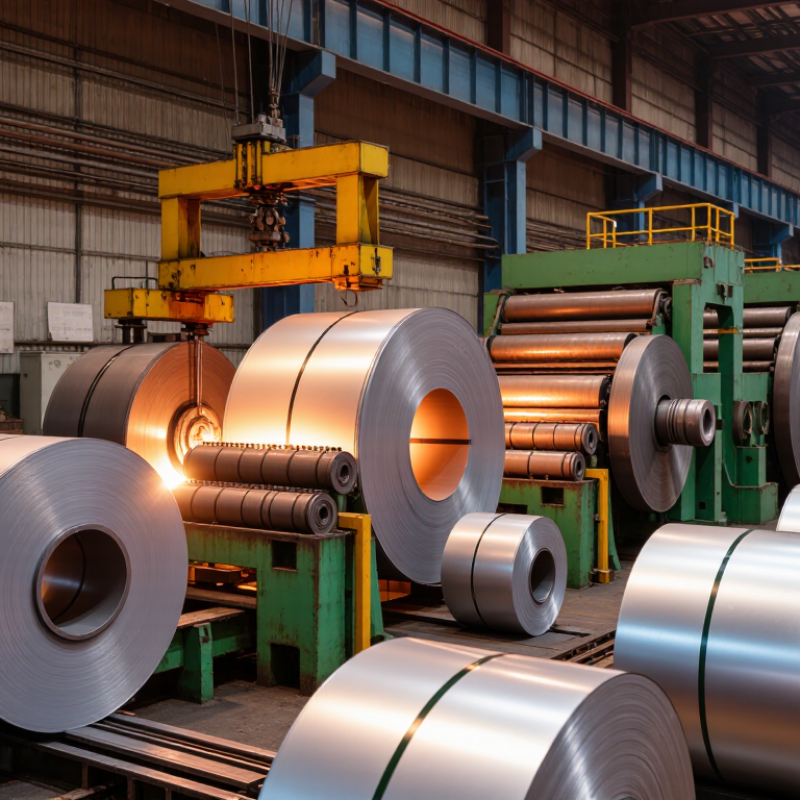
HR Slitting Machines: Core Components and Operating Principles
An HR slitting machine is a connected line, not just a set of cutting knives. A decoiler supports the incoming coil and feeds the steel toward the slitter. Entry guides and pinch rolls help keep the strip aligned. At the slitter head, circular knives mounted on arbors make lengthwise cuts as the steel passes through. Spacers set the distance between knives and help control strip width. Small details matter.
After cutting, scrap winders collect narrow edge trim, while a tension stand helps keep the separate strips steady. A recoiler then winds them into smaller coils. The control system coordinates feed speed, tension, and stopping points. In practice, operators check knife clearance and alignment against the material’s thickness and condition. Hot-rolled steel may arrive with scale or slight variation, so one setup may not suit every coil.
The principle is straightforward: feed, slit, separate, and rewind. The setup is less tidy. Too much tension can distort strip edges; too little may cause loose winding or wandering. Operators may need to adjust settings after observing the first section of material. That judgment is useful, though it can make repeatability harder than a machine specification suggests. A careful trial cut often reveals problems before the full coil runs.
7 Best HR Slitting Machines for Steel Processing — Core Components and Operating Principles
The configurations below represent common hot-rolled (HR) steel slitting-line classes, not specific products or brands. Capacity and speed are indicative ranges; actual limits depend on steel grade, coil weight, strip width, tooling, and line design.
| Slitting Line Configuration | Typical HR Steel Thickness | Typical Coil Width | Indicative Line Speed | Core Components | Operating Principle | Typical Applications |
|---|---|---|---|---|---|---|
| Compact light-gauge line | 1.5–3.0 mm | 600–1,250 mm | 30–80 m/min | Uncoiler, pinch rolls, entry guide, slitter head, separator discs, recoiler | The coil is uncoiled and guided through rotary circular knives. The knives shear the sheet lengthwise into narrower strips, which are separated and rewound under controlled tension. | Service centers and manufacturers processing narrow strips, blanks, and general-purpose HR coil. |
| Standard medium-gauge line | 2.0–6.0 mm | 800–1,650 mm | 20–60 m/min | Heavy-duty uncoiler, flattener or leveler, side guides, powered slitter, scrap winder, tension stand, recoiler | Leveling rolls reduce coil set before the strip enters the slitter. Matched rotary knives make continuous longitudinal cuts; a tension stand stabilizes the slit strands before recoiling. | Construction products, welded-tube feedstock, structural components, and general steel processing. |
| Heavy-gauge high-torque line | 4.0–10.0 mm | 1,000–2,000 mm | 10–35 m/min | High-capacity uncoiler, driven pinch rolls, robust slitter arbor, hydraulic hold-down, separator, heavy-duty tensioner, recoiler | High-torque drives feed thick strip through a rigid slitter head. Knife clearance and overlap are set for the material thickness, while controlled tension keeps the resulting strands stable. | Thick HR plate and coil processing for structural, machinery, and industrial fabrication. |
| Wide-coil precision line | 2.0–8.0 mm | 1,500–2,200 mm | 15–50 m/min | Wide-coil uncoiler, edge guide, precision slitter head, scrap choppers or winders, separator tooling, tension reel | Edge guiding centers the wide strip before cutting. Precisely positioned knives divide it into multiple strands, which are separated and tensioned to support consistent winding. | Wide HR coils converted into multiple strip widths for downstream forming and fabrication. |
| High-speed production line | 1.5–4.0 mm | 800–1,650 mm | 60–120 m/min | Fast-cycle uncoiler, automatic threading equipment, powered slitter, high-speed scrap handling, separator, tension control, recoiler | Automated threading and synchronized drives maintain strip movement through the rotary slitter. Speed and tension controls help reduce strip oscillation and maintain stable recoiling. | High-volume service-center operations processing thinner HR strip in long production runs. |
| Precision narrow-strip line | 1.5–5.0 mm | 400–1,250 mm | 20–70 m/min | Centering guides, precision arbor and spacers, close-clearance knives, separator discs, adjustable tension stand, recoiler | Knife spacing and side guidance are set to the target strip widths. Separators keep adjacent strands apart, while controlled back tension supports neat, compact coils. | Narrow HR strip for roll forming, tube production, and component manufacturing. |
| Flexible multi-product line | 2.0–8.0 mm | 600–2,000 mm | 15–60 m/min | Adjustable uncoiler, entry leveler, interchangeable knife tooling, movable separators, variable-speed drives, recoiler | Changeable tooling and adjustable guides allow the setup to be adapted to different coil widths and slit patterns. The strip is sheared longitudinally, separated, and rewound at controlled tension. | Mixed-batch production where coil dimensions, strip widths, and order sizes vary. |
Related Posts
-
2026 Top Sheet Metal Slitting Machine Types Buyers Need?
-
China Top 10 Steel Slitter Machine Manufacturers?
-
Who Are the Top Sheet Slitting Machine Suppliers in China?
-
Top Benefits of Using a Metal Coil Slitting Machine in Manufacturing Industry?
-
What Is the Steel Coil Slitting Machine Price in China?
-
What is a Sheet Metal Slitting Machine and How Does It Work?