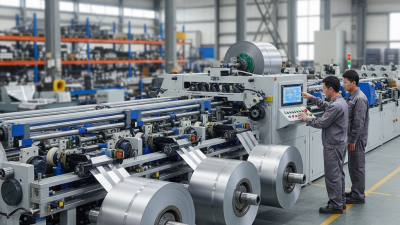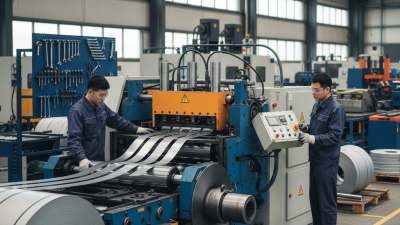

Choosing among China’s top 10 steel slitter machine manufacturers requires more than comparing prices or catalog photos. A reliable review should examine cutting accuracy, line speed, tension stability, automation, service response, and documented customer experience. The term slitter machine steel covers several practical concerns, including material compatibility, blade performance, coil width, and long-term machine rigidity. These details become visible on the factory floor, where operators handle heavy coils, measure strip edges, and adjust tension beside running equipment.
Chen Yiming, a steel-processing equipment consultant with more than twenty years of field experience, says, “A slitter line earns trust through stable production, not impressive specifications.” That observation is useful. A machine may claim high speed, yet poor recoiling can create telescoping, wrinkles, or uneven strip edges. Small details matter. So does training.
This introduction examines ten Chinese manufacturers through an experience-based and evidence-focused lens. It considers engineering capability, quality control, customization, delivery records, installation support, and spare-parts availability. Public certifications can help, but they should not replace factory inspections, sample trials, or direct customer references. No ranking is perfect. Supplier websites may present polished information, while actual performance can vary between projects. Buyers should therefore request trial-cut data, blade specifications, electrical standards, and maintenance schedules before making a decision. The strongest supplier is not always the largest one. It is the company that communicates clearly, proves its process, and supports the slitter machine steel line after installation.
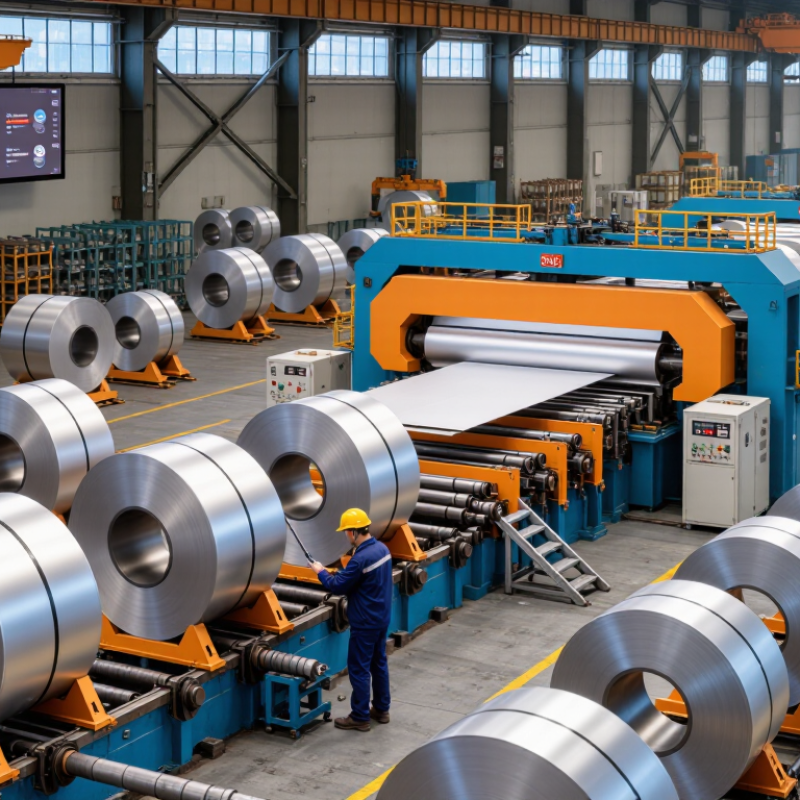
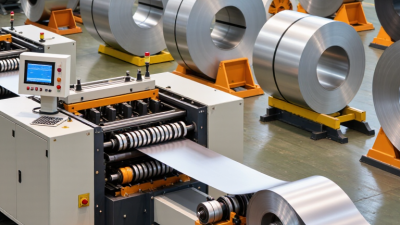
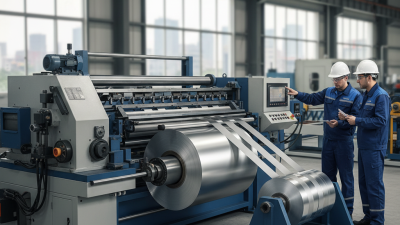
A steel slitter machine converts wide steel coils into narrower strips. A decoiler feeds the sheet through rotary knives, which shear it lengthwise; a recoiler then winds the strips into separate coils. Spacers set the cutting widths, while tension controls help keep edges straight and coils compact. The setup looks simple from the outside. In practice, knife clearance, blade condition, and material thickness all affect edge quality. A small setup error can leave burrs or uneven strip widths.
Slitting lines serve steel service centers and manufacturers that need coil stock in specific widths. Common applications include metal roofing, automotive components, electrical enclosures, shelving, and welded tube production. The World Steel Association reported 1,882.6 million tonnes of global crude steel production in 2024, indicating the scale of the material supply chain—not the output of slitting machines themselves. Slitting helps processors turn broad coils into usable feedstock without cutting every part from a full-width sheet. Not every line handles every grade equally well. Stainless steel, coated sheet, and high-strength steel can require different tooling and tension settings, so buyers should match machine capacity to their actual material and tolerances. Industry practice varies. “Slitter” can also refer to the complete line, rather than the cutting unit alone.
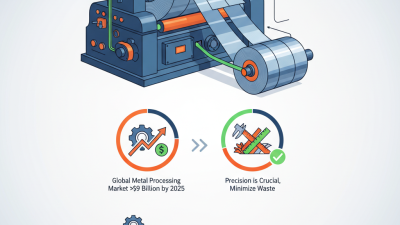
A steel slitter machine unwinds a master coil, cuts it lengthwise into narrower strips, and recoils them. Slitting lines are used to prepare metal for applications such as automotive parts, construction products, and appliances. Material density affects coil weight and handling; values shown are approximate at room temperature.
A steel slitting line turns a wide coil into narrower strips through a controlled sequence of uncoiling, cutting, and recoiling. The operator loads the coil onto an uncoiler and secures it with an expanding mandrel. A threader guides the leading edge through leveler rolls and into the slitter. Keep the strip centered. Even a small alignment error can affect edge quality and winding.
At the slitter, circular knives shear the moving steel into set widths. Spacers help position the knives, while careful setup limits burrs and uneven edges. Operators check material thickness, strip width, and knife condition before production. The right settings depend on the steel and the job; a setup that works for one coil may not suit the next. That part can be fiddly.
After cutting, separator discs keep the narrow strips apart as they travel toward the recoiler. Tension devices help each strip wind evenly, while edge guides reduce sideways movement. The recoiler’s mandrel gathers the strips into separate finished coils. Operators watch for loose wraps, telescoping edges, and unusual vibration. A neat coil matters, but it does not prove every cut is perfect, so sample measurements and edge checks remain useful.
A steel slitter rated at 200 m/min may not deliver that speed on every coil. Ask which material thickness, strip width, tensile strength, and coil weight were used for the rating. Also check knife-shaft stiffness, spacer accuracy, recoiler torque, and scrap-winder capacity. These details affect edge quality and stable production, not just the headline speed.
The 20–200 m/min range is a useful starting point, not a universal benchmark. Thin, narrow strips may run faster; thick or high-strength material can require slower acceleration and tighter tension control. World Steel Association’s World Steel in Figures 2025 reports global crude steel production of 1,882.6 million tonnes in 2024. That scale makes efficient coil processing important, but it does not mean every slitting line should chase maximum speed. Ask suppliers to test your actual material and show the finished edges. On your own coils.
For dimensional requirements, ASTM A568/A568M sets general requirements for hot- and cold-rolled steel sheet, while product-specific standards may add tolerances. Confirm how the proposed line handles width changes, burr limits, coil memory, and scrap removal. Request a speed curve by thickness, plus real run data—not only a peak-speed figure. That sounds neat on paper. It isn’t always. A short production trial can expose vibration, looping problems, or edge damage before installation.
Buyers should compare slitting-line suppliers by process fit, not catalog rankings. Ask whether the line handles your actual steel grade, thickness, width, and coil weight. A machine designed for thin galvanized strip may struggle with high-strength steel. Check speed under production tension, not only the advertised maximum. Knife diameter, arbor strength, separator design, and recoiler torque directly affect edge quality.
Small details matter.
Request a complete layout with entry equipment, pinch rolls, slitter head, scrap winder, tension stand, and exit recoiler. Compare setup time and changeover tools. Automatic positioning can reduce errors, but only when sensors and software are properly integrated.
Review cut-to-width tolerance, burr limits, coil telescoping, and surface protection.
Demand sample slitting data from similar materials. Numbers without test conditions are weak evidence.
Supplier reliability also requires careful checking.
Examine weld quality, electrical components, spare-parts availability, manuals, training, and remote support. Factory acceptance testing should use your coil specifications and documented inspection points. Ask for references involving comparable production volumes.
A low quotation may exclude commissioning, tooling, or future upgrades. That can distort the real cost. A polished proposal can still hide practical gaps.
Some buyers focus too heavily on speed and overlook tension stability. This is a common mistake.
Leave room for improvement after installation, because real coils rarely behave exactly like test material.
China’s top 10 steel slitter machine manufacturers are best identified through verified production capability, not advertising claims. Leading suppliers usually operate modern machining workshops, assembly lines, and testing areas. Their machines should handle steel coils with stable tension, accurate slitting, and clean edge quality. A practical inspection should include decoiler performance, knife-holder rigidity, recoiler control, and emergency-stop response.
Experience matters on the factory floor. Ask for cutting samples using similar steel grades, thicknesses, and coil weights. Review inspection records for shaft runout, blade clearance, electrical safety, and speed stability. Reliable manufacturers can explain how they control burrs, strip wandering, and uneven recoiling. They should also provide installation guidance, operator training, spare-parts support, and measurable warranty terms. Documentation should be clear.
Do not trust a ranking based only on export volume. A large supplier may still offer weak customization or slow technical support. Smaller factories can sometimes respond faster, but their quality systems require closer checking. I would compare at least three production sites and request recent customer references. A perfect top-ten list is impossible without current audits. That is the part many buyers overlook. A sound choice combines engineering evidence, transparent communication, and tested machine performance.