
Scroll Top
4801 Bennett Rd. Toledo, Ohio 43612

What Is a Mini Rolling Machine?

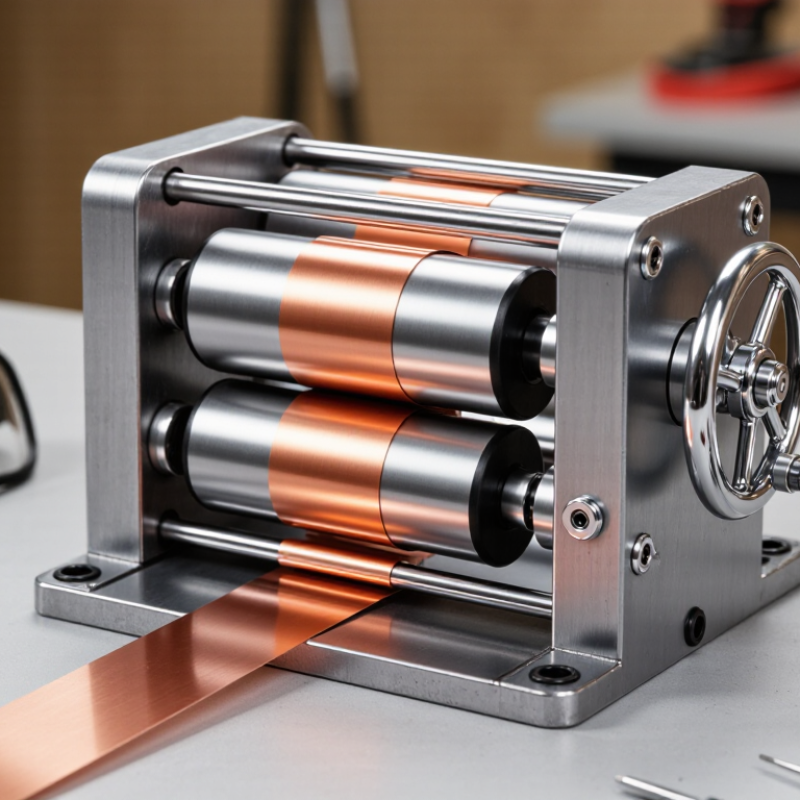
A mini rolling machine is a compact tool designed to shape metal through controlled pressure. It usually uses two or three rollers. The rollers gradually reduce thickness or create smooth curves. Unlike large industrial mills, this equipment suits jewelry benches, teaching labs, repair shops, and small fabrication spaces.

In practical use, an operator feeds a metal strip between rotating rollers. A handwheel or adjustment screw controls the gap. Each pass changes the material slightly. Copper, brass, aluminum, and some mild steel are common choices, depending on the machine’s rated capacity. The workpiece should remain aligned and free from loose debris. Small errors can leave dents, uneven edges, or permanent scratches.

A mini rolling machine saves space.

However, “mini” does not mean effortless. Its frame still needs a stable, level surface. Excessive force may damage the gears or distort the rollers. Experienced users check the manufacturer’s instructions, maximum material thickness, roller hardness, and maintenance requirements before purchasing. Protective eyewear and careful hand positioning also matter, especially near moving parts.

This guide explains what a mini rolling machine does, how its main components work, and where it performs best. It also considers limitations that product descriptions sometimes overlook. A compact model may be convenient, but it can lack the rigidity needed for repeated heavy work. That distinction is easy to miss. Reliable selection depends on measured requirements, not appearance alone. When used patiently and maintained properly, this machine can provide consistent results for detailed, small-scale metalworking. Still, results vary with alloy, thickness, operator technique, and machine quality.
What Is a Mini Rolling Machine?

Definition and Core Purpose of a Mini Rolling Machine

What Is a Mini Rolling Machine?

Definition and Core Purpose of a Mini Rolling Machine

A mini rolling machine is a compact tool for shaping flat metal into smooth curves, arcs, or cylindrical forms. It uses two or three rollers to guide and gradually bend the material. Unlike a large industrial roller, this machine suits small workshops, repair areas, classrooms, and prototype projects. Its core purpose is controlled forming, not cutting or drilling.

In practical workshop use, an operator feeds a metal sheet or strip between the rollers. Adjusting the roller gap controls the bending pressure and final radius. Softer materials usually form more easily, while thick or hardened metal may exceed the machine’s capacity. Small corrections matter. A slight adjustment can change the curve noticeably. The result may still show uneven edges, especially when the operator rushes or skips a test piece. That imperfection deserves attention, not concealment.

Tips: Check the rated material thickness before every project. Clean the rollers to prevent scratches and slipping. Begin with low pressure, then increase it gradually. Measure the curve after each pass. Wear suitable eye protection and keep loose clothing away from moving parts. A short practice strip can reveal alignment problems early. Do not force material through a tight setting. This can damage the rollers or distort the workpiece. Reliable results depend on careful setup, steady feeding, and realistic expectations.

What Is a Mini Rolling Machine?

A mini rolling machine is a compact tool used to bend thin metal sheets into smooth curves, cylinders, or partial arcs. Its core purpose is controlled forming through adjustable rollers.

The chart shows representative thicknesses for common U.S. standard steel sheet gauges. Thinner sheets generally require less forming force, while the actual capacity of a mini rolling machine depends on roller diameter, material strength, working width, and machine design.

Main Components and How They Work Together

What Is a Mini Rolling Machine?

A mini rolling machine reduces metal thickness through controlled pressure between rotating rolls. Its compact frame supports the working load and limits vibration. Two hardened rolls form the main deformation zone. Their bearings maintain alignment while allowing smooth rotation.

A geared motor transfers torque through a coupling or gearbox. The drive must remain steady when the metal enters the roll gap. A handwheel, screw, or electric actuator adjusts the gap by small increments. Side guides keep the strip centered. Guards protect operators from moving parts, while lubrication reduces heat and surface damage.

The U.S. Department of Energy reports that motor-driven systems consume about 60% of industrial electricity, making drive efficiency important, even in small equipment. My practical concern is simple: a powerful motor cannot correct poor alignment.

The control panel coordinates speed, gap position, and emergency stopping. A basic sensor can detect overload or unexpected movement. Cooling may be necessary when repeated passes raise roll temperature.

The World Steel Association reported about 1.89 billion tonnes of crude steel production in 2023, showing the scale of rolling demand worldwide. A mini machine handles far less material, but the same principles apply.

Operators should measure thickness after each pass, because springback can make the first reading misleading. I would not trust a smooth surface alone. Flatness, edge condition, and temperature also reveal whether the components are working together properly.

Common Types and Material-Forming Methods

A mini rolling machine is a compact mill that reduces metal thickness or changes its profile through rotating rolls. It suits laboratories, repair workshops, jewelry production, and small fabrication lines. Unlike large industrial mills, it needs less floor space and often allows quicker roll changes. Still, compact does not mean simple.

Common types include two-high, three-high, four-high, and plate rolling machines. Two-high models use two opposing rolls for straightforward thickness reduction. Three-high designs move material in alternate directions without reversing the motor. Four-high machines improve control when producing thinner sheet. Plate rollers curve flat stock into cylinders, cones, or gentle arcs. Small machines may process steel, aluminum, copper, or brass, depending on roll hardness and motor capacity.

The forming method determines the final result. Flat rolling compresses material between parallel rolls. Shape rolling creates channels, angles, or rounded sections with grooved rolls. Ring rolling expands a heated or prepared ring while reducing its thickness. Cold rolling improves surface finish and dimensional accuracy, but it demands greater force. Hot rolling lowers forming resistance, although oxidation can roughen the surface. According to the World Steel Association’s World Steel in Figures 2024, global crude steel production reached 1,892.1 million tonnes in 2023, showing the scale behind these processes. The International Aluminium Institute reports that recycled aluminium uses about 5% of the energy required for primary aluminium production. That matters when selecting a mini mill for material-efficient work. In practice, calculations can fail when lubrication, springback, or uneven feeding is ignored. A test pass is wise.

What Is a Mini Rolling Machine? - Common Types and Material-Forming Methods
Machine Type Typical Configuration Common Working Materials Primary Forming Method Typical Products or Profiles Main Advantages Important Limitations
Mini Three-Roll Plate Rolling Machine Three rolls arranged in a triangular or asymmetric layout; manual or motorized adjustment. Mild steel Stainless steel Aluminum Copper Progressive bending of flat sheet or thin plate between rotating rolls. Small cylinders, cones, arcs, guards, funnels, and curved covers. Compact footprint; suitable for prototyping, repair work, and low-volume fabrication. Limited capacity for thick or wide plate; cone rolling may require additional setup and skill.
Mini Four-Roll Plate Rolling Machine Four rolls with upper and lower rolls supported by side rolls; usually hydraulically or mechanically adjusted. Carbon steel Stainless steel Aluminum alloys Controlled prebending and rolling with the sheet held between the upper and lower rolls. Short cylindrical shells, curved panels, pipe sections, and conical parts. Improved plate control; reduced flat ends; repeatable positioning compared with simpler layouts. More complex and expensive than a basic three-roll machine; still limited by mini-machine capacity.
Mini Section or Angle Rolling Machine Three driven or adjustable rolls shaped to accept angle, flat bar, channel, tube, or other sections. Structural steel Stainless steel Aluminum sections Cold bending of a linear profile while the rolls apply a controlled curvature. Rings, frames, arches, handrail components, and curved structural sections. Forms long profiles into arcs or rings without cutting and welding multiple short pieces. Profile distortion can occur if roll geometry and alignment are not correctly matched.
Mini Tube and Pipe Bending Machine Roller, rotary-draw, or three-roll arrangement selected according to tube diameter and wall thickness. Steel tube Stainless tube Copper tube Aluminum tube Rotary bending or roll bending around a die, former, or set of contoured rolls. Small-radius elbows, handrails, frames, coils, and tubing assemblies. Useful for repeatable tube shaping and compact fabricated assemblies. Thin-wall tubing may flatten, wrinkle, or crack without suitable tooling and support.
Mini Sheet-Metal Beading or Flanging Machine Pair of profiled forming rolls, often manually driven or powered at low speed. Sheet steel Aluminum sheet Stainless sheet Incremental rolling that creates beads, grooves, wiring edges, offsets, or flanges. Ductwork, containers, panels, stiffening ribs, and decorative sheet details. Improves sheet stiffness and creates edges or profiles without removing material. Primarily suited to thin sheet; roll clearance and tooling must match the material thickness.
Mini Roll-Forming Machine Multiple roll stations arranged in sequence to produce a continuous profile. Galvanized steel Cold-rolled steel Aluminum Continuous incremental bending of strip or coil through successive forming stands. Channels, angles, tracks, trims, rails, and other constant cross-sections. High dimensional consistency for long parts; efficient for repeated profiles. Tooling is profile-specific; less suitable for short runs or frequently changing shapes.
Mini Ring Rolling Machine Radial rolling arrangement with a main roll and mandrel or supporting rolls. Carbon steel Stainless steel Aluminum alloys Radial reduction and circumferential expansion of a preformed ring or heated ring blank. Small rings, flanges, collars, bearing-related components, and circular frames. Can produce seamless ring shapes with favorable grain flow when properly operated. Usually requires a preform; capacity and accuracy depend strongly on roll size and machine rigidity.
Manual Benchtop Rolling Machine Handwheel-driven rolls mounted on a compact bench or frame. Copper Brass Aluminum Thin steel Manual cold rolling, bending, flattening, or thickness reduction through adjustable rolls. Small curved panels, jewelry components, prototypes, thin strips, and workshop parts. Low operating cost, simple maintenance, and good suitability for education or occasional use. Lower throughput and forming force; operator effort affects consistency.
Powered Mini Rolling Machine Electric motor and gearbox drive one or more rolls; controls may be foot-operated or panel-mounted. Mild steel Stainless steel Aluminum Copper alloys Motor-driven bending, rolling, or profile forming at a controlled rotational speed. Small production batches, cylindrical shells, curved panels, and repeatable workshop parts. Reduces manual effort and improves process repeatability compared with hand-operated equipment. Requires electrical safety controls, routine maintenance, and protection against overload.
Hot-Forming Mini Rolling Machine Compact rolling unit used with a furnace, induction heater, or other controlled heat source. Carbon steel Low-alloy steel Heat-resistant alloys Rolling or bending at elevated temperature to reduce deformation force and improve formability. Small forged rings, difficult bends, thick sections, and parts requiring reduced cold-work. Allows forming of materials or thicknesses that may be impractical to shape cold. Needs temperature control, heat-resistant tooling, ventilation, and careful oxidation management.
Cold-Forming Mini Rolling Machine Rolls shape material at or near room temperature without intentional heating. Low-carbon steel Stainless steel Aluminum Brass Plastic deformation below the material's recrystallization temperature. Sheet curves, profiles, tubes, rings, trims, and small structural parts. Clean process, no heating system required, and suitable for accurate repeatable production. Higher forming force; excessive deformation may cause springback, work hardening, or cracking.
Incremental Roll-Forming Machine One or more passes gradually deform the workpiece instead of creating the final shape in one step. Sheet steel Stainless steel Aluminum sheet Repeated small bending steps that distribute strain across the material. Deep curves, compound transitions, narrow channels, and custom prototypes. Reduces sudden deformation and can improve control over complex shapes. May require several passes, careful setup, and compensation for elastic springback.

Step-by-Step Process for Using the Machine

What Is a Mini Rolling Machine?

A mini rolling machine reduces the thickness or shapes small metal sheets through controlled pressure. Its compact frame suits workshops, classrooms, and detailed repair work. Before operating it, inspect the rollers, handles, guards, and mounting points. Check the material limit in the machine’s instructions.

Wear safety glasses, secure loose clothing, and keep fingers away from the roller gap.

Step-by-Step Process for Using the Machine

Place the machine on a stable, level bench. Clean the rollers with a dry cloth, then set a wide opening for the first pass. Mark the sheet lightly if consistent positioning matters. Feed the material straight between the rollers. Turn the handle slowly and use even pressure. Do not force it. Stop if the sheet twists, jams, or makes an unusual sound.

Remove the sheet and measure its thickness with calipers. Adjust the rollers slightly, not dramatically. Feed the material again in the same direction unless the instructions permit reverse rolling. Several light passes usually create a smoother result than one aggressive pass. Keep the sheet aligned with both hands, but never place fingertips near the entry point. The edges may become sharp, so handle them carefully.

Inspect the surface after each pass. Small waves can indicate uneven pressure or poor alignment. A clean finish is not guaranteed on the first attempt. I would rather make another gentle pass than correct an avoidable crease. Record the setting and material type for future work. That simple note can prevent repeated mistakes.

Applications, Advantages, and Operating Limitations

What Is a Mini Rolling Machine?

A mini rolling machine forms sheet metal into cylinders, cones, or gentle curves. It uses three or four rollers, hand-driven or motor-assisted. Practical shop use suits prototypes, repair work, ducts, craft parts, and light fabrication. The World Steel Association reported about 1.89 billion tonnes of crude steel production in 2023. That scale shows the material’s importance, but a mini roller serves a much narrower purpose.

Its main advantage is control in small spaces. Operators can adjust the roll gap, watch the curve develop, and reduce setup costs. It also needs less floor space than industrial equipment. However, working width and thickness remain limited. Hard steel can exceed the machine’s torque. Springback may leave the finished part wider than expected. Repeated passes help, but perfect first-pass accuracy is unlikely.

This point is often underestimated. Surface scratches, uneven pressure, and poor alignment can also reduce quality. The International Energy Agency’s energy-efficiency guidance supports efficient, right-sized equipment, yet low power does not mean unlimited capacity.

Tips

Measure thickness at several points. Remove burrs before rolling. Make a test pass on scrap. Mark the centerline clearly. Check diameter with a template, not eyesight alone. Keep hands away from pinch points. Follow the machine’s rated limits and ISO 12100-based risk assessment practices. Thin aluminum may deform easily, while stainless steel can demand several gradual passes. Results vary with grain direction, tooling condition, and operator technique. That variability deserves honest attention.