
Scroll Top
4801 Bennett Rd. Toledo, Ohio 43612

What Is the Best Roller Leveling Machine in 2026?

Choosing the best roller leveling machine in 2026 starts with the material, not the brochure. A machine that handles thin aluminum well may struggle with high-strength steel or a wider coil. The World Steel Association reported 1,882.6 million tonnes of crude steel production in 2024, in its World Steel in Figures 2025 report. That figure shows the scale of steel production, but it does not tell buyers which leveler suits their line.

A practical comparison should examine material thickness, width, yield strength, incoming flatness, and required production speed. Check the roll arrangement, adjustment range, drive system, and how the machine supports the strip across its width. Ask suppliers to run representative samples. Record the material grade and thickness, then compare flatness before and after leveling against your actual tolerance. Small variations matter. Also review changeover time, operator controls, maintenance access, and local technical support. These details can matter more than a headline speed.

There is no universal winner. A high-capacity roller leveling machine may be unnecessary for short runs, while a compact unit may limit future production. Published specifications help narrow the field, but they cannot replace a material trial. Even a careful comparison can miss real-world differences, such as inconsistent incoming coil condition. That uncertainty deserves attention. This guide considers machine capability, application fit, and ownership needs to help identify the strongest option for your process in 2026.
What Is the Best Roller Leveling Machine in 2026?

Define Roller Leveling: How Alternating Bending Reduces Residual Stress

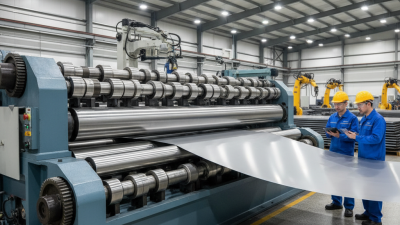
Roller leveling is a controlled sequence of bends that helps flatten sheet or plate and reduce uneven internal stress. The material passes through staggered rolls, which bend it first one way, then the other. These alternating bends extend slightly different zones through the thickness. As the sheet exits, some strain remains, while much of the uneven stress pattern is redistributed.

That matters during cutting. A sheet that looks flat on the table can still curl when a section is released. Not magic. Leveling cannot erase every stress or correct every defect. Results depend on thickness, strength, incoming shape, roll spacing, and adjustment. Too little penetration may leave waves; too much can mark the surface or create new distortion.

In practice, a suitable machine needs enough adjustment for the material range, plus repeatable roll settings. Operators can check a test piece by measuring flatness before and after leveling, then observing how it behaves after a simple cut. Record the settings. Small changes can matter. The test is imperfect, and temperature or material variation may shift the result, but it is more reliable than judging a sheet by appearance alone.

Match Capacity to Sheet Thickness (mm), Width (mm), and Yield Strength (MPa)

Choosing the best roller leveling machine in 2026 starts with the material you actually process. Record sheet thickness, maximum width, and yield strength from recent production orders. Not just thickness. A 1.5 mm mild-steel sheet and a 1.5 mm high-strength sheet can place very different loads on the rollers.

Check the machine’s rated capacity for all three values together. A stated maximum thickness may apply only to narrower or lower-strength material. For example, a 2,000 mm-wide sheet with high yield strength may need more leveling force than a narrow sheet of the same thickness. That detail matters. Ask for capacity tables across the full width range, and confirm whether the rating assumes a particular material grade.

Also consider the roller diameter, spacing, and adjustment range; these affect how consistently the machine can correct shape defects. A specification sheet can look reassuring, but mixed production may expose gaps.

There is no tidy shortcut. When possible, run representative samples and inspect the sheet for edge wave, center buckle, and residual curl before choosing a machine.

Compare Leveler Designs: Work-Roll Count, Diameter (mm), and Roll Gap

A roller leveling machine should be compared by work-roll count, roll diameter, and the way its gap is adjusted. More work rolls can create more gradual, repeated bends, helping reduce coil set and crossbow. They do not guarantee a better result. Roll support, strip width, material strength, and setup accuracy matter too.

Diameter changes how sharply the strip bends. Smaller rolls can apply tighter curvature, which may help with thin or stiff material, but can increase marking risk if settings are poor. Larger rolls make gentler bends and may suit heavier stock. Compare diameters in millimeters, but check the machine’s stated material range as well. A number alone tells only part of the story.

“Roll gap” needs careful reading. Some specifications refer to the physical opening; others describe roll penetration or a controlled setting. These are not interchangeable. Ask how the gap is measured and whether it can be adjusted across the working width. During a trial, note the incoming sheet thickness, edge wave, and center buckle, then inspect the leveled sheet under consistent lighting. A neat specification table can still mislead. I would also record the actual settings, even when the first result looks good; operators sometimes change them later and forget why.

What Is the Best Roller Leveling Machine in 2026? — Compare Leveler Designs
Leveler Design Typical Work-Roll Count Typical Work-Roll Diameter Typical Material Thickness* Roll-Gap / Intermesh Practice Best Fit Main Trade-Off
Precision thin-gauge leveler 17–23 rolls Approximately 20–50 mm Approximately 0.1–2 mm Fine, independently controlled entry and exit settings are used to create a graduated bending pattern. Set intermesh for the material; there is no universal fixed gap. Thin sheet, strip, and parts where small residual curvature or shape variation matters. Small rolls and close adjustment support precision, but the setup is more sensitive to material and operating conditions.
General-purpose sheet leveler 9–13 rolls Approximately 50–100 mm Approximately 0.5–6 mm Adjust the entry and exit roll positions to produce sufficient alternating bending. Use a setup chart or trial calibration for the specific material and thickness. Mixed sheet-metal work and a broad range of routine flattening tasks. A versatile middle ground, but it may not match a dedicated precision or heavy-plate design at the extremes.
Heavy-plate leveler 5–9 rolls Approximately 100–250 mm Approximately 3–25 mm Gap and intermesh settings depend on plate thickness, strength, and machine capacity. Stiff frames and powerful adjustment systems are important; the setting is not simply the plate thickness. Thicker plate and applications requiring high leveling force. Larger rolls and robust construction handle heavier stock, but offer less suitability for very thin-gauge precision work.

How to choose: Match the leveler to the material’s thickness, strength, width, and required flatness—not roll count alone. The ranges above are representative design guides, not standardized specifications or guarantees for a particular machine. Work-roll diameter, roll count, and usable capacity vary by design. Roll gap/intermesh must be set for the actual material and operating conditions.

Evaluate Performance by Line Speed (m/min) and Flatness Tolerance (mm/m)

A roller leveler should be judged at the speed your plant can sustain, not by its maximum-speed claim.

Compare machines using the same material grade, width, thickness, and coil condition. Run trials at defined speeds, such as 10, 20, and 30 m/min, then measure flatness at each setting. Speed alone misleads. A line that reaches 30 m/min but leaves edge wave or residual stress may deliver less usable output than a slower, stable line. Treat these speeds as a test plan, not universal industry benchmarks.

Flatness tolerance should be stated in mm/m, with the measurement method and sampling locations recorded. For example, set a provisional acceptance target of 1.0 mm/m, then tighten or relax it to match stamping, cutting, or welding requirements.

ISO 16162 specifies dimensional and shape tolerances for continuously cold-rolled steel; it does not certify a leveler’s performance. The World Steel Association reported 1,888.2 million tonnes of global crude steel production in 2023, a useful reminder of the sector’s scale, but not a machine-speed benchmark.

One weakness in many comparisons: they report speed without showing flatness at that speed. Ask for trial data across the full operating range, including the slowest practical setting and the point where flatness begins to deteriorate.

Check Safety and Controls Against ISO 12100 and IEC 60204-1 Before Choosing

A roller leveling machine may look straightforward, but its rollers create serious pinch points. Before comparing speed or sheet capacity, ask how the machine’s risks were assessed under ISO 12100. Look for fixed or interlocked guards around hazardous areas, safe access for threading sheets, and clear procedures for clearing jams. Ask to see the risk assessment, not just a statement that the machine is safe. Small details matter.

Then examine the electrical controls against IEC 60204-1. Check that emergency-stop devices are easy to reach, control labels are readable, and unexpected restart is prevented after power loss or a guard opening. Ask how the machine is isolated for maintenance, and whether operators can distinguish normal, setup, and fault conditions. An emergency stop does not replace proper guarding. A checklist can still miss hazards during unusual tasks, such as removing a bent sheet. I would want a competent, machine-specific review before relying on a general declaration. Also confirm which standard editions and local requirements apply to the installation.