
Scroll Top
4801 Bennett Rd. Toledo, Ohio 43612

China Top Plate Leveling Machine Manufacturers

China has become a major source of industrial plate leveling equipment. Its manufacturers serve steel service centers, fabrication plants, and heavy engineering workshops worldwide. This guide examines China’s top plate leveling machine manufacturers through practical and technical perspectives.

Reliable suppliers usually offer machines for carbon steel, stainless steel, aluminum, and other flat products. Their equipment may include multi-roll leveling systems, hydraulic gap adjustment, automatic control, and customized feeding lines. A capable plate leveling machine should deliver stable flatness, repeatable performance, and controlled material stress. These details matter when processing thick plates under demanding production schedules.

Manufacturing experience remains important. A supplier with proven installations can explain roller design, motor capacity, frame strength, and maintenance requirements clearly. Factory audits, sample testing, certifications, and customer references also improve confidence. However, a polished website does not prove actual performance. That point is easy to overlook.

Buyers should compare working width, thickness range, leveling accuracy, production speed, and after-sales support. They should also ask how the manufacturer handles installation, operator training, spare parts, and software updates. Some suppliers may offer lower prices, yet their long-term service can be uncertain. Careful verification is necessary.

This overview highlights manufacturers with relevant capabilities and visible industry experience. It does not suggest that one company suits every application. Steel grade, plate dimensions, workshop space, and local power standards can change the best choice. Even experienced buyers may discover overlooked requirements during testing. A realistic evaluation protects investment and supports safer, more consistent production.
China Top Plate Leveling Machine Manufacturers

What Is a Plate Leveling Machine?

What Is a Plate Leveling Machine?

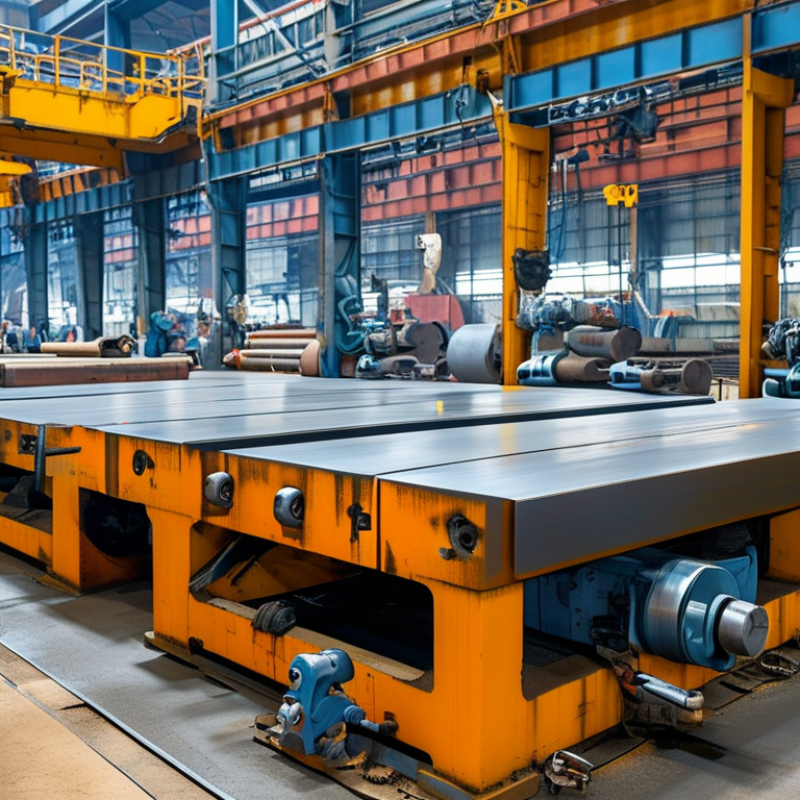
A plate leveling machine corrects uneven steel or metal plates after rolling, cutting, or welding. It uses several aligned rollers to apply controlled pressure across the plate. The upper and lower rollers work together, reducing waves, edge curl, and internal stress. The plate passes through the machine repeatedly or in one controlled feed. Its final flatness depends on material grade, thickness, width, and original distortion.

A reliable machine requires accurate roller alignment and stable hydraulic control. Operators normally inspect the plate surface before processing. They check thickness with calipers and measure flatness using a straightedge or digital gauge. Small adjustments to roller gaps can prevent overcorrection. This matters when handling high-strength steel, because excessive pressure may leave new marks or stress. Experience still matters. Automatic settings are useful, but they cannot judge every irregular plate.

In fabrication workshops, leveling often improves cutting accuracy and welding fit-up. A flat plate sits more securely on a cutting table. It also reduces unwanted movement during assembly. However, no leveling machine repairs serious cracks or poor material quality. That limitation should remain clear. Sometimes, the first pass looks acceptable, yet measurements reveal a slight center wave. A second adjustment may be necessary. Regular roller inspection, cleaning, and calibration support consistent results and safer operation.

How Plate Leveling Machines Work

China Top Plate Leveling Machine Manufacturers

Plate leveling machines correct uneven steel by controlled plastic deformation. A plate passes through staggered upper and lower rolls. The rolls apply repeated bending, reversing the material’s curvature across its thickness. Small reductions accumulate until residual stress becomes more balanced. This is the working principle behind most heavy-plate leveling lines.

The operator sets roll gaps, pressure, speed, and entry geometry for each grade and thickness. A hot-rolled plate may show edge waves, center buckle, or camber. Sensors and trial passes help refine the settings. A practical check is simple: measure the gap beneath a cooled plate, then inspect its edges under straight lighting. The result is not always perfect.

Industry scale explains the demand. The World Steel Association reported 1.89 billion tonnes of crude steel production in 2023. Flat products require reliable downstream correction before fabrication. A 2024 report from the International Energy Agency also identifies steel efficiency and process optimization as important decarbonization opportunities. Leveling does not remove all production waste, but stable settings can reduce repeat passes and unnecessary trimming.

Manufacturers in China commonly configure machines for carbon steel, stainless steel, and high-strength plate. However, thicker material needs greater roll force and a stronger frame. Excessive pressure can create new waves or surface marks. That detail is often underestimated. Operators should verify flatness using documented tolerances, not visual judgment alone. Reference: World Steel Association, World Steel in Figures 2024; International Energy Agency, Iron and Steel Technology Roadmap updates.

China Top Plate Leveling Machine Manufacturers - How Plate Leveling Machines Work

Plate leveling machines repeatedly bend steel plate in alternating directions to reduce residual stress and improve flatness. The required leveling force increases with material strength, thickness, and plate width. The chart shows the specified minimum yield strength of common structural steel grades for plate thicknesses up to 16 mm.

China’s Leading Plate Leveling Machine Manufacturers

China’s leading plate leveling machine manufacturers combine practical engineering with large-scale production experience. Their equipment often serves steel service centers, fabrication workshops, and heavy manufacturing lines. Common designs include multi-roll leveling systems, hydraulic gap adjustment, and digital control panels. These features help correct bending, residual stress, and uneven plate surfaces.

From factory evaluations, the strongest manufacturers pay close attention to frame rigidity, roll alignment, and heat treatment quality. Operators also need clear settings for thickness, width, and material strength. A reliable supplier should provide test records, installation guidance, spare-part support, and measurable flatness results. No machine is perfect. Some suppliers still need better documentation and faster technical communication.

Tips: Ask for a sample leveling test before purchase. Check plate thickness, yield strength, and expected flatness. Inspect weld quality, bearing protection, and emergency-stop access. Request maintenance intervals in writing. A low price can become expensive when rolls wear early or calibration takes too long. Compare actual production data, not only catalog specifications.

Key Technologies Used by Chinese Manufacturers

China Top Plate Leveling Machine Manufacturers: Key Technologies Used by Chinese Manufacturers

China’s large steel base supports continuous investment in plate-processing equipment. The World Steel Association reported 1,019.1 million tonnes of Chinese crude steel output in 2023, about 54% of global production. This scale encourages manufacturers to develop leveling machines for shipbuilding, construction, pressure vessels, and heavy fabrication.

Control starts at entry. Many current systems combine servo-hydraulic roll-gap adjustment, load cells, and laser displacement sensors. These components measure plate thickness, force, and flatness during production. Closed-loop PLC control then adjusts the upper rolls within milliseconds.

Roll design is equally important.

Engineers use finite-element analysis to calculate roll deflection under heavy loads. Backup rolls, variable roll crowns, and segmented support structures help maintain a stable leveling zone. Some machines also use automatic gauge control, allowing operators to store recipes for different grades and thicknesses.

According to the International Energy Agency’s Energy Technology Perspectives 2024, digital monitoring and industrial efficiency remain major priorities for energy-intensive manufacturing. Better control can reduce repeated passes, though actual savings depend on plate condition and operator settings.

The data is not perfect. Thermal expansion can distort readings during long shifts. Sensor calibration may also drift.

Chinese manufacturers increasingly add temperature compensation, remote diagnostics, and production traceability to address these weaknesses. However, software cannot replace disciplined maintenance.

A practical acceptance test should check flatness across the full plate, not only at its center. Independent inspection against applicable steel standards remains essential. Performance claims need evidence from measured plates, force curves, and repeatability records, rather than catalog language alone.

How to Select a Reliable Chinese Manufacturer

Selecting a reliable Chinese plate leveling machine manufacturer requires more than comparing online prices. Begin by checking whether the factory builds machines in-house. Ask for workshop photographs, production records, and recent customer references. A serious manufacturer should explain roller materials, leveling accuracy, maximum plate thickness, and feeding speed clearly.

Request a live video inspection or visit the facility if possible. Watch how workers align the frame, finish welds, and protect electrical cabinets from dust. Small details matter. Ask for a trial using your actual plate grade and dimensions. The supplier should provide measurable results, including flatness data, machine settings, and test videos. Avoid accepting vague promises such as “high precision” without figures.

Review the technical contract carefully. It should list motor power, roller diameter, control components, spare parts, installation support, and delivery conditions. Check how quickly engineers answer difficult questions. Slow or copied replies can reveal weak technical support. My own early mistake was trusting polished brochures before checking machining capacity. The machine arrived well painted, but several settings needed adjustment. This was not a disaster, but it increased installation time. A dependable manufacturer admits limitations and records corrective actions. Confirm quality inspections before shipment, packaging for sea transport, and operator training. Also verify that documents match the regulations required in your destination market.

China Top Plate Leveling Machine Manufacturers - How to Select a Reliable Chinese Manufacturer
Evaluation Dimension Recommended Technical or Commercial Benchmark Evidence to Request Risk Signal Priority
Material Compatibility The machine should be matched to the actual material grade, yield strength, thickness, width, and coil or sheet format. Carbon steel, stainless steel, and aluminum require different process settings and roll configurations.
  • Completed material and application questionnaire
  • Force and torque calculation
  • Successful test report using the buyer's material
Specifications are provided only for thickness and width, with no reference to material strength or grade. High
Thickness and Width Capacity Confirm the usable thickness range, maximum strip or plate width, minimum workable thickness, and allowable thickness variation. The rated capacity should cover the application without operating continuously at its limit.
  • Detailed technical specification sheet
  • Load and capacity calculation
  • Sample production records for comparable material
The supplier lists only a maximum thickness and does not state the minimum thickness, width range, or material conditions. High
Leveling Accuracy Define the required flatness using an agreed measurement method, such as maximum deviation over a specified length. Accuracy depends on material properties, entry shape, roll condition, setup, and speed.
  • Factory acceptance test procedure
  • Flatness measurement method and tolerances
  • Before-and-after sample measurements
Claims such as “perfect leveling” or “zero error” are made without a test method or measurable tolerance. High
Leveling Roll Configuration Verify the number, diameter, pitch, material, surface finish, and adjustment method of the work rolls. More rolls do not automatically guarantee better results; configuration must suit the material and thickness range.
  • Roll arrangement drawing
  • Roll material and hardness information
  • Adjustment and maintenance instructions
The supplier refuses to provide a roll arrangement drawing or gives identical roll parameters for very different applications. High
Adjustment and Control System For demanding applications, consider independent roll-gap adjustment, automatic setup recipes, encoder feedback, overload protection, and clear operator controls. Manual systems may be suitable for simpler production requirements.
  • Electrical schematic and control-system description
  • Operating video or live demonstration
  • List of sensors, drives, and safety functions
Control functions are described with vague terms such as “fully automatic” without explaining what is measured or adjusted. High
Main Drive and Structural Strength Check motor power, gearbox rating, frame rigidity, bearing capacity, shaft diameter, and overload protection against the required material load and production speed.
  • Drive-system data sheet
  • Structural drawings and load calculations
  • Component certificates and inspection records
Motor power is emphasized, but there is no information about gearbox capacity, frame design, shafts, or overload protection. High
Manufacturing and Quality Control A reliable supplier should use documented incoming inspection, machining control, assembly inspection, electrical testing, and final performance testing. Quality processes should be repeatable rather than dependent on individual workers.
  • Quality-control plan
  • Inspection and test records
  • Calibration records for measuring equipment
  • Factory audit access
No inspection records are available, or the supplier cannot explain how critical dimensions and alignment are controlled. High
Standards and Compliance Electrical, mechanical, and safety requirements should be defined for the destination country. The machine should include guarding, emergency stops, warning labels, electrical documentation, and a risk assessment where applicable.
  • Declaration and compliance documentation when applicable
  • Risk assessment
  • Electrical test report
  • Safety-device checklist
Compliance marks are shown without supporting documents, or safety devices are treated as optional. High
Factory Acceptance Testing Use a written acceptance test covering dimensions, unloaded operation, loaded operation, leveling performance, noise, vibration, safety functions, and documentation before shipment.
  • Signed factory acceptance test protocol
  • Test videos with date and machine identification
  • Recorded production samples
The supplier requests final payment without allowing inspection, testing, or review of objective test results. High
After-Sales Service Evaluate installation support, commissioning, operator training, troubleshooting response, remote assistance, and availability of mechanical and electrical spare parts.
  • Service-level agreement
  • Spare-parts list and recommended stock
  • Training and commissioning plan
  • Response-time commitment
Support is promised verbally, but no response time, spare-parts policy, or commissioning scope is included in the contract. High
Spare Parts and Maintainability Critical consumables and wear parts should be identified in advance. The design should allow practical access to rolls, bearings, lubrication points, sensors, and electrical components.
  • Recommended spare-parts list
  • Maintenance schedule
  • Exploded assembly drawings
  • Part numbers and lead times
Parts are described only by informal names, or replacement components have no identifiable specification or lead time. Medium
Delivery Scope and Installation The quotation should clearly state machine dimensions, shipping weight, foundation requirements, utilities, included accessories, installation boundaries, and commissioning responsibilities.
  • General arrangement drawing
  • Utility and foundation requirements
  • Commercial scope-of-supply list
  • Installation schedule
Important accessories, electrical cabinets, tooling, or commissioning services are excluded from the quotation without clear disclosure. High
Commercial Contract Protection Use milestone payments linked to design approval, production progress, factory testing, shipment, and final acceptance. Specify warranty duration, exclusions, delay remedies, and acceptance criteria.
  • Detailed purchase contract
  • Milestone payment schedule
  • Warranty terms
  • Acceptance and dispute-resolution clauses
The supplier requires a large non-refundable advance payment and refuses measurable acceptance criteria. High
Supplier Verification Verify legal business information, manufacturing location, technical personnel, export experience, production capability, and whether the supplier is a manufacturer or a trading intermediary.
  • Business registration information
  • Factory video inspection or third-party audit
  • Organization and production-capacity overview
  • Reference projects with permission to contact
Factory addresses, company documents, payment details, or technical contacts change during negotiation without a clear explanation. High
Total Cost of Ownership Compare purchase price together with shipping, installation, energy use, tooling, planned maintenance, spare parts, downtime risk, and operator training. The lowest initial price is not necessarily the lowest operating cost.
  • Five-year operating-cost estimate
  • Energy and maintenance assumptions
  • Spare-parts pricing
  • Expected production capacity
The quotation has an unusually low price but omits commissioning, safety equipment, spare parts, testing, or technical documentation. Medium