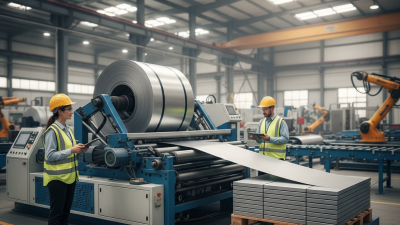

Choosing an automatic cut to length machine is not simply a matter of comparing speed, price, and advertised capacity. The correct choice depends on your material, required tolerances, production volume, and future workload. A machine that performs well with thin aluminum may struggle with heavy steel coils. That difference becomes visible on the shop floor: uneven cuts, damaged surfaces, excess scrap, and frequent setup adjustments.
Dr. Shigeo Shingo, a respected manufacturing engineer, said, “The most dangerous kind of waste is the waste we do not recognize.” His observation is highly relevant when evaluating an automatic cut to length machine. Hidden waste may come from slow coil changes, inaccurate feeding, excessive maintenance, or software that operators find difficult to use. These details rarely appear in a basic sales brochure. They deserve careful attention.
Look closely at the complete process. Check the machine’s leveling accuracy, servo control, shear design, line speed, and material range. Ask for test-cut results using your actual coil specifications. Speak with operators, not only sales representatives. Their experience can reveal practical weaknesses.
A perfect machine does not exist.
Even experienced buyers can misjudge future production needs. I have seen equipment selected for today’s orders become restrictive after a few months of growth. Reliable suppliers should explain limitations honestly, provide service support, and document safety procedures clearly. The best decision balances measurable performance with real operating conditions. This approach creates a more dependable investment and reduces costly surprises after installation.
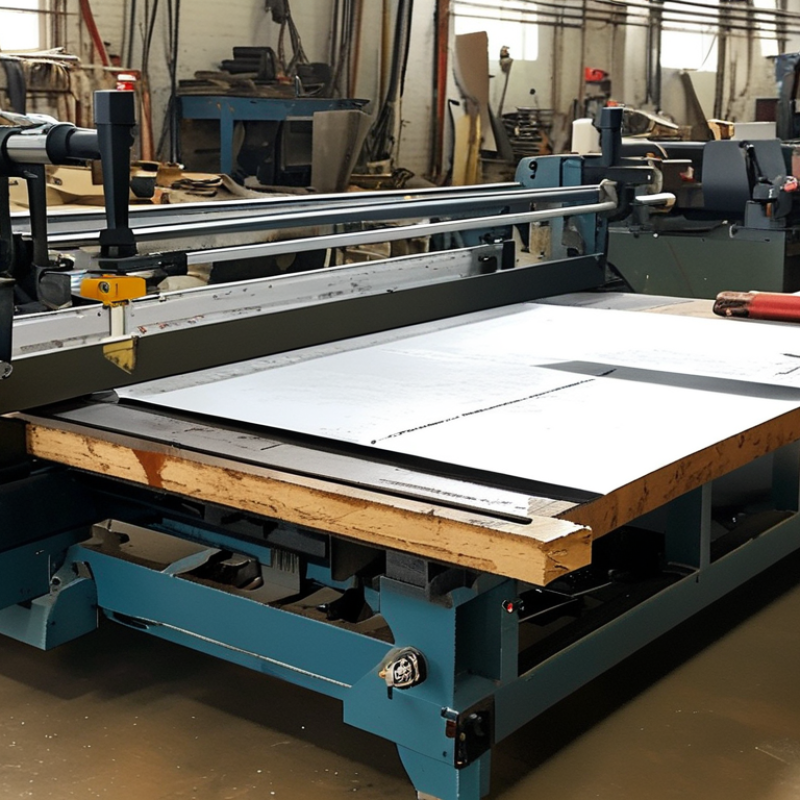
Choosing an automatic cut to length machine starts with the material, not the machine catalog. Identify whether the input is carbon steel, stainless steel, aluminum, or coated sheet. Each material behaves differently during feeding, leveling, and cutting. Hard steel may need stronger straightening force. Soft aluminum can mark easily. Surface protection matters too.
Measure the actual thickness range and coil width. Do not use only the average value. A line designed for 1.2 mm sheet may struggle with occasional 2.0 mm material. Record minimum and maximum widths, coil weight, inner diameter, and outer diameter. These details affect the uncoiler, rollers, drive power, and cutting capacity. Small errors here become expensive downtime.
Set the target cut length and its acceptable tolerance before comparing equipment. For example, a 2,000 mm panel with a ±1 mm tolerance requires more control than a general fabrication cut. Check how the machine measures length, controls feeding speed, and compensates for material slip.
A clean factory floor helps, but real production includes dust, temperature changes, and uneven coils. I have seen specifications look perfect while actual samples failed at the edges.
That is a useful warning.
Request trial cutting with your own material and inspect several consecutive sheets. Measure length at multiple points, check squareness, and review burrs. A wider tolerance may reduce cost, but it should never be accepted without confirming the finished product’s requirements.
Choosing an automatic cut to length machine starts with the production target.
Servo accuracy of ±0.1 mm sounds impressive, but accuracy depends on the entire line. Material tension, roller pressure, blade condition, and feeding stability can change the final length. That difference matters.
In a controlled trial, measure at least 30 pieces from one production batch. Use a calibrated digital caliper, and record the average deviation and maximum error. A reliable servo system should return the material to the programmed position without visible drift.
However, thin sheet, flexible profiles, or uneven coils may still create variation. The machine cannot correct every upstream problem.
Cutting speeds up to 120 cuts per minute can increase output significantly. Yet this figure usually applies to short lengths, light materials, and simple cutting cycles. Longer parts require more feeding time. Heavy stock also needs slower acceleration and stronger clamping.
In practice, a machine running at 85 cuts per minute may outperform a faster system that stops frequently.
Ask for a live test using your actual material, thickness, and target length. Watch the cut surface, noise, vibration, and rejected pieces. Reality is less tidy. A ±0.1 mm specification may describe positioning accuracy, not every finished part. Measure it before committing.
How to Choose an Automatic Cut to Length Machine?
Match the decoiler, straightener, and shear to your coil specifications, not only the target sheet size. The World Steel Association’s World Steel in Figures 2024 reports about 1.89 billion tonnes of crude steel production in 2023. This scale reflects wide material variation across today’s processing lines. Record coil thickness, width, weight, outside diameter, yield strength, and surface condition. A decoiler rated for 10 tonnes may struggle with a dense, narrow coil. Check mandrel expansion range and braking capacity carefully. Small gaps here create large operating problems.
The straightener must handle both thickness and yield strength. Its roller diameter, number of rolls, and adjustment range affect flatness. A useful starting point is selecting capacity at least 15% above the heaviest regular coil. This margin is not universal. High-strength steel may need more. The shear also requires attention. Compare maximum thickness, cutting width, line speed, and cut-length accuracy. ISO 16120-2:2024 highlights how steel wire rod properties can vary by grade, reminding buyers that material strength should guide equipment selection. In practice, I would request a trial run using the hardest and widest planned coil. Catalog figures can look reassuring.
Tips: Build a coil-to-machine capacity table before requesting quotations. Include normal and worst-case values. Ask for measured test results, not only rated capacity. Leave space for future grades. Operators often discover that the “ideal” specification was too optimistic.
| Typical Application | Material | Coil Thickness | Coil Width | Coil ID / OD | Coil Weight | Recommended Decoiler Capacity | Straightener Recommendation | Shear Capacity | Typical Cut-Length Range |
|---|---|---|---|---|---|---|---|---|---|
| Light-gauge panels and HVAC components | Carbon steel, galvanized steel | 0.30–0.80 mm | 600–1,250 mm | 508 / 1,500 mm | 3–8 t | 8 t minimum Hydraulic expansion |
5–7 rolls Working range up to 1.0 mm |
0.8 mm carbon steel at rated width |
300–6,000 mm |
| Roofing sheets and general fabrication | Galvanized steel, pre-painted steel | 0.50–1.20 mm | 800–1,500 mm | 508 / 1,600 mm | 5–10 t | 10 t minimum Motorized expansion |
7 rolls Working range up to 1.5 mm |
1.2 mm carbon steel at rated width |
500–8,000 mm |
| Automotive and appliance blanks | Low-carbon steel, high-strength steel | 0.80–2.00 mm | 1,000–1,600 mm | 508 / 1,800 mm | 8–15 t | 15 t minimum Hydraulic expansion and braking |
7–9 rolls Working range up to 2.5 mm |
2.0 mm carbon steel at rated width |
500–6,000 mm |
| Structural components and support brackets | Carbon steel, pickled and oiled steel | 1.50–3.00 mm | 1,000–2,000 mm | 508 / 2,000 mm | 10–20 t | 20 t minimum Heavy-duty hydraulic expansion |
9–11 rolls Working range up to 3.5 mm |
3.0 mm carbon steel at rated width |
600–6,000 mm |
| Stainless-steel equipment and enclosures | Austenitic stainless steel | 0.50–1.50 mm | 800–1,500 mm | 508 / 1,600 mm | 5–12 t | 12 t minimum Surface-protected mandrel |
7–9 rolls Working range up to 2.0 mm |
1.5 mm stainless steel at rated width |
400–5,000 mm |
| Aluminum panels and lightweight components | Aluminum alloy sheet | 0.50–2.00 mm | 800–1,600 mm | 508 / 1,800 mm | 3–10 t | 10 t minimum Low-tension control |
7–9 rolls Working range up to 2.5 mm |
2.0 mm aluminum at rated width |
500–8,000 mm |
Throughput starts with a simple production calculation. Divide line speed by cut length to estimate cuts per minute. For example, a line running at 30 meters per minute can produce 15 pieces per minute when each cut measures 2 meters. That equals 900 pieces per hour before interruptions. The result is theoretical, not guaranteed.
Changeover time changes the real number. An eight-hour shift contains 480 minutes. If operators spend 20 minutes changing material, cleaning guides, and entering new settings, only 460 minutes remain. At 15 cuts per minute, expected output becomes 6,900 pieces per shift. This calculation helps compare machines with different cutting speeds, feeding systems, and setup procedures. Record actual changeovers on the factory floor, not only in supplier specifications.
Small losses matter. Acceleration, blade replacement, sensor checks, material curling, and rejected pieces can reduce output further. A practical estimate should include an efficiency factor, such as 90 percent. In the example, 6,900 pieces becomes about 6,210 acceptable pieces. That estimate may still be optimistic.
We once treated every changeover as equal, but material thickness made some setups twice as slow. Measure several production runs before choosing a machine. A suitable system should maintain accurate length control while making adjustments quick, visible, and repeatable. Operators should also have clear access to emergency controls and routine maintenance points.
How to Choose an Automatic Cut to Length Machine?
Safety should begin with IEC 60204-1, not with the machine’s price. Check protective bonding, emergency-stop circuits, guarded cutting areas, and restart prevention. The control system should detect open guards and stop motion quickly. Ask for the risk assessment, wiring diagrams, and validation records. CE marking also requires a documented conformity process, technical file, and Declaration of Conformity. A CE logo alone proves very little.
Controls deserve close inspection. A PLC, encoder, and clear HMI should maintain length accuracy during speed changes. Operators need visible alarms, recipe storage, manual jog control, and password protection. Deloitte’s 2024 Smart Manufacturing and Operations Survey reported that 86% of manufacturers see smart manufacturing as a major competitiveness driver within three years. That figure supports connected controls, but connectivity should not replace basic safety. Keep local controls usable.
Total cost includes more than purchase price. Compare blade life, calibration intervals, compressed-air use, energy demand, training, spare parts, and planned downtime. A machine that saves two seconds per cut may still lose money if setup takes twenty minutes. The calculation can be uncomfortable. A low quotation often looks attractive, but that judgment may be wrong. Request a three-year cost model using your actual material width, cutting rate, shift pattern, and scrap percentage. The U.S. Department of Energy’s Better Plants program repeatedly emphasizes energy measurement as a practical route to industrial savings. Measure before promising.
A practical 100-point procurement model for evaluating IEC 60204-1 safety, CE conformity, controls, cutting performance, and total cost of ownership.
The weighting is a screening framework rather than manufacturer-specific data. IEC 60204-1 covers the electrical equipment of machinery, while CE marking indicates conformity with applicable European Union requirements. Verify the machine’s technical file, risk assessment, declaration of conformity, control functions, accuracy, maintenance needs, energy use, and lifetime operating costs before purchase.