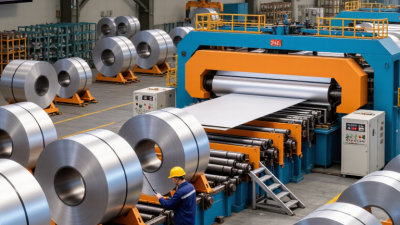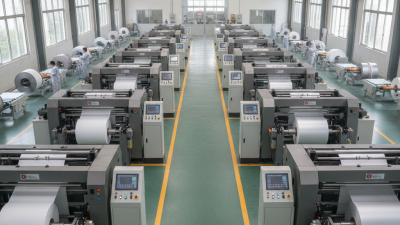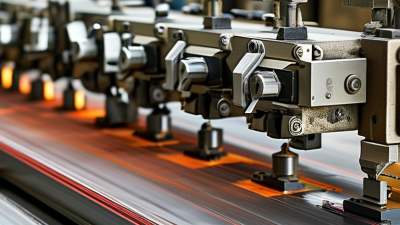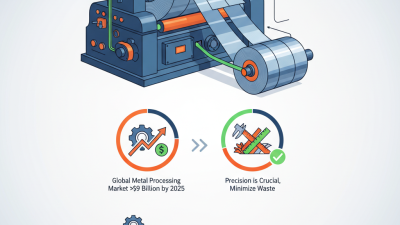

Choosing a steel slitting machine is not simply a matter of comparing prices or maximum coil width. The correct decision begins with the material. Steel grade, thickness, tensile strength, coil weight, strip width, and required edge quality all influence the machine design. A line that performs well on mild steel may struggle with high-strength steel or thin-gauge material.
“Slitting performance is decided at the knife, but profitability is decided by the entire line,” says Michael J. Collins, a veteran steel-processing engineer. His observation deserves attention. A reliable steel slitting machine must coordinate decoiling, tension control, knife positioning, recoiling, and material handling. Small weaknesses can become visible defects. Uneven edges. Telescoped coils. Surface scratches. Production delays.
Look closely at the knife arbor, separator system, braking method, and automatic tension controls. Ask the manufacturer for trial results using your actual steel coils. Brochures are useful, but they rarely show every limitation. A machine rated for 2,000 millimeters may not deliver stable accuracy at every thickness. That detail is easy to overlook.
Safety also belongs in the selection process. Guarding, emergency stops, maintenance access, and operator training should be evaluated before purchase. Energy use and changeover time matter too. They quietly affect operating costs every day.
There is no perfect machine for every factory. Your priorities may change. A careful evaluation should compare present production needs with future coil sizes, tolerances, and automation goals. The best choice is usually the machine that performs consistently, not the one with the longest feature list.
How to Choose a Steel Slitting Machine?
Define the Material, Thickness, Width, and Coil Requirements
When choosing a steel slitting machine, begin with the material, not the machine catalogue. Steel, stainless steel, aluminum, and coated strip each react differently during slitting. Record tensile strength, yield strength, surface finish, and hardness. These details influence knife clearance, shaft design, tension control, and burr formation. A mill certificate is useful, but a real coil trial is more revealing. Small differences matter.
Thickness determines more than cutting force. It affects knife overlap, spacer accuracy, strip stability, and the risk of edge wave. List the minimum and maximum gauges separately. A machine designed for 0.3-millimeter strip may struggle with 3-millimeter stock. Width requires equal care. Specify incoming coil width, finished slit width, number of strands, and allowable width tolerance. Do not rely on average production data. One unusually narrow slit can expose weak tension control. That detail is easy to miss.
Coil requirements complete the selection. Provide inner diameter, outer diameter, maximum coil weight, and arbor loading method. Confirm whether the line must handle small remnant coils or only full-width master coils. Pay attention to coil shape, telescoping, and packaging damage. Ask for measured speed at your actual thickness, not an attractive empty-line figure. Operators also need safe threading, clear adjustments, and repeatable setup records. Sometimes a slower, steadier line produces better edges than a faster one. That trade-off deserves honest review before purchase.
Define the material, thickness, width, and coil requirements before selecting machine capacity.
The chart shows typical planning envelopes for common steel coil materials. Select a machine that covers the required maximum strip width and material thickness, while also checking the maximum coil mass, slitting width, yield strength, and tooling configuration. These values are representative industry ranges and should be confirmed against the actual coil certificates and production schedule.
Choosing a steel slitting machine starts with production facts, not catalog promises. Measure the required coil width, thickness, weight, material strength, and monthly output. A machine rated for 1,500 millimeters may still perform poorly with heavy, high-strength coils. Capacity must cover the real workload, including setup time and changeovers.
Match the slitting line to your product mix. A narrow-strip operation may need more knives, precise spacers, and reliable tension control. Wider strips may require stronger shaft support and greater recoiler torque.
Check the entry pay-off, slitter head, scrap winder, recoiler, and exit handling as one system. They must work together. A fast line is useless if the recoiler cannot maintain stable coil shape.
Think about tomorrow’s orders.
Operators should also review automation, safety guarding, maintenance access, and spare-part availability. Simple controls can reduce training time, but advanced systems may improve repeatability. In my experience, buyers often overestimate speed and underestimate coil change time. This is where plans become less accurate. Leave practical capacity below the maximum rating, perhaps by 15 to 25 percent, depending on material and setup complexity. Review sample coils with the machine builder before purchase. Real steel behavior can differ from test data. A careful trial may reveal edge burrs, tension variation, or unstable winding that specifications do not show.
Choosing a steel slitting machine requires more than checking its maximum coil width. Blade design, tension control, and strip accuracy directly affect production stability.
Select a blade system that matches the steel grade, thickness, and required slit width. Razor blades suit thinner materials, while circular knives offer better control on heavier steel. Check arbor rigidity, spacer quality, and knife positioning. Even a small clearance error can create burrs, edge wave, or uneven widths. I have found that clean, repeatable setup matters more than impressive speed ratings. However, operator judgment still influences the result.
Tension control keeps the strip stable as it passes through the line. Look for responsive braking, reliable sensing, and consistent winding pressure. Excessive tension may stretch the strip or damage delicate edges. Low tension can cause telescoping coils and loose wraps. Measure slit width, camber, burr height, and coil hardness during trials. Do not rely only on the machine display. A calibrated gauge often reveals small errors that the control panel misses. No setup is perfect. Review the first coil carefully.
Tips: Test the hardest material first. Record blade gaps and tension settings. Inspect both coil edges under good light. If accuracy drifts, check the tooling before increasing speed.
How to Choose a Steel Slitting Machine?
Automation should reduce variation, not remove human judgment. Check whether the machine controls tension, knife positioning, coil alignment, and speed automatically. Deloitte’s 2023 Global Smart Manufacturing Survey found that 86% of manufacturing executives viewed smart manufacturing as important for competitiveness. However, advanced controls are useful only when operators can understand them. Choose a system with clear alarms, recipe storage, remote diagnostics, and visible production data. Avoid complicated interfaces that require constant technical support.
Safety deserves equal attention. Ask for guarding around rotating shafts, interlocked access doors, emergency stops, and safe coil-loading procedures. ISO 12100 recommends systematic risk assessment throughout machine design. The U.S. Bureau of Labor Statistics recorded 5,283 fatal work injuries in 2023, showing why safety cannot be treated as paperwork. Operator access also matters. A worker should reach inspection points without leaning over moving material. Sightlines should remain clear during threading and changeovers. Small design details prevent rushed decisions.
Tips: Watch a live demonstration. Test the emergency stop. Ask how long routine cleaning takes. Check whether blades, sensors, and bearings are easy to inspect. Request maintenance intervals and training records. Predictive maintenance can help, but it is not magic. A 2024 maintenance survey by Plant Engineering reported that many facilities still rely heavily on preventive maintenance, despite growing interest in predictive tools. That suggests a practical compromise: select automation with simple manual checks. Perfect uptime is unrealistic. Choose equipment your team can maintain safely, every shift.
Choosing a steel slitting machine requires more than comparing cutting speed and quoted price. Supplier support can determine whether production continues after installation. Ask who handles technical questions, how quickly engineers respond, and where replacement parts are stored. Request operator training, commissioning assistance, and maintenance procedures in writing. During plant evaluations, I also contact users processing similar steel grades. Their experience often reveals delays hidden in sales discussions. Silence is expensive.
Compare total cost, not only the equipment invoice. Include freight, installation, electrical upgrades, tooling, software, training, spare blades, energy use, scrap, and planned maintenance. Calculate costs over five years using your actual coil widths, thicknesses, and monthly output. Ask the supplier to explain changeover time and expected material yield. A lower-priced machine may require more setup labor or create higher edge-trim waste. A clean spreadsheet can still mislead.
Future expansion deserves careful attention. Check whether the machine can accept additional slitters, wider coils, automatic packaging, or upgraded controls. Confirm available floor space, power capacity, and software compatibility before signing. Ask for a realistic upgrade path, not a vague promise. Growth is not guaranteed. I would avoid paying for unused capacity, yet a narrowly configured machine may limit new orders later. Review demand forecasts with production and maintenance teams, then challenge your own assumptions. Forecasts are often wrong.
| Evaluation Dimension | Option A: Standard Entry-Level Line | Option B: Mid-Range Production Line | Option C: Modular High-Performance Line | Why It Matters |
|---|---|---|---|---|
| Typical Input Material | Carbon steel, galvanized steel, pre-painted steel | Carbon steel, stainless steel, galvanized steel, coated steel | Carbon steel, stainless steel, electrical steel, coated and high-strength grades | Material grade, yield strength, surface finish, and coil width determine machine loading and tooling requirements. |
| Typical Thickness Range | 0.30–2.00 mm | 0.20–3.00 mm | 0.15–6.00 mm, depending on configuration | Actual capability depends on steel strength, strip width, knife diameter, tension control, and line design. |
| Typical Maximum Coil Width | 1,250–1,600 mm | 1,600–2,000 mm | 2,000–2,200 mm or customized | The maximum width should be selected from the company’s current coil mix and realistic expansion plan. |
| Typical Maximum Coil Weight | 10–15 tonnes | 15–25 tonnes | 25–35 tonnes or customized | Higher coil weight requires stronger decoiler, hydraulic handling equipment, braking capacity, and foundation support. |
| Typical Line Speed | 80–150 m/min | 120–250 m/min | 200–400 m/min | Rated speed is not the same as production output; setup time, coil changes, threading, and scrap affect actual throughput. |
| Slit-Width Accuracy | Typically ±0.10–0.20 mm under suitable conditions | Typically ±0.05–0.10 mm under suitable conditions | Typically ±0.03–0.08 mm under suitable conditions | Accuracy depends on knife quality, spacer control, tension stability, strip flatness, and operator setup. |
| Automation Level | Manual or semi-automatic setup; basic PLC control | PLC control with automatic tension control and assisted setup | Recipe management, automatic setup functions, advanced tension control, and production data interfaces | Automation can reduce setup errors and labor demand, but it increases initial cost and integration requirements. |
| Supplier Technical Support | Remote commissioning and standard operating documentation | Remote support plus site commissioning and operator training | Application engineering, site acceptance testing, process optimization, and scheduled service options | Confirm response times, spare-parts availability, troubleshooting procedures, and whether travel costs are included. |
| Operator Training | Usually 1–3 days for basic operation and safety | Usually 3–5 days covering setup, slitting quality, and maintenance | Usually 5–10 days covering recipes, tooling, diagnostics, maintenance, and process optimization | Training should include knife setup, tension adjustment, coil handling, lockout procedures, and quality checks. |
| Spare-Parts Strategy | Common wear parts supplied as a basic starter kit | Starter kit plus recommended inventory for critical sensors, bearings, and cutting tools | Critical-parts list, preventive replacement plan, remote diagnostics, and longer-term service support | Ask for lead times and compatibility of electrical, hydraulic, pneumatic, and control-system components. |
| Estimated Initial Investment | USD 150,000–350,000 | USD 300,000–700,000 | USD 650,000–1,500,000+ | Indicative ranges exclude or vary by freight, duties, installation, building modifications, tooling, and automation scope. |
| Installation and Commissioning Allowance | Approximately 8–15% of equipment price | Approximately 10–18% of equipment price | Approximately 12–22% of equipment price | Budget for foundation work, electrical service, crane access, compressed air, commissioning, training, and acceptance testing. |
| Five-Year Operating Cost Profile | Lower purchase cost, but potentially higher labor and setup-related scrap | Balanced cost profile for regular production and mixed orders | Higher capital cost, but lower unit cost at high utilization and demanding quality levels | Total cost of ownership includes energy, labor, tooling, maintenance, downtime, scrap, training, and financing. |
| Energy and Utility Demand | Low to moderate; generally suitable for standard industrial power systems | Moderate; requires adequate electrical capacity and hydraulic or pneumatic services | Moderate to high; electrical capacity, cooling, compressed air, and material-handling systems must be verified | Request connected load, average consumption assumptions, and utility requirements before finalizing the facility layout. |
| Future Expansion Options | Limited; expansion may require replacement of the decoiler, recoiler, drives, or control system | Good; commonly supports additional tooling, automation modules, and selected capacity upgrades | Strong; modular tension, inspection, packaging, automation, and material-handling upgrades are more feasible | A machine should be evaluated as a platform, not only as a standalone purchase. |
| Best Fit | Small-volume processing, limited product variety, and price-sensitive entry into steel service | Growing processors requiring flexibility, dependable quality, and controlled total cost | High-volume production, demanding tolerances, multiple steel grades, and long-term capacity planning | The best choice depends on utilization, order mix, required tolerances, labor availability, and planned growth. |
| Suggested Commercial Checks | Confirm actual sample-cut results, warranty coverage, training scope, and availability of standard wear parts | Request a full test protocol, guaranteed tolerances, commissioning schedule, and five-year spare-parts estimate | Define acceptance criteria, uptime assumptions, integration responsibilities, software support, and expansion pricing | Compare written commitments rather than relying only on catalog ratings or verbal assurances. |
| Planning note: The numerical ranges are common preliminary budgeting benchmarks for steel slitting lines and should not replace a supplier’s engineering proposal. Final selection should be based on verified coil data, sample trials, guaranteed production requirements, site conditions, total cost of ownership, and documented after-sales support. | ||||