
Choosing the best China flying shear cutting machine requires more than comparing prices, motor power, or catalog photographs. A suitable machine must match the production line, material grade, strip thickness, cutting length, and required speed. In a real steel plant, these details decide whether the cut is clean or uneven.
According to steel-processing engineer Dr. Wei Zhang, “A flying shear performs best when cutting accuracy, timing control, and line stability work together.” This practical observation matters because a high-speed machine can still produce poor results when sensors respond slowly or the blade gap is incorrectly adjusted. The best flying shear cutting machine should provide reliable synchronization between the encoder, servo motor, shear head, and conveyor system. It should also handle repeated acceleration without creating excessive vibration.
Look closely.
A useful evaluation should examine blade material, maximum strip width, cutting tolerance, maintenance access, control-system brand, and spare-parts availability. Operators should also inspect the machine’s frame, weld quality, cable protection, and emergency-stop design. These physical details often reveal more than promotional claims. Supplier experience is equally important. A manufacturer with proven installations can usually offer better commissioning support and clearer troubleshooting guidance.
Still, no machine is perfect. A model designed for thin carbon steel may struggle with thicker stainless steel. A faster line may demand more frequent maintenance. Buyers sometimes focus too heavily on output speed and overlook downtime risk. That is a mistake worth reconsidering. This guide compares key technical factors, operating conditions, and supplier capabilities to identify which Chinese flying shear cutting machine offers the most balanced, dependable value.
What Is a China Flying Shear Cutting Machine?
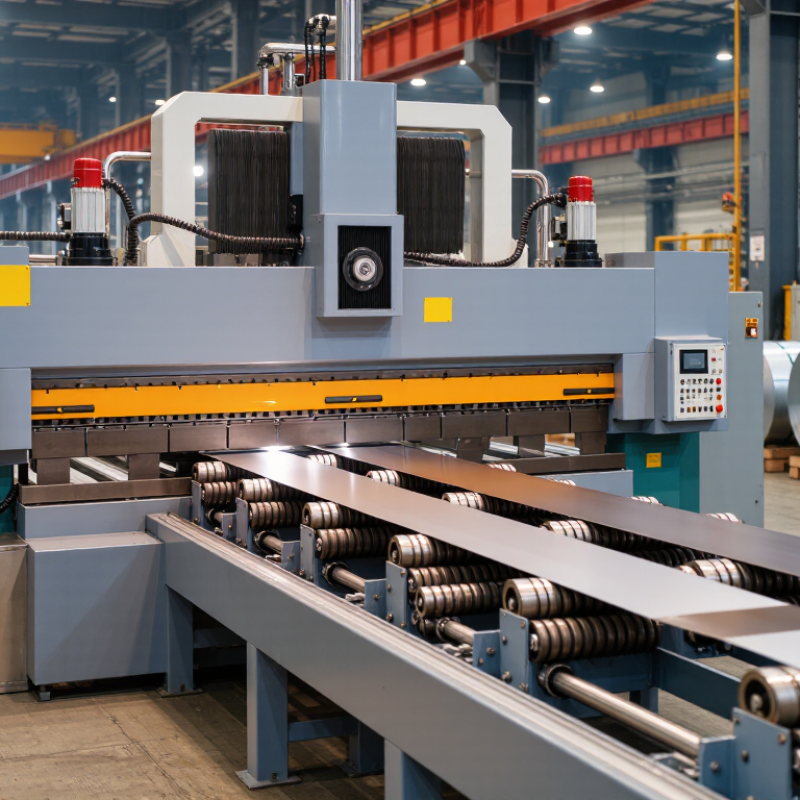
A China flying shear cutting machine cuts moving metal strip without stopping the production line. Its blades travel with the strip during cutting. China describes its manufacturing origin, not a separate cutting principle. The machine usually works after a rolling mill, leveler, or coil-processing line. It can produce fixed-length sheets, crop damaged ends, or separate bundles. A servo motor, encoder, and control system coordinate blade movement precisely. The line keeps moving.
Scale matters here. World Steel Association’s World Steel in Figures 2024 reports that China produced about 1.02 billion tonnes of crude steel in 2023. Such output creates strong demand for fast, repeatable cutting equipment. In practical commissioning, operators should check blade clearance, acceleration, strip tension, and cut-length accuracy. A clean cut is not guaranteed by speed alone. Thick material may need slower motion and stronger tooling. Thin strip can wrinkle when tension control is poor. Catalog claims sometimes look too perfect. Real lines are less forgiving.
Tips: Confirm the material range before ordering. Ask for witnessed tests using your actual thickness and grade. Measure burr height, length tolerance, and noise during trials. Review safety functions against ISO 12100 and electrical requirements under IEC 60204-1. Keep spare blades available. Small delays become expensive when a continuous line stops. Remember, the cheapest machine may not deliver the lowest operating cost.
A flying shear cutting machine cuts moving metal without stopping the production line. This action protects output speed and reduces unnecessary strip deformation. In practical use, the machine needs accurate information about strip position, speed, and length. An encoder measures movement continuously. Sensors confirm the material’s entry and alignment.
The control system calculates when the shear should accelerate. Servo-driven blades then match the strip speed before cutting. The upper and lower knives cross the material during this synchronized movement. After the cut, the carriage returns to its starting position. The cycle repeats for each programmed length. Timing matters greatly. Even a small error can create uneven parts or excessive scrap.
Operators usually adjust cutting length, material thickness, and line speed through the control interface. Before production, I would check blade clearance, encoder readings, and strip alignment. These checks reveal problems early. However, perfect results are not guaranteed. Material tension can change during a coil, and vibration may affect cut accuracy. That weakness deserves attention. Regular blade inspection, clean sensors, and careful calibration improve reliability. A well-designed flying shear should also provide guarded access, emergency stopping, and clear maintenance procedures. Safety cannot depend only on operator experience.
| Evaluation Dimension | Typical Technical Data | How It Affects Performance | Selection Notes |
|---|---|---|---|
| Operating Principle | A servo-driven blade or shear carriage moves with the continuously traveling strip during the cutting cycle. | The workpiece can be cut without stopping the production line, supporting continuous or high-speed processing. | Choose a flying shear when line productivity is more important than the lowest initial equipment cost. |
| Suitable Materials | Carbon steel, stainless steel, galvanized steel, aluminum, and other coil-fed metals, depending on tooling. | Material strength, hardness, surface coating, and thickness determine the required cutting force and blade design. | Confirm the material grade and mechanical properties before selecting the drive and blade configuration. |
| Typical Material Thickness | Approximately 0.3–6.0 mm for many coil-processing applications; actual capacity depends on material and machine design. | Thicker or stronger material requires greater cutting force, stronger frames, and more robust tooling. | Use the maximum production thickness rather than the occasional maximum thickness as the main sizing reference. |
| Typical Strip Width | Approximately 300–2,000 mm, with the useful range determined by the production line and blade length. | The working width affects frame rigidity, blade arrangement, line layout, and overall machine footprint. | Allow additional clearance for guides, guarding, maintenance access, and future product sizes. |
| Line Speed | Commonly about 20–120 m/min; high-speed lines may require higher performance and specialized synchronization. | Higher speed demands faster servo response, accurate position feedback, and coordinated control with upstream equipment. | Specify both the normal operating speed and the required peak speed when requesting a quotation. |
| Cut-Length Accuracy | Often around ±0.5–1.0 mm under stable material, speed, and calibration conditions. | Accuracy is influenced by encoder resolution, strip slippage, tension stability, blade clearance, and control tuning. | Request test-cut records using the actual material, thickness, speed, and target length. |
| Drive and Synchronization | Servo motor with encoder feedback and PLC-based synchronization is commonly used. | Closed-loop control keeps the cutting motion aligned with strip speed and improves repeatability. | Prioritize stable motion control, accessible parameter settings, and protection against encoder or sensor faults. |
| Cutting Modes | Common modes include fixed-length cutting, batch cutting, emergency cutting, and automatic recipe-based production. | Multiple modes allow the same line to process different orders and reduce manual adjustment time. | Verify that the control system supports the required length range, batch quantity, and changeover procedure. |
| Blade Configuration | Flying shear systems may use guillotine, rotary, or other application-specific blade arrangements. | Blade geometry affects cut quality, burr formation, noise, maintenance frequency, and compatible material thickness. | Select the blade type according to material strength, thickness, cut edge requirements, and production speed. |
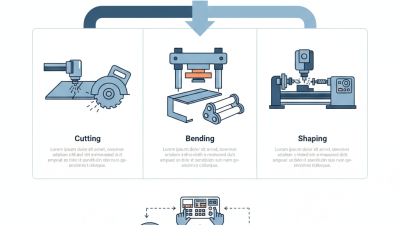
| Cutting Sequence | Measure strip travel, calculate the cut position, accelerate the shear carriage, perform the cut, and return it for the next cycle. | Correct timing and acceleration profiles minimize length error and prevent marks on the moving strip. | A demonstration should show the complete sequence at the intended production speed. |
| Electrical Supply | Industrial three-phase power is commonly used; voltage and frequency must match the installation site. | Correct electrical matching supports reliable operation and prevents drive, motor, and control-system problems. | Confirm the local power standard, total connected load, cabinet requirements, and grounding method. |
| Safety Features | Typical features include guarding, emergency stops, safety interlocks, overload protection, and fault alarms. | Safety systems reduce access to moving blades and help stop the equipment during abnormal conditions. | Check compliance with the safety requirements applicable in the installation country and industry. |
| Maintenance Requirements | Routine work may include blade inspection, fastener checks, lubrication, sensor cleaning, alignment, and calibration. | Regular maintenance preserves cut accuracy, reduces unplanned downtime, and extends component life. | Evaluate spare-parts availability, maintenance access, technical documentation, and remote support capability. |
| Best-Fit Application | Continuous coil lines, cut-to-length lines, metal forming lines, and other processes requiring synchronized cutting. | The machine is most valuable where stopping the strip would reduce throughput or cause process instability. | The best machine is the one whose capacity, accuracy, safety, and service support match the complete line—not simply the lowest-priced option. |
Note: The figures shown are typical reference ranges for general industrial applications. Final specifications should be confirmed through a technical review based on material grade, thickness, width, line speed, cut length, and required accuracy.
The best China flying shear machine is defined by control, accuracy, and stable production. World Steel Association data reports 1,882.6 million tonnes of crude steel production in 2023. That volume demands reliable cutting systems, not impressive brochures.
A strong machine uses servo synchronization between the flying carriage and material speed. The encoder should detect small speed changes before cutting begins. A rigid frame reduces vibration around the blade. High-quality PLC control supports repeatable lengths, while automatic gap adjustment suits different coil thicknesses.
Cutting accuracy should remain consistent at production speed, not only during testing.
Safety guarding, emergency stops, and clear fault alarms are essential. They protect people and reduce costly interruptions.
Tips:
Ask for a witnessed trial using your actual material. Check cut-length tolerance, cycle speed, blade life, and changeover time. McKinsey reports that predictive maintenance can reduce downtime by 30% to 50%. Therefore, remote diagnostics and condition monitoring deserve serious attention.
However, the figure is not guaranteed. Poor sensors, incorrect setup, or untrained operators can weaken the result. No machine is perfect.
A cheaper model may perform well on thin steel but struggle with thicker sections. Request maintenance records, electrical drawings, spare-part lead times, and operator training details.
Small omissions can become large production problems.
Evaluating a Chinese flying shear machine manufacturer requires more than comparing quoted prices. In production, I would inspect cutting speed, strip thickness, accuracy, and line stability. Ask for performance data from machines running similar materials. A reliable supplier should explain servo control, blade adjustment, and emergency stopping procedures clearly. Do not accept vague claims.
Check engineering evidence before signing a contract. Request drawings, motor sizing, blade material, tolerance records, and a detailed spare-parts list. During a factory video call, watch the machine cutting real material, not only an edited demonstration. Ask for test samples using your actual strip width and thickness. Measure cut length, burrs, squareness, and repeatability. Real proof matters more. However, my own evaluation can be imperfect. A clean factory visit may not reveal slow technical support after delivery.
Review service capacity with the same care as mechanical design. Confirm installation methods, remote troubleshooting, training hours, warranty coverage, and response times in writing. Speak with recent customers about delivery accuracy and unresolved faults. Ask whether electrical components are locally available in your market. Examine packing photos, inspection reports, and final acceptance records. A strong manufacturer should welcome these questions, even when small weaknesses appear. Clear documentation often reveals more than polished sales language.
This weighted evaluation model emphasizes the factors that most directly affect flying shear performance: cutting accuracy, stable line speed, safety compliance, machine durability, system integration, and after-sales support. Buyers should verify technical claims through test-cut results, documented quality procedures, applicable safety standards such as ISO 12100 and IEC 60204-1, spare-parts availability, and service response commitments.
China flying shear cutting machines serve industries that process continuous metal coils at high speed. Steel service centers use them to cut sheets for construction frames, roofing panels, and fabricated components. The machine cuts moving material without stopping the production line. This helps reduce scrap and keeps coil-processing operations steady.
Automotive suppliers often use flying shears for blanks, brackets, and formed body parts. Appliance factories process coated steel for refrigerator panels, washing machine housings, and oven components. Electrical equipment manufacturers also depend on accurate cuts for cabinet panels and structural parts. Solar mounting systems can require similar production, especially when long steel strips must be divided into repeatable lengths.
In practice, material thickness, line speed, and cut tolerance determine machine suitability. A powerful shear is not always the best choice. Sensors must track strip position, while the control system must adjust timing during speed changes. Operators should inspect blades, guides, and safety guarding on a fixed schedule. Small alignment errors can create large losses after thousands of cuts.
I have seen efficiency claims hide maintenance limits. That deserves careful review. Buyers should compare test-cut results, spare-part access, operator training, and actual energy use. A reliable supplier should explain these details clearly, not only quote maximum speed. Even a well-built machine needs correct setup and disciplined daily checks.