
Scroll Top
4801 Bennett Rd. Toledo, Ohio 43612

How to Choose a Flying Shear Cutting Machine?

Choosing a flying shear cutting machine is a production decision, not merely an equipment purchase. The machine must cut moving steel accurately, repeatedly, and without slowing the line. World Steel Association data reports approximately 1.89 billion tonnes of crude steel production worldwide in 2023. That scale increases pressure on mills to reduce scrap, stabilize output, and maintain dimensional accuracy.

A useful principle comes from steel-processing researcher Dr. Wolfgang Bleck: “Reliable quality begins with controlling the process, not inspecting defects afterward.” Applied to a flying shear cutting machine, this means examining synchronization, blade design, servo response, acceleration, and feedback control. A hot strip moving several metres per second leaves little room for correction. One poorly timed cut can create an incorrect blank, edge damage, or a costly production interruption.

Industry reports also show strong demand for automation and digitally monitored manufacturing. The International Energy Agency’s reports on industrial efficiency emphasize the value of energy management, process optimization, and reduced material waste. However, market forecasts differ widely. Some commercial studies predict rapid growth, while actual results depend on product thickness, steel grade, line speed, maintenance quality, and operator experience.

The right choice therefore begins with the production facts. Check the maximum strip width. Measure the speed range. Review cut-length tolerance and changeover time. Ask how the control system handles vibration, thermal expansion, and emergency stops. These details matter more than a polished brochure.

A perfect specification is unlikely. The better goal is a balanced machine that delivers stable cuts, manageable maintenance, and measurable savings over years of operation.

How to Choose a Flying Shear Cutting Machine?

Define the Cutting Requirements and Material Specifications

Choosing a flying shear cutting machine starts with precise cutting requirements, not machine speed. Define the material form, strip width, thickness, cut length, and production rate. Record the required length tolerance, such as ±0.5 millimeters. Also specify whether cuts must be square, angled, or synchronized with an existing line.

Material data directly affects blade design and machine capacity. Provide the grade, yield strength, tensile strength, hardness, and surface condition. Coated steel, aluminum, and stainless steel may need different blade clearances. A thin, soft strip can deform under excessive pressure. A thick, high-strength strip may create burrs or accelerate blade wear. Small details matter.

Line speed must match the required cut length and acceleration profile. Ask for test results using material with similar thickness and strength. Check the cut edge, burr height, dimensional accuracy, and vibration during acceleration. In practical trials, an initial specification is often too optimistic. I have seen acceptable cuts at low speed fail during continuous production. That weakness deserves attention. Review blade replacement time, access for adjustment, guarding, control response, and maintenance records. Clear technical documentation also makes later troubleshooting more reliable.

Compare Flying Shear Machine Types and Operating Principles

How to Choose a Flying Shear Cutting Machine?

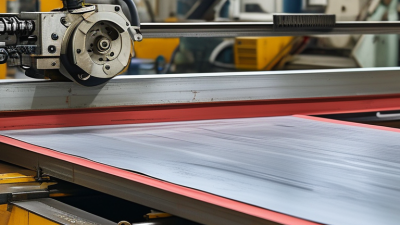
A flying shear cuts moving material without stopping the production line. Its carriage accelerates to match the strip or profile speed. The blade then cuts across the material before returning to its starting position. This reduces impact on line productivity. In real production, I check cutting speed, material thickness, width, and required length tolerance before choosing a machine. Speed matters.

Rotary flying shears use circular blades and suit continuous strip processing. They provide smooth cutting at high line speeds, especially with thinner materials. Guillotine flying shears use straight blades and deliver a clean, square cut. They often handle thicker sections better, but their acceleration and braking demands are higher. Servo-driven systems control carriage movement and blade timing precisely. Mechanical systems may be simpler, but adjustment can take longer. The right choice depends on production conditions, not only rated capacity.

The operating principle sounds simple, yet synchronization is difficult. Sensors measure material movement, while the controller adjusts carriage speed in real time. Poor tracking can create length errors, burrs, or uneven edges. During selection, ask for test cuts using your actual material. Inspect the cut face, noise level, vibration, and blade wear. I would also examine guarding, emergency stops, maintenance access, and spare-part availability. A machine may perform well during a short trial but struggle after hours of heat and vibration. That detail is easy to miss. Even experienced operators sometimes underestimate setup time.

How to Choose a Flying Shear Cutting Machine?

Comparison of common flying shear types by operating characteristics

Rotary flying shears are suited to continuous high-speed production, while pendulum shears provide flexible cutting for medium and heavy sections. Start-stop shears are simpler and economical, but they interrupt the material movement and are generally better suited to lower-speed lines. The index uses a practical 1–5 engineering suitability scale, where 5 represents stronger suitability.

Evaluate Key Performance, Accuracy, and Speed Features

Choosing a flying shear cutting machine requires more than checking its maximum line speed. Evaluate how the system behaves during acceleration, deceleration, and repeated cutting cycles. A stable servo drive should synchronize the blade with moving material without creating visible marks. Ask for measured cycle data, not only catalog figures. Small delays can produce uneven lengths, especially when coils run at high speed. Consistency matters most.

Accuracy depends on several linked features. Inspect the encoder resolution, motion-control response, blade alignment, and automatic length compensation. A practical test should cut different lengths and materials, then compare samples with a calibrated measuring tool. Check the cut edge under strong light. Burrs, angled edges, or stretching may reveal poor setup. Keep records. Operators often notice patterns that software reports miss.

Speed must support quality, not replace it. A machine that reaches peak speed but needs frequent stops may reduce actual output. Review acceleration curves, recovery time, and cutting performance near the line’s upper limit. Safety guarding and accessible adjustment points also affect reliable operation. I once focused too heavily on speed and overlooked changeover time. That decision looked efficient on paper, but daily production proved otherwise. Leave room for testing, because the best setting is rarely the first one.

Check Compatibility, Safety Systems, and Maintenance Needs

Choosing a flying shear cutting machine starts with compatibility, not cutting speed. Match the machine to the material, thickness, width, and target length. A mismatch can cause burrs, unstable feeding, or premature blade wear. Check the production line’s entry height, conveyor direction, electrical supply, and available floor space. Small details matter.

I have seen operators focus on rated capacity while overlooking coil tension and line acceleration. That mistake creates uneven cuts. Ask for trial data using your actual material. Confirm cutting accuracy at low, medium, and maximum speed. The control system should provide clear alarms, guarded access, and an emergency stop within easy reach. Interlocked doors are essential around moving blades and carriages. Good lighting also helps.

Safety systems need regular testing, not just installation. Record each test and investigate repeated alarms. Maintenance access should allow safe blade changes without awkward lifting. Inspect guides, bearings, fasteners, sensors, and lubrication points according to a written schedule. Keep spare wear parts in a clean, labeled cabinet. I prefer simple inspection sheets, although they can be incomplete when rushed. That weakness needs attention. Ask the supplier about technician training, documentation, and response times. A machine may cut accurately on day one, yet poor maintenance can quickly change its performance.

Assess Manufacturer Support, Costs, and Long-Term Value

Choosing a flying shear cutting machine requires more than comparing its purchase price. Assess the manufacturer’s service network, commissioning process, and response time. Ask who will troubleshoot encoder errors, blade wear, and synchronization faults at 2 a.m. Spare-parts availability matters. A low-cost machine becomes expensive when one drive module waits six weeks.

The U.S. Department of Energy’s Operations and Maintenance Best Practices Guide reports that predictive maintenance can reduce maintenance costs by 25–30% and downtime by 35–45%. Use these figures carefully; actual results depend on sensors, operator discipline, and production conditions. Request maintenance records, recommended replacement intervals, and training hours. A supplier should explain cutting accuracy, line-speed limits, and changeover procedures with measured data, not broad promises.

Calculate total cost of ownership over at least ten years. Include installation, software updates, blade consumption, electricity, calibration, emergency travel, and lost production. Deloitte’s 2024 Smart Manufacturing and Operations Survey found that 86% of manufacturing leaders view smart manufacturing as important for competitiveness. That does not make every digital feature valuable. Remote diagnostics may reduce travel, but poor connectivity can create another failure point. I would also demand a performance acceptance test using your actual material grades and thicknesses. Paper specifications look neat. Real coils can be less cooperative.