
Choosing the right hot rolling mill machine affects product quality, energy use, maintenance, and long-term operating risk. Global buyers now face a demanding steel market. The World Steel Association’s World Steel in Figures 2024 reports approximately 1.89 billion tonnes of crude steel production in 2023. That scale creates intense pressure for stable output and efficient equipment.
A modern mill must do more than reduce slab thickness. It should maintain accurate roll gaps, steady cooling, reliable tension control, and consistent strip flatness. Operators also need accessible spare parts and responsive technical support. Small details matter. A poorly aligned work roll can leave visible defects across an entire coil.
Energy performance deserves equal attention. The International Energy Agency identifies iron and steel production as responsible for roughly 8% of global energy-related emissions. This makes motor efficiency, heat recovery, automation, and process monitoring important purchasing factors. However, efficiency claims require evidence. Buyers should request test conditions, production data, and references from comparable plants.
This guide reviews seven leading hot rolling mill machine options for international buyers. It compares production capacity, material compatibility, automation, maintenance access, safety systems, and lifecycle value. The “best” choice depends on the product mix, budget, local power supply, and workforce experience. A perfect machine does not exist. Some decisions remain judgment calls.
Reliable selection begins with measurable requirements. Confirm slab dimensions, target gauge, rolling speed, annual output, and acceptable tolerances. Examine commissioning records, warranty terms, and service coverage before signing. These practical checks can prevent expensive surprises after installation.
7 Best Hot Rolling Mill Machines for Global Buyers
What Hot Rolling Mill Machines Are and How They Work
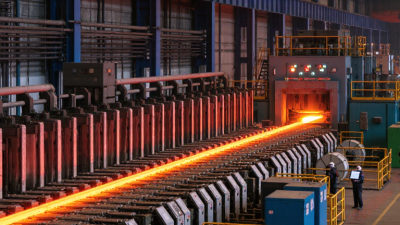
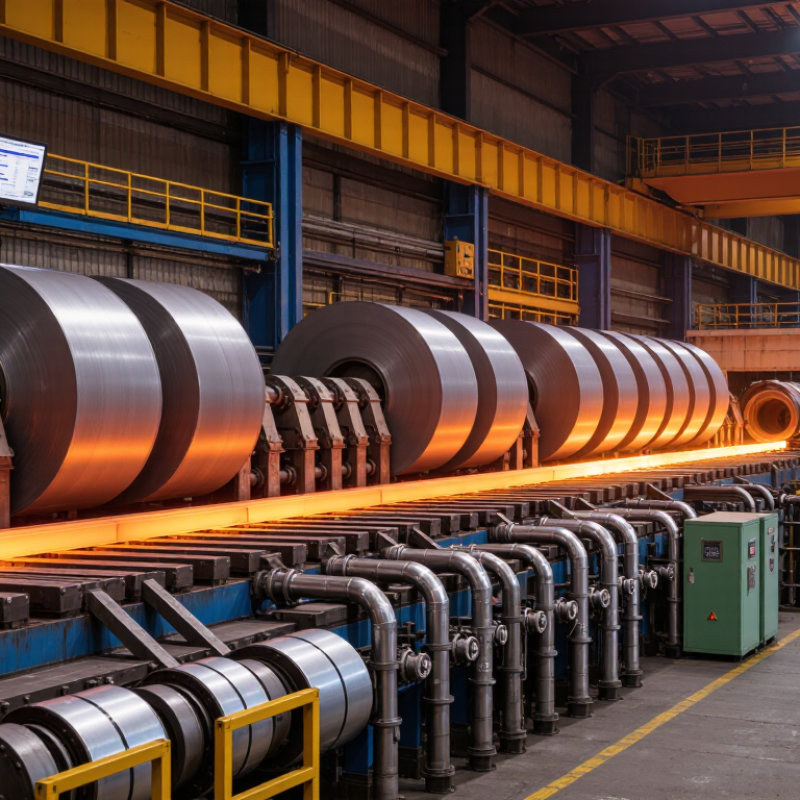
A hot rolling mill reduces heated steel slabs into plates, strips, rails, or structural sections. The process usually begins inside a reheating furnace. Steel may reach roughly 1,100–1,250°C before entering the rolling line. At this temperature, the material becomes easier to deform.
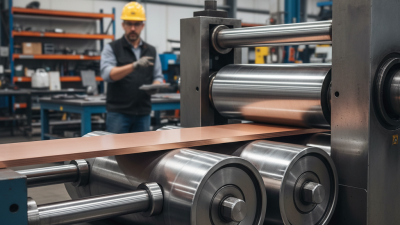
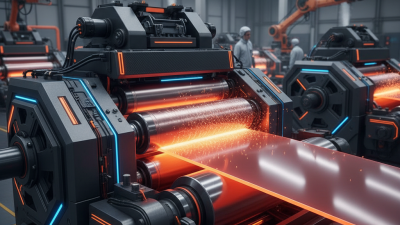
The slab passes between rotating rolls. Each pass reduces thickness and increases length. Roughing stands remove most of the thickness. Finishing stands control the final gauge, surface, and shape. A coiler then winds finished strip for transport or later processing. Common machine designs include two-high, four-high, six-high, reversing, continuous, Steckel, and planetary mills. Each design suits different widths, alloys, production volumes, and maintenance capabilities.
According to the World Steel Association, global crude steel production reached about 1.88 billion tonnes in 2024. That scale keeps hot rolling equipment strategically important for infrastructure and manufacturing. The International Energy Agency reports that iron and steel production creates around 7–9% of global energy-related carbon dioxide emissions. Furnace efficiency and accurate pass control therefore matter greatly.
A practical warning remains. Higher speed does not always mean better output. Poor temperature control can cause scale, uneven thickness, or roll damage. Operators should check cooling systems, automation depth, spare-roll access, and local technical support. A lower-cost quotation may become expensive after one avoidable production stoppage. Real factory trials are still more convincing than polished brochures.
Global buyers often compare seven leading hot rolling mill machines: the roughing mill, finishing mill, reversing mill, continuous hot strip mill, plate mill, bar mill, and wire rod mill. Each serves a different production target. A roughing mill reduces thick slabs quickly, while a finishing mill controls final gauge and surface quality. Reversing mills suit flexible, smaller batches.
Continuous hot strip mills deliver high output for coils used in automotive and construction applications. Plate mills handle wider, heavier products and require strong leveling control. Bar mills produce consistent rounds and sections for structural projects. Wire rod mills operate at high speed, demanding stable tension and accurate loop control.
Check the details closely. A practical buyer should review slab dimensions, rolling force, motor capacity, furnace compatibility, cooling design, and automation functions. Ask for test records, maintenance schedules, spare-part availability, and installation support. These documents reveal more than polished photographs. Site visits can expose vibration, oil leakage, or difficult access around the mill. Small details matter.
Energy use deserves equal attention. Efficient drives and heat recovery can reduce operating costs, but claimed savings need measured evidence. Some machines appear affordable until foundation work and commissioning are added. That mistake is common. The best selection depends on product mix, annual tonnage, local service skills, and realistic expansion plans. Allow room for human error, because even advanced controls cannot replace disciplined operation.
Two-high reversing mills suit small batches, billets, and maintenance-friendly production. Their simple roll arrangement supports flexible setup, though thickness control can be less precise.
Three-high mills process blooms and structural sections without reversing the roll direction. They can improve output, but their larger footprint may challenge smaller plants.
Four-high reversing mills use backup rolls to reduce deflection. They perform well for plates, wide strips, and tighter gauge requirements.
Six-high mills add intermediate rolls for stronger shape control. They are useful for demanding strip applications and variable widths.
Cluster mills handle very thin, high-strength strip with excellent roll support. However, threading and alignment require experienced operators.
Tandem hot strip mills connect several stands in one production line. They deliver high volume for coils, automotive sheet, and construction materials. Their speed is impressive. Yet, one setup error can affect the entire line.
Steckel mills reverse the strip through a compact arrangement. They fit medium-volume plate and coil production, especially where product variety matters.
Universal mills combine horizontal and vertical rolls. They are effective for beams, rails, and heavy structural profiles.
Tips: Match the machine to steel grade, width range, annual tonnage, and available maintenance skills. Check cooling control, automation access, spare-roll logistics, and operator training before purchase. Ask for measured tolerance data, not only catalog claims. Real production conditions often expose weaknesses.
Choosing among the 7 best hot rolling mill machines requires more than comparing advertised tonnage. World Steel Association data reports about 1.89 billion tonnes of crude steel production in 2023, so buyers need equipment matched to real production patterns.
Start with material and size. Check slab or billet dimensions, target strip thickness, width range, steel grades, and annual throughput. A roughing stand handling 1,200 tonnes per hour may still underperform if furnace discharge is unstable. Roll diameter, maximum separating force, motor capacity, and reduction schedule reveal practical capability. Small details matter. Measure the transfer table.
Finishing accuracy deserves equal attention. Ask for gauge deviation, flatness results, cooling precision, and coil temperature data from comparable installations. The International Energy Agency identifies steelmaking as responsible for roughly 8% of global energy-related emissions, making reheating-furnace efficiency an important comparison point. Review fuel consumption per tonne, heat recovery, insulation, and idle-time controls. Automation can improve repeatability, but sensors need calibration and accessible replacement parts. That is where many procurement spreadsheets become optimistic. A mill with impressive speed may deliver inconsistent edges when maintenance routines are weak. Also examine water quality, descaling pressure, foundation loads, commissioning support, and operator training before selecting equipment.
A practical comparison of commonly selected hot rolling mill configurations, typical operating ranges, and major purchasing considerations.
| Mill Configuration | Primary Products | Typical Incoming Size | Typical Finished Size | Typical Product Width | Typical Rolling Speed | Key Technical Features | Main Advantages | Important Buying Factors |
|---|---|---|---|---|---|---|---|---|
| Two-High Reversing Plate Mill | Heavy plate, ship plate, structural plate, pressure-vessel plate | Slab thickness commonly 150–300 mm; slab mass depends on furnace and mill design | Approximately 5–200 mm, depending on pass schedule and material grade | About 1,500–5,000 mm | Approximately 0.5–8 m/s | One pair of work rolls reverses direction after each pass; hydraulic screwdown and automatic gauge control are commonly used. | Flexible and robust Suitable for wide product mixes and relatively small or medium production campaigns. |
Check maximum rolling force, roll diameter, mill stiffness, cooling-zone length, flatness control, and plate-length handling capacity. |
| Four-High Reversing Plate Mill | Carbon steel, alloy steel, stainless steel, and specialty plate | Slabs commonly 150–300 mm thick | Approximately 3–150 mm | About 1,500–4,500 mm | Approximately 1–10 m/s | Small-diameter work rolls are supported by larger backup rolls, improving reduction capability and thickness control. | Better gauge accuracy More efficient than a two-high mill for thinner plate and higher-strength grades. |
Evaluate backup-roll diameter, work-roll bending, roll shifting, AGC response, cooling uniformity, and roll-change time. |
| Four-High Steckel Mill | Stainless steel, carbon steel, silicon steel, and specialty hot-rolled strip | Slab thickness commonly 150–250 mm | Approximately 1.5–25 mm | About 800–2,000 mm | Approximately 2–12 m/s | Reversing four-high stands are combined with heated coiler furnaces that support the strip ends during reversing passes. | Product-mix flexibility Can produce relatively thin and wide strip without requiring a full-length continuous finishing train. |
Compare furnace temperature uniformity, coiler capacity, strip threading reliability, edge-drop control, and energy consumption. |
| Compact Hot Strip Mill | Hot-rolled coil for automotive, construction, appliance, and general engineering applications | Slabs commonly 50–250 mm, depending on caster integration | Approximately 1.2–25 mm | About 900–2,100 mm | Finishing speeds commonly 10–25 m/s | Typically includes a roughing unit, transfer table, finishing stands, laminar cooling, and a downcoiler; thin-slab versions may integrate casting and rolling. | High productivity Efficient material flow, lower reheating demand in integrated designs, and consistent coil production. |
Assess annual capacity, slab-to-coil layout, finishing-stand count, crop-shear design, cooling control, automation, and coil handling. |
| Continuous Tandem Hot Strip Mill | High-volume hot-rolled strip and coil | Slabs commonly 200–300 mm, or thinner slabs in integrated layouts | Approximately 1.2–20 mm | About 900–2,300 mm | Finishing speeds commonly 15–30 m/s | Several non-reversing finishing stands operate in sequence, with interstand tension control and automatic gauge and flatness control. | Highest throughput Strong dimensional consistency and low processing time for standardized product families. |
Prioritize production volume, width-change strategy, looper or tension control, roll cooling, automation architecture, and maintenance access. |
| Bar and Section Rolling Mill | Rebar, rounds, flats, angles, channels, and structural sections | Billets commonly 100–200 mm square or rectangular | Rebar commonly 8–40 mm; section size varies by product family | Product-dependent; generally supplied as individual bars or bundles | Approximately 10–30 m/s for high-speed rebar lines; lower for large sections | Uses roughing, intermediate, and finishing stands; may include slit rolling, controlled cooling, twin-channel delivery, and flying shears. | Versatile long-product output Can serve construction and structural markets with rapid product-size changes. |
Compare billet-heating capacity, pass-line design, stand arrangement, dimensional tolerance, cooling-bed size, shear capacity, and changeover time. |
| Wire Rod Mill | Low-carbon, high-carbon, alloy, stainless, and welding wire rod | Billets commonly 100–160 mm square or rectangular | Typically 5.5–25 mm wire rod; smaller diameters require specialized finishing blocks | Usually delivered in coils rather than flat-width products | Approximately 60–120 m/s at the finishing block, depending on product size and mill design | High-speed finishing block, controlled cooling conveyor, pinch rolls, laying head, and coil-forming equipment are typical. | High-speed coil production Suitable for large volumes and consistent metallurgical properties. |
Review finishing-block precision, laying-head stability, cooling-line control, coil compactness, cobble protection, and surface-quality monitoring. |
Choosing among seven hot rolling mill configurations requires more than comparing production capacity. Buyers should inspect foundation drawings, crane access, power quality, cooling-water demand, and workshop space. A mill may fit the catalog specification but fail during installation because the entry side lacks service clearance. Measure the full material path, not only the machine footprint.
Safety must be designed into the purchase contract. Check guarding around rolls, emergency stops, lockout points, hydraulic pressure relief, and safe access for maintenance. Ask whether electrical cabinets match local voltage and climate conditions. Request risk assessments, safety manuals, and operator training in a usable language. Small details matter. A poorly placed sensor can delay an emergency response.
Support often separates a workable machine from an expensive idle asset. Confirm commissioning scope, remote diagnostics, spare-part availability, and response times before signing. Require clear acceptance tests for thickness accuracy, temperature control, vibration, and production speed. A common mistake is trusting promised output without defining testing conditions. That needs correction. Buyers should also speak with existing users, inspect service records, and confirm who will support the mill after the warranty period. Availability of trained local technicians may matter more than a slightly lower purchase price.