
Choosing the best hot rolling mill machine in 2026 is not a matter of buying the fastest line. The right choice depends on product dimensions, steel grade, output targets, energy costs, and available maintenance skills. A mill producing thin automotive strip faces different demands from one rolling heavy plate or structural sections. The details matter: a few degrees of temperature loss, uneven billet heating, or poorly controlled roll gaps can affect quality and yield.
The scale is substantial. World Steel Association data report 1,892 million tonnes of crude steel production in 2023, reflecting the immense demand served by steelmaking and rolling operations. The International Energy Agency’s Iron and Steel Technology Roadmap identifies steel production as responsible for about 7% of global energy-related carbon dioxide emissions. These figures help explain why buyers now weigh throughput alongside energy efficiency, process control, and emissions performance. Still, a high-efficiency specification does not guarantee low operating costs. Local electricity prices, downtime, spare-parts access, and operator experience can change the result.
This guide compares the practical factors behind a sound investment: mill configuration, automation, roll design, heating systems, safety features, and lifecycle costs. It also distinguishes measurable performance claims from sales language. There is no universal winner. Some specifications remain hard to compare across suppliers, and published figures may not reflect real production conditions. A careful evaluation should ask for reference installations, product-specific trial data, and clear assumptions. Those checks take time. They can prevent an expensive mismatch.
What Is the Best Hot Rolling Mill Machine in 2026?
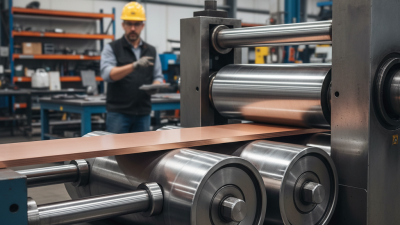
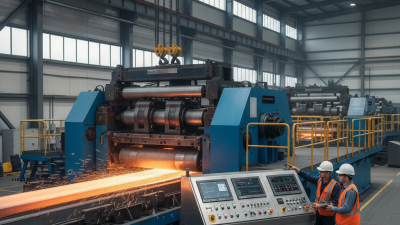
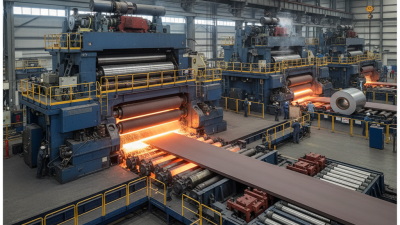
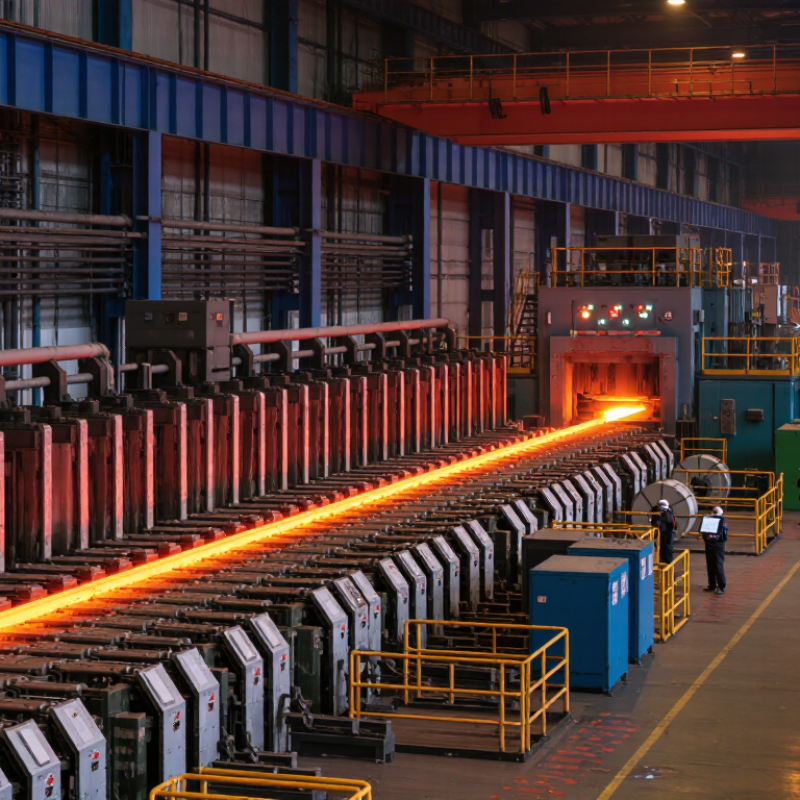
A hot rolling mill shapes heated steel between rotating work rolls. The process normally begins with a reheated slab near 1,100–1,250°C. Roughing stands reduce its thickness quickly. Finishing stands then control gauge, width, and surface quality. A run-out table sprays water across the strip. Finally, a coiler forms a tight steel coil.
This sequence sounds simple. It is not. Small temperature changes can affect flatness, strength, and scale formation. The World Steel Association reported about 1.89 billion tonnes of crude steel production in 2023. That scale explains why stable rolling speed and low downtime matter. The International Energy Agency also identifies iron and steel as a major industrial emissions source. Therefore, the best 2026 machine should balance productivity, heat recovery, automation, and maintenance access.
The word “best” is misleading. A high-speed mill may suit automotive sheet, but not heavy plate. In practical plant evaluations, operators should inspect vibration, hydraulic response, cooling control, and roll-change time. Data from the International Iron and Steel Institute and ISO 50001 guidance can support energy and performance comparisons. Still, specifications can hide weaknesses. I would question any machine promising perfect output. Real steel behaves less neatly.
Tips: Check sample coils, not only brochures. Measure thickness variation across the strip. Ask for verified energy data under similar production conditions. Leave space for safe maintenance. A cheaper mill can become expensive when alignment problems repeat.
In 2026, the best hot rolling mill machine depends on the product, thickness range, and required output. A two-high mill offers a simple layout and strong reduction for billets or heavy sections. It is easier to maintain, but roll deflection can affect thickness accuracy. Four-high mills use smaller work rolls supported by larger backup rolls. This design improves control when producing thinner strip.
Reversing mills move the material back and forth through the same stand. They suit smaller production batches, changing alloys, and flexible plate manufacturing. Tandem mills use several stands in sequence, allowing continuous rolling at high speed. They are effective for large-volume strip production, although their setup requires careful tension control. Steckel mills combine reversing operation with heated coilers. They can handle plate and wider strip while reducing heat loss between passes.
For very thin hot strip, a planetary mill may provide significant reduction in limited space. Its complex roll arrangement demands skilled maintenance and accurate calibration. A universal mill adds vertical rolls to control width during beam or rail production. This detail matters when side profiles must remain consistent.
In practical factory evaluations, operators should inspect drive stability, cooling response, automation, and roll-changing time. A clean specification sheet can still mislead. Energy use may rise sharply during frequent size changes. The “best” machine is often the one that matches real production habits, not the most advanced design. Mistakes happen when buyers measure capacity but ignore operator training and maintenance access.
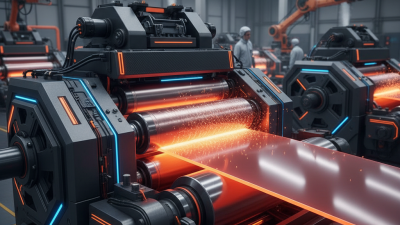
A best hot rolling mill machine in 2026 is defined by stable process control, not headline speed alone. The World Steel Association’s World Steel in Figures 2024 reports 1,892.2 million tonnes of crude steel production in 2023, reflecting the scale and consistency demanded across the industry. For mill buyers, the practical test is whether the machine holds target thickness and temperature as billets move through the stands. A control system should adjust roll gap and speed quickly, while operators can see alarms and settings clearly. Small deviations matter. A few microns can affect downstream finishing.
Look for robust drive systems, reliable cooling, and sensors that track temperature, rolling force, and strip dimensions. These features help teams spot drift before it creates scrap or an unplanned stop. Ask for performance data from comparable materials and operating conditions, not only peak-capacity figures. Check how fast rolls and guides can be inspected or replaced; access around a hot, noisy stand matters on a real shift. Energy use per tonne is worth comparing, but measurement boundaries should be stated. Honestly, no single specification settles the choice. A machine can be highly automated and still frustrate operators if maintenance access or training is overlooked.
What defines a capable hot rolling mill? Temperature control is one key factor: steel must remain within an appropriate hot-working range as it moves through the mill. The bars show approximate midpoints of typical operating ranges; actual temperatures vary by steel grade, product, and process.
What Is the Best Hot Rolling Mill Machine in 2026?
How Do Leading Hot Rolling Mill Configurations Compare?
The best configuration depends on product mix, output targets, and available floor space. A continuous tandem mill sends steel through several stands in sequence. It suits high-volume strip production, where steady flow and consistent thickness matter. The trade-off is a demanding setup. A change in product range can require careful adjustment.
A reversing mill passes the same slab back and forth through one stand. It can handle varied grades and smaller batches, with less equipment than a long tandem line. But each pass takes time. Operators must manage temperature closely; a slab cooling too much may affect rolling quality. This configuration can fit flexible production, though its output is usually lower.
Plate mills and compact strip configurations serve different needs. A plate mill focuses on thicker products and broad dimensions, while compact layouts aim to reduce space and processing steps. Neither is automatically the better choice. Maintenance access, reheating capacity, automation, and energy use deserve equal attention. A practical comparison should include measured output and operating costs, not just the mill’s maximum rated speed. That figure can mislead. Real production also depends on material, scheduling, and operator experience.
What Is the Best Hot Rolling Mill Machine in 2026? The right choice depends on your product mix, not a headline speed.
World Steel Association data put global crude steel production at about 1.89 billion tonnes in 2024, reflecting the scale and variety of modern steelmaking. That figure is context, not a mill-sizing target. A plant rolling narrow, thin strip needs different controls from one producing heavy plate.
Start with the actual order book: steel grades, slab dimensions, target thickness, strip width, and tonnes per hour. Then compare those needs with the mill’s rolling force, motor power, stand configuration, and temperature-control range. A small mismatch matters. If the finishing passes cannot hold thickness evenly, a fast line may simply produce more off-spec material. Ask suppliers for performance data using your grades and dimensions, not only ideal test conditions.
Check the whole line, too. Reheating capacity, descaling, cooling, coiling, and changeover time can limit output even when the stands are powerful. The International Energy Agency identifies iron and steel as a major industrial energy-use and emissions sector, making furnace efficiency and heat recovery relevant selection criteria. Ask for energy figures per tonne and define what equipment they include.
Get references from mills with comparable products. And inspect maintenance access. A cramped roll-change area can cost real production hours. Some assumptions will still be wrong; plan for trials and adjustment.