
In 2026, industries are increasingly reliant on advanced automation. Kuka machines stand at the forefront of this technological evolution. Their design and functionality offer unparalleled precision and adaptability across various sectors. However, simply owning a Kuka machine is not enough to ensure maximum efficiency.
Optimizing these machines requires a comprehensive understanding of their capabilities. Operators must regularly assess their usage patterns and maintenance schedules. An ineffective approach may lead to reduced performance and unexpected downtime. Investing in training for staff can also enhance the operation of Kuka machines, minimizing errors and maximizing output.
Moreover, monitoring software updates is crucial. Many users overlook this aspect, which can lead to missed enhancements. Each Kuka machine has unique features that can be fine-tuned for specific tasks. Taking the time to explore these options can yield significant improvements in efficiency and productivity. This ongoing process demands reflection and adaptation, as the landscape of automation continues to evolve.

Optimizing robot programming and path planning is essential for Kuka machines' efficiency. Focus on refining algorithms to enhance performance. Start by examining existing workflows and pinpointing areas for improvement. This analysis helps identify bottlenecks.
Tips: Regularly review your programming logic. Look for redundancies. Small adjustments can lead to significant gains.
Utilize simulation tools to test different scenarios. These tools allow for virtual trials without risk. It’s critical to iterate on the path optimization process. Not every path will yield the best results, and some may need rethinking.
Tips: Experiment with various trajectory options. Collect data on each trial. Use metrics to discern the most effective paths. Over time, this will streamline operations.
Maintenance of Kuka robots plays a crucial role in optimizing performance. Regular checks are essential. These machines can face unexpected downtimes if ignored. Efficient maintenance practices can greatly enhance productivity. Scheduling routine inspections helps identify potential issues early. It allows for timely repairs, avoiding costly breakdowns.
Training staff on effective maintenance techniques is vital. Implementing a structured maintenance program improves worker accountability. Encourage technicians to document repairs and changes. This creates a knowledge base for future reference. Workers must understand the significance of every component in the machine. Overlooking minor parts can lead to major malfunctions.
However, some organizations still struggle with these practices. They may lack the resources or knowledge needed for consistent maintenance. This can lead to underperformance and increased costs over time. Regular evaluation of maintenance strategies is necessary. Reflecting on past experiences will show what needs improvement. Engaging with experts for feedback can foster better practices. Mistakes can be learning opportunities.
In 2026, optimizing Kuka machines will hinge on advanced software tools for performance monitoring. These tools can significantly enhance productivity. Reports indicate that real-time data analysis can increase operational efficiency by up to 30%. This improvement leads to reduced downtime and better resource allocation.
Integrating advanced analytics solutions allows for proactive maintenance. Predictive algorithms can forecast equipment failures. A study found that predictive maintenance can reduce maintenance costs by 25% while extending machinery lifespan. However, the implementation process isn’t always seamless. Companies must first ensure their workforce is trained in these new technologies. Without proper training, the expected efficiency gains may not materialize.
Investing in performance monitoring tools is essential, yet businesses must remain vigilant. Over-reliance on technology can lead to oversight. Regular audits and employee feedback are crucial to ensure that the systems function as intended. Continuous evaluation helps in adapting to challenges, optimizing operations for the best results. The path to efficiency improvement is ongoing and requires constant attention.
Integrating IoT solutions into Kuka machines can drastically enhance their efficiency. Real-time data analysis plays a crucial role in optimizing operations. By utilizing IoT sensors, operators can monitor machine performance continuously. This results in immediate insights into productivity and potential downtimes. Effective data collection allows for precise adjustments in real time.
Tips: Ensure that data is easily accessible. Use user-friendly dashboards for quick decision-making. Regularly update software for better data integration. Analyze patterns over time to identify inefficiencies. The ability to react swiftly to data trends can significantly reduce downtime.
Additionally, not all IoT implementations succeed. Some setups may face compatibility issues with older machines. This can lead to frustration and wasted resources. Training staff on new technologies is crucial. Without proper knowledge, even the best systems fall short. A well-thought-out implementation strategy is essential for success.
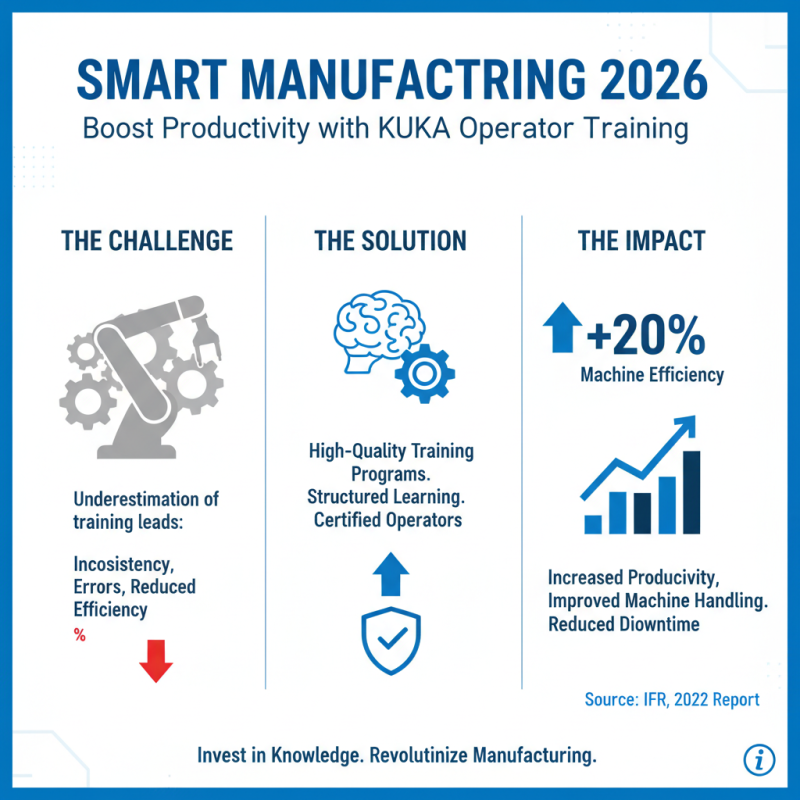
In 2026, training operators for Kuka machines is crucial. High-quality training programs can significantly boost productivity in manufacturing. A report from the International Federation of Robotics indicates that properly trained operators can increase machine efficiency by up to 20% (IFR, 2022). Yet, many companies underestimate this need. Often, employees learn on the job, resulting in inconsistency and errors.
Effective training should combine theory with hands-on practice. Simulated environments allow operators to handle complex tasks safely. A study from the Manufacturing Institute shows that immersive training can reduce the learning curve by 30% (Manufacturing Institute, 2023). However, companies often lack the resources to implement such programs. As a result, frontline workers may feel overwhelmed and unsure, which can lead to decreased productivity and machine misuse.
Furthermore, continuous training is essential. Operators should receive updates on new technologies and techniques. A recent survey found that 45% of operators felt underprepared for evolving technology (Industry Trends Report, 2023). This gap can hinder overall efficiency. Investing in ongoing operator education is vital for leveraging the full potential of Kuka machines. As the industry evolves, companies must reflect on their training strategies to stay competitive.