

Scroll Top
4801 Bennett Rd. Toledo, Ohio 43612

Why Choose an HDPE Liner for Your Project?

Choosing a liner is not just a materials decision. It affects how well a pond, reservoir, landfill cell, or containment area holds liquid over time. An Hdpe Liner is widely considered for projects that need a durable barrier and broad chemical resistance. Its value, however, depends on the conditions it will face.

High-density polyethylene is a thermoplastic sheet material supplied in rolls or panels. Installers join the seams, then inspect them using methods suited to the project specifications. Thickness, surface texture, subgrade preparation, and seam quality all influence performance. A sharp stone beneath the liner can matter. So can a poorly planned corner. Small details count.

HDPE is often selected for its strength, low permeability, and resistance to many common chemicals. These properties do not make it suitable for every site or every substance. Temperature changes, ultraviolet exposure, settlement, and the handled liquid should be assessed against manufacturer data and project requirements. Ask for technical documentation, confirm installation procedures, and involve qualified professionals when the design calls for them.

There is no perfect liner. That deserves a closer look. This guide examines where an Hdpe Liner can make practical sense, what trade-offs to consider, and which questions to resolve before purchase. A careful comparison can help project teams avoid choosing on price or reputation alone. The right specification begins with the actual site, not a broad promise.
Why Choose an HDPE Liner for Your Project?

What Is an HDPE Liner?

Why Choose an HDPE Liner for Your Project?

What Is an HDPE Liner?

An HDPE liner is a flexible geomembrane made from high-density polyethylene. It is supplied in large sheets and commonly joined on site with heat-fusion welding. The material has low permeability and resists many chemicals, making it useful for ponds, reservoirs, mining facilities, and waste-containment systems. Its performance depends on more than the polymer: thickness, seam quality, subgrade preparation, and installation conditions all matter.

Not a magic shield. Sharp stones, trapped wrinkles, or poorly inspected seams can create weak points. The U.S. EPA’s municipal solid-waste landfill rule, 40 CFR 258.40, specifies a minimum 60-mil HDPE geomembrane within a particular composite-liner design. That figure is a regulatory benchmark for that setting, not a universal project recommendation. Industry specifications such as GRI-GM13 also set measurable requirements for geomembrane properties and quality control.

Tips: Match the liner thickness to the fluid, exposure, and site conditions. Ask for resin and testing documentation, then inspect welds and protect the liner during placement. A careful site walk can catch small problems—but it cannot replace documented seam testing.

How HDPE Liners Resist Environmental and Chemical Stress

Why Choose an HDPE Liner for Your Project?

An HDPE liner faces more than liquid pressure. Sunlight, heat, and chemical contact can gradually weaken exposed surfaces. Its dense polyethylene structure limits seepage, while carbon black helps shield the material from ultraviolet exposure. Good installation matters, too. A sharp stone beneath the liner can create a weak point before service even begins.

The Geosynthetic Institute’s GRI-GM13 specification sets a minimum standard oxidative induction time of 100 minutes for HDPE geomembrane resin. This laboratory measure indicates resistance to oxidation under specified test conditions; it does not predict a liner’s exact service life. That distinction matters. In practice, temperature, chemical concentration, exposure duration, and weld quality all affect performance. A compatibility review using the actual project fluid is more reliable than assuming every HDPE liner resists every chemical.

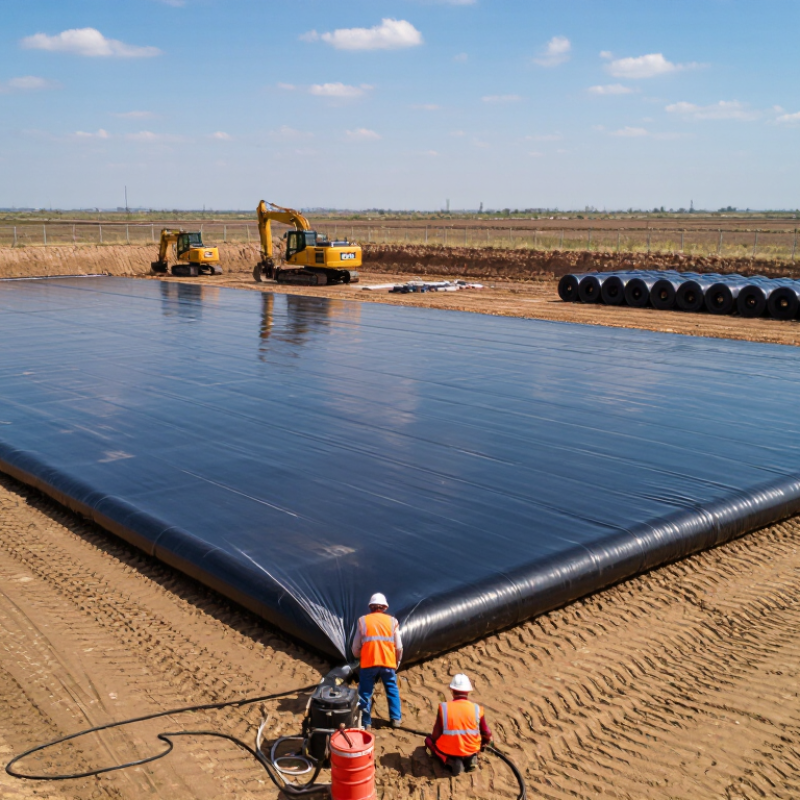
For a containment basin, imagine a dark liner beneath shallow water, with welded seams inspected before filling. Specify appropriate thickness, test seams, and protect the surface from punctures during placement. HDPE can tolerate many acidic and alkaline solutions, but some hydrocarbons and oxidizing agents require closer evaluation. Even a strong material has limits. A site-specific chemical exposure test may reveal an issue that a general data sheet misses.

Where HDPE Liners Are Commonly Used

HDPE liners are commonly used beneath landfills, where they help limit leachate movement into surrounding soil and groundwater. The U.S. Environmental Protection Agency’s 2018 Advancing Sustainable Materials Management report estimated that Americans generated 292.4 million tons of municipal solid waste; 146.1 million tons went to landfills. These large volumes make careful containment important. In practice, the liner works as part of a system: prepared subgrade, protective geotextile, drainage layers, and well-tested seams all matter. A strong sheet cannot compensate for a rough base.

Mining operations also use HDPE geomembranes in process-water ponds and some tailings facilities. The U.S. Geological Survey’s Mineral Commodity Summaries 2024 reported global copper mine production of about 22 million metric tons in 2023, illustrating the scale of mineral processing and its water-management needs. HDPE liners are also used in wastewater lagoons, irrigation reservoirs, and aquaculture ponds, where they can reduce seepage and help retain stored water. Site conditions differ. A steep pond bank, sharp rock, or repeated temperature changes can affect installation and long-term performance.

Selection takes more than comparing thicknesses. Designers typically assess chemical exposure, subgrade conditions, slope stability, seam testing, and expected service life. Installation details matter. I have seen project plans treat seam inspection as a final checkbox; that deserves a second look, because small defects can undermine an otherwise sound containment system.

How to Choose the Right HDPE Liner for a Project

Why Choose an HDPE Liner for Your Project?

Choosing the right HDPE liner starts with the conditions it must handle. Define what the liner will contain, the expected temperature range, and how long it will face sunlight. Then check chemical compatibility against the actual materials in the project, not a broad category. Details matter.

Thickness depends on use, support, and installation conditions. A pond with a smooth, prepared base may need different protection than a site with sharp stones or frequent equipment traffic. Measure the area carefully, including slopes, corners, and anchoring trenches. Measure twice. Also consider panel size and seam layout; fewer seams can simplify installation, but access and handling limits matter too.

Inspect the subgrade before choosing a product. Remove roots and debris, and address soft spots that could settle beneath the liner. Ask for technical data on resin properties, thickness tolerance, and suitability for the planned exposure. For critical containment, have a qualified installer review seam methods and testing requirements. A detail that looks minor on paper can become difficult to repair once covered. It is tempting to select the lowest-cost option, but I would pause and compare the full installation needs, not just the price per square foot.

What Installation and Maintenance Require

HDPE geomembrane performance depends on careful installation and routine inspection. Before deployment, crews should remove sharp stones, compact soft spots, and check that the subgrade is even. A small ridge beneath the liner can concentrate stress. Keep panels clean and dry at seam locations, then use qualified technicians and calibrated welding equipment. Wind and cold can affect seam quality, so trial welds help confirm settings before production work begins.

The Geosynthetic Institute’s GRI-GM13 specification provides useful material benchmarks. Depending on grade and test method, its criteria include at least 500 hours of stress-crack resistance and 100 minutes of standard oxidative-induction time. These are qualification values, not guarantees against poor field workmanship. Project quality plans should include documented seam testing, such as nondestructive checks along accessible welds and destructive samples at specified intervals. Small defects matter.

After installation, inspect exposed areas for punctures, wrinkles, settlement, or damage from maintenance equipment. Check drainage paths after heavy rain; standing water can hide defects and add stress. Record repairs with locations, photographs, and test results, then recheck patched seams. Buried liners need a site-specific monitoring plan, since access may be limited. One practical oversight is assuming that a sound installation needs no follow-up. It does.

Article Source: