

Scroll Top
4801 Bennett Rd. Toledo, Ohio 43612

Why Choose an Automotive Door Lock Switch for Your Vehicle?

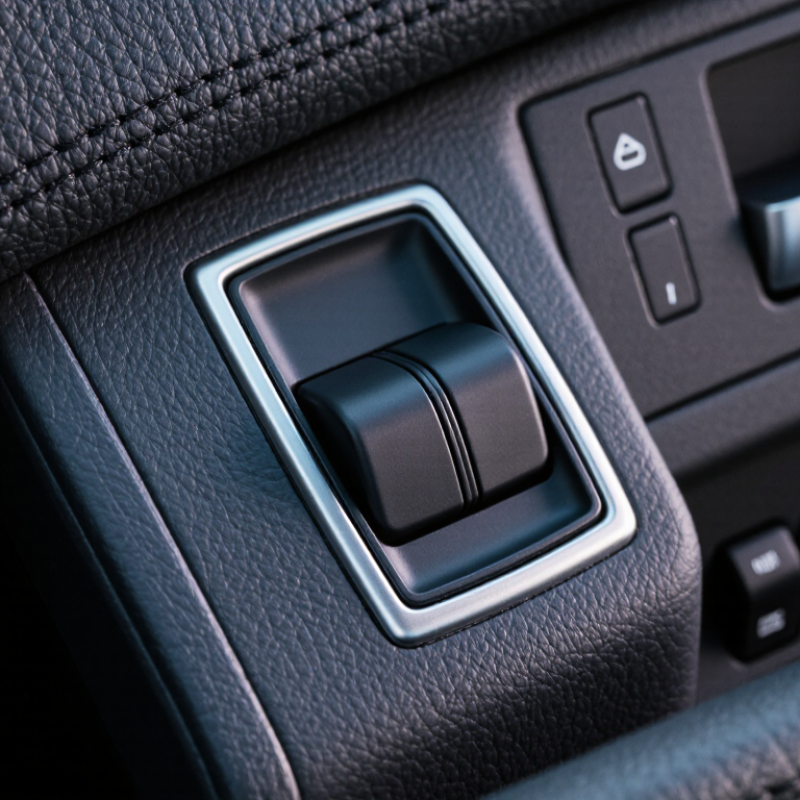
Choosing the right automotive door lock switch can change how a vehicle feels every day. A driver presses it beside the armrest, often without looking. The lock responds with a firm click, or it does not. That small moment reflects design quality, electrical reliability, and long-term comfort.

An automotive door lock switch sends a simple command to the vehicle’s locking system. Yet its performance depends on more than button shape. Engineers consider contact materials, moisture resistance, wiring compatibility, tactile feedback, and repeated use. A dependable switch should work in winter mornings, dusty parking areas, and humid city traffic. It should also communicate clearly through touch. That matters when the driver’s attention belongs on the road.

Taiichi Ohno, a renowned automotive manufacturing expert, said, “Without standards, you cannot improve.” His observation applies directly here. A suitable switch should meet the vehicle’s original specifications, not merely appear similar. Correct fit reduces loose connections, unexpected operation, and unnecessary diagnostic work. It can also preserve the clean feel of the cabin.

No switch is perfect. Even a well-made component may fail after years of heat, vibration, or spilled drinks. That uncomfortable detail deserves attention. Buyers should check connector design, operating voltage, product testing, warranty terms, and compatibility with the vehicle’s control module. A cheaper part may look attractive at first. It may create more work later.

This guide examines why an automotive door lock switch can be a practical replacement choice. It focuses on safety, convenience, durability, and informed selection, without promising that one component suits every vehicle.

Why Choose an Automotive Door Lock Switch for Your Vehicle?

What Is an Automotive Door Lock Switch in a 12-Volt Vehicle System?

Why Choose an Automotive Door Lock Switch for Your Vehicle?

In a 12-volt vehicle system, an automotive door lock switch is a low-current control device. It sends a signal to a door-lock actuator or body control module. Pressing the switch may create a momentary ground or voltage signal. The actuator then moves the locking mechanism inside the door.

A healthy battery usually measures about 12.6 volts at rest. During charging, system voltage commonly rises between 13.5 and 14.8 volts. These figures match common automotive service references and voltage conditions addressed by ISO 16750-2 testing.

Therefore, the switch must tolerate vibration, moisture, temperature changes, and unstable electrical loads. A wet door panel can expose weak sealing quickly. Small faults become annoying.

S&P Global Mobility reported that the average U.S. vehicle age reached about 12.6 years in 2024. That number makes switch durability more than a comfort issue. A reliable switch should provide consistent contact after thousands of presses. It should also connect securely with the vehicle’s wiring and avoid excessive resistance. Cheap components may still function during a quick inspection. That assumption can be wrong. Technicians should verify connector condition, actuator movement, and voltage drop before replacement. A practical test uses a multimeter while pressing the switch, checking whether the signal changes cleanly. Door locks seem simple. Their electrical details are not.

How ISO 26262 Guides Functional Safety in Door-Lock Electronics

An automotive door lock switch is more than a button beside the driver’s hand. It controls access, occupant protection, and sometimes emergency unlocking functions. A dependable switch should provide clear feedback, stable signals, and predictable operation in heat, vibration, and moisture. Small hardware can carry serious safety responsibilities.

ISO 26262 guides engineers through hazard analysis, risk assessment, and safety goals. For door-lock electronics, teams may examine unintended locking, failed unlocking, or conflicting commands. They then assign safety requirements and suitable Automotive Safety Integrity Levels. These requirements can include signal monitoring, watchdog timers, diagnostic checks, and controlled fault responses. The switch, wiring, controller, and software must work as one safety-related system.

Testing should reflect real use. Engineers can inject open circuits, short circuits, voltage drops, and stuck signals. They should also test repeated operation with cold, dust, and vibration. Traceable records support reliable decisions and later verification.

Yet compliance alone is not a magic shield. A carefully documented design may still miss an unusual user action or aging connector. That weakness deserves honest review. Practical experience matters here, especially when technicians compare laboratory results with field behavior.

A well-selected door lock switch supports ISO 26262 objectives when its electrical behavior, diagnostics, and failure response are clearly understood.

Why IP54–IP67 Protection Matters for Switch Reliability

Why Choose an Automotive Door Lock Switch for Your Vehicle?

Why IP54–IP67 Protection Matters for Switch Reliability

A door lock switch sits near moisture, dust, skin oils, and winter road residue. Its enclosure rating directly affects long-term response and safety. Under IEC 60529, IP54 resists limited dust entry and water splashes from multiple directions. IP67 adds dust-tight protection and temporary immersion resistance. The test condition allows immersion up to one metre for 30 minutes.

That difference matters during rain, car washing, and accidental drink spills. However, IP67 is not a complete durability guarantee. It does not automatically protect against vibration, salt spray, chemicals, or repeated thermal cycling. ISO 16750 testing guidance treats these stresses separately for road vehicles. Engineers should combine ingress testing with temperature, mechanical, and electrical endurance tests.

Field experience shows a sealed switch can still fail after poor cable routing. Water may travel along wires and reach the connector. A tight housing cannot correct weak installation details. This is where many product evaluations become too optimistic. Buyers should request test records, sampling conditions, and cycle-life results. A reliable automotive door lock switch needs protection matched to its actual location, not merely the highest IP number. For exposed doors, IP67 offers a stronger baseline. For sheltered interiors, IP54 may be sufficient when sealing and maintenance are controlled.

How CAN Bus Integration Supports Modern Central Locking

An automotive door lock switch now does more than trigger a mechanical latch. It communicates with the vehicle through the Controller Area Network, or CAN bus. When a driver presses the switch, it sends a digital message to the body control module. The module checks that message before commanding the door actuators. This process supports faster responses and cleaner wiring. It also allows the vehicle to monitor lock status across several doors.

Small detail. Big effect.

CAN bus integration makes diagnosis more practical. A technician can connect a scan tool and check whether the switch sent a valid command. If one rear door stays locked, stored fault data may reveal a communication error, actuator problem, or wiring issue. This is more precise than replacing parts by guesswork. In service bays, that distinction saves time and prevents unnecessary repairs.

However, diagnostic codes are clues, not final answers. A weak connector can produce an intermittent signal that disappears during inspection.

Reliable switch design still depends on physical quality. The housing should resist dust, moisture, temperature changes, and repeated finger pressure. Connectors need secure terminals and proper sealing. The CAN network also requires correct wiring and termination. A damaged node may affect more than one door.

It is not perfect. Poor calibration, corrosion, or software conflicts can still cause delays. Careful testing after installation remains essential, especially when the switch feels normal but the lock response is inconsistent.

How UN Regulation No. 11 Relates to Door-Lock System Safety

Why Choose an Automotive Door Lock Switch for Your Vehicle?

An automotive door lock switch seems simple, but it supports daily safety and control. From the driver’s seat, one press should lock every intended door without hesitation. A clear tactile response helps confirm the command, especially at night or in heavy traffic. However, a smooth click alone proves very little.

UN Regulation No. 11 focuses on door latches, locks, hinges, and retention systems. Its purpose is to reduce the risk of unintended door opening during impact or sudden vehicle movement. Testing examines whether doors remain securely closed and whether the locking system resists relevant forces. This matters when selecting a replacement switch. The switch must communicate correctly with the vehicle’s locking system, rather than merely look compatible.

During a practical inspection, I would check connector fit, switch travel, response consistency, and operation from every seating position. A loose button can create uncertainty. A delayed response may indicate wiring or control-module issues, not just a faulty switch. Regulation approval does not automatically guarantee perfect real-world performance. Installation quality still matters. So does maintenance. A careful choice should match the vehicle’s electrical design and approved safety configuration. Small details deserve attention.

Why Choose an Automotive Door Lock Switch for Your Vehicle?

A door lock switch provides discrete status signals that help the vehicle identify whether a door is locked, unlocked, latched, or open. These signals support safety logic related to door-lock and door-retention systems covered by UN Regulation No. 11.

Each signal has two logical states in a typical vehicle system: locked or unlocked, closed or open, latched or unlatched, and enabled or disabled. UN Regulation No. 11 focuses on the safe retention and latching of vehicle doors; a door-lock switch supports monitoring and warning functions but does not replace the required mechanical latch and retention components.