

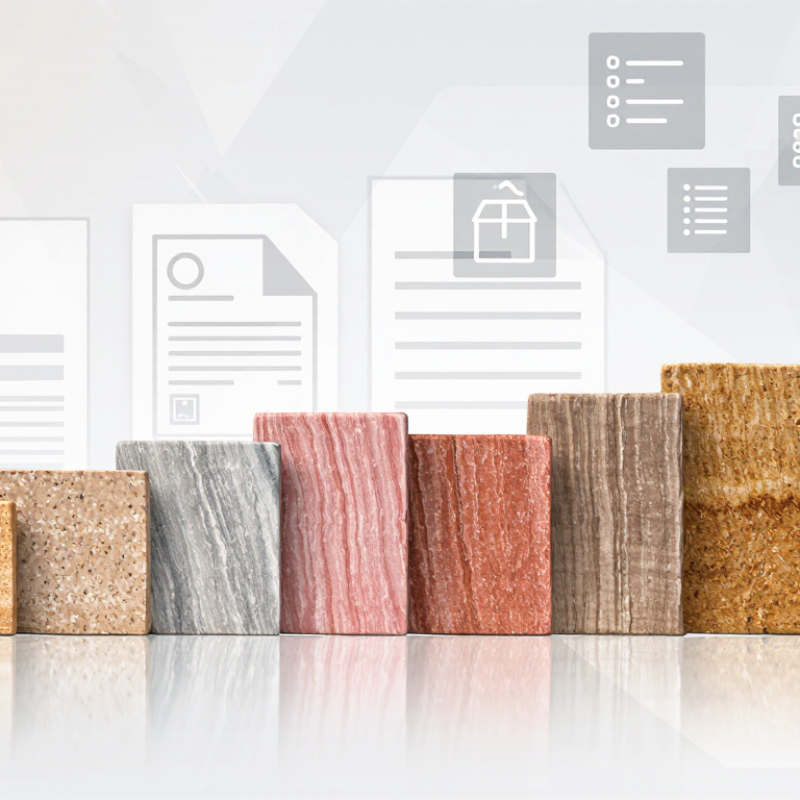
When comparing the 10 best sandstone suppliers for global buyers, product quality should lead the review. Inspect slab thickness, edge accuracy, surface finish, and color consistency. Water absorption and flexural strength test results reveal more than attractive showroom photographs. Ask for samples from the same quarry batch. A polished sample can mislead. Natural variation remains.
Pricing needs careful reading. Compare EXW, FOB, and CIF quotations, not only the stone price. Include crating, insurance, port charges, and expected cutting waste. A low quote may hide thin packaging or inconsistent sizing. Reliable suppliers provide invoices, packing lists, origin documents, and relevant certifications. ISO 9001 supports quality management, while project-specific test reports confirm technical performance. Certification alone is not proof of good stone. Verify issuing bodies and document dates.
Service quality often decides whether a project stays on schedule. Strong suppliers answer technical questions clearly and share drawings, installation guidance, and realistic lead times. Request photos of packed orders, container loading, and final inspections. Independent pre-shipment inspection can reduce surprises. Payment terms should be transparent and legally compliant. After-sales support matters when tiles arrive chipped or shades differ. I have seen buyers focus too heavily on unit price and overlook replacement costs. That judgment is understandable, but incomplete. A practical comparison sheet should record quality data, total landed cost, certification validity, communication speed, and packaging details. Pay attention to small gaps. They become expensive later.