

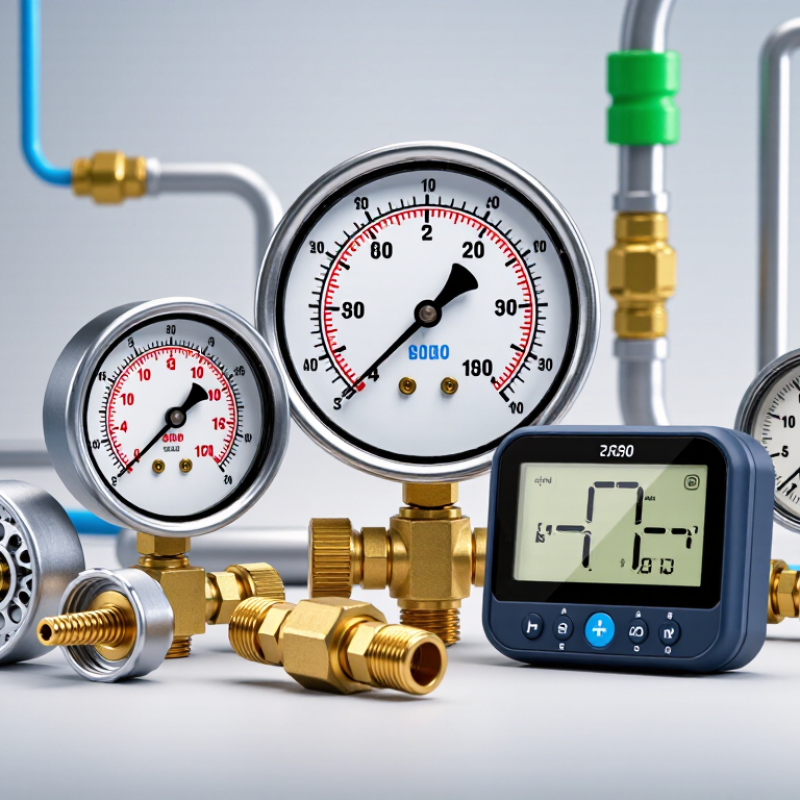
What Are the Top Pressure Gauges for Global Buyers?
Pressure gauges convert pressure into a readable mechanical or electronic value. Common types include Bourdon tube, diaphragm, capsule, differential, and digital gauges. Bourdon tube gauges suit general water, air, and hydraulic service. Diaphragm gauges handle corrosive fluids or low-pressure applications more safely. Digital gauges offer clearer readings, data logging, and easier night-time inspection. Yet, digital does not always mean better.
The International Energy Agency reported that industry consumed about 37% of global final energy in 2022.
The U.S. Department of Energy also notes that compressed air may represent 10% of industrial electricity use.
In these environments, a reliable gauge can reveal leaks, blocked filters, unstable pumps, or unsafe pressure changes. Buyers should check range, accuracy class, connection size, wetted materials, temperature limits, and calibration requirements. A gauge rated far above the working pressure may hide small but costly changes. That detail is easy to miss.
Tips: Select a gauge whose normal reading stays near the middle of its scale. Use a diaphragm seal for difficult media. Confirm units, such as bar, psi, or kPa, before installation. Follow ISO 9001 calibration procedures and relevant ASME guidance. Keep a calibration record for every critical instrument. Field experience still matters, because vibration and pulsation can damage an otherwise suitable gauge. Some installations need a snubber or liquid-filled case. Guessing here is not wise.