

Scroll Top
4801 Bennett Rd. Toledo, Ohio 43612

Top 10 Laser Film Manufacturers and Suppliers Worldwide

Laser Film is moving from a specialist material into wider packaging, security, decoration, and optical applications. Its surface can create sharp rainbow effects, microtext, or changing images under direct light. These effects are visible on labels, cartons, gift packaging, and security documents.

Market evidence supports this direction. Smithers’ report, The Future of Global Packaging to 2028, forecasts continued global packaging expansion, driven by premium presentation, brand protection, and material innovation. Grand View Research’s Holographic Films Market Size, Share & Trends Analysis Report also identifies rising demand for holographic effects in packaging and promotional products. Meanwhile, MarketsandMarkets reports sustained growth in optical films, supported by displays, electronics, and advanced light-management applications.

The category is not perfectly standardized.

Some suppliers use “laser film” for holographic transfer film. Others describe decorative laminates, cold-stamping film, or laser-compatible optical film. That difference can confuse buyers. It also makes technical comparison essential. A reliable supplier should disclose film thickness, coating structure, roll width, adhesion performance, surface energy, and recommended processing temperature.

This guide reviews the top 10 Laser Film manufacturers and suppliers worldwide. It considers production capacity, customization, quality systems, export experience, application expertise, and documented customer support. Practical details matter, including whether a film runs smoothly at the laminator or curls after storage. No ranking is completely universal. Selection depends on the final substrate, visual effect, printing process, compliance needs, and order volume. Readers should verify current certifications, test samples, and commercial terms before making a purchasing decision.
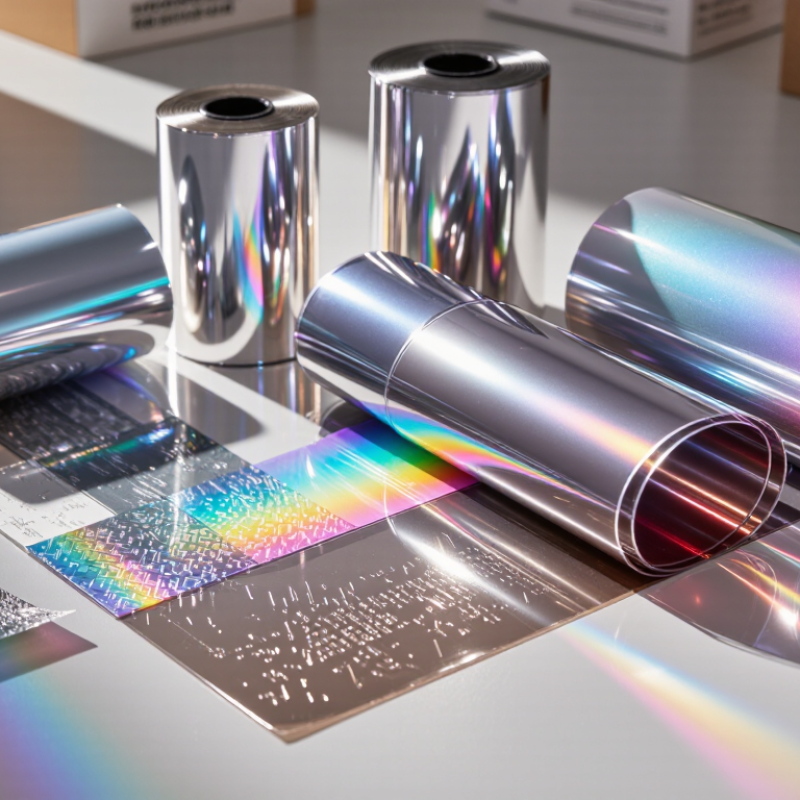
Top 10 Laser Film Manufacturers and Suppliers Worldwide

Definition and Role of Laser Film in Modern Optical Applications

Laser film is a precision thin layer designed to control coherent light. It can transmit, reflect, polarize, diffuse, or protect laser energy. Unlike ordinary display film, it must manage narrow wavelengths and concentrated heat. In optical assemblies, engineers place it over lenses, mirrors, sensors, or protective windows. A microscopic coating defect may create scattering, hotspots, or unstable beam output.

Published reports often group laser film with optical and holographic films. Grand View Research estimated the global optical films market at over USD 20 billion in 2023. Its forecast also indicates continued growth through 2030, driven by displays, imaging systems, automotive sensors, and photonics. Fortune Business Insights similarly identifies electronics and advanced optical equipment as major demand areas. These figures provide useful context, but they do not isolate laser film revenue. That limitation matters.

Professional buyers should examine spectral transmission, haze, uniformity, coating adhesion, and laser-induced damage threshold. A film rated for one wavelength may perform poorly at another. Testing should use the intended power density, pulse duration, and angle of incidence. In practical production, cleanroom handling and roll-to-roll thickness control can affect final reliability. Small details matter.

The industry still lacks one universal reporting standard for every laser-film application. This makes supplier comparisons imperfect. A transparent test method is often more valuable than a broad performance claim. Experienced manufacturers should provide measured curves, batch data, and aging results, not only attractive specifications.

Key Types and Performance Standards of Laser Film

Laser film is not one uniform product. Common types include laser-markable polyester, transparent optical film, holographic film, and coated films for high-speed packaging lines. Each type responds differently to heat, beam energy, ink, and pressure. A production trial often reveals more than a catalogue.

According to Grand View Research, the global laser marking machine market was valued at about USD 3.7 billion in 2023, with strong projected growth through 2030. This expansion increases demand for films with stable marking contrast and reliable surface adhesion. ASTM D1003 is widely used to measure haze and light transmission, while ISO 527 evaluates tensile properties. For packaging applications, ASTM F1249 helps assess water-vapor transmission. These figures matter.

Performance also depends on laser wavelength. A film designed for infrared processing may perform poorly under ultraviolet exposure. Operators should check marking speed, optical density, dimensional shrinkage, abrasion resistance, and residue after processing. Smithers’ flexible packaging studies continue to identify barrier performance and lightweight structures as major development priorities. Yet one weakness remains: laboratory results may not match factory conditions. Humidity, dust, roller pressure, and uneven cooling can change the final image. Small trials under real production settings are essential. No test is perfect.

How to Evaluate Global Laser Film Manufacturers and Suppliers

Evaluating global laser film manufacturers requires more than comparing catalog prices. Start with the film’s optical performance. Request measured transmittance, haze, color shift, and thickness tolerance. A clear sample may perform differently after lamination or thermal cycling. Test both conditions.

Ask suppliers for production records, inspection methods, and batch traceability. Reliable manufacturers should explain how they control coating uniformity, surface energy, and roll defects. Examine sample rolls under angled light. Tiny streaks, pinholes, or edge waves can become serious problems during converting. Short answers are a warning sign.

Technical support also matters. Confirm whether the supplier can adjust film thickness, adhesive compatibility, width, and winding direction. Request independent test reports when possible, not only internal data sheets. Check aging results under heat, humidity, and ultraviolet exposure. A supplier with stable export experience should provide clear packaging details and realistic lead times.

Do not trust impressive claims too quickly. I have seen excellent prototypes fail during long runs because the release liner curled or the adhesive reacted with the coating. This is easy to miss. Compare at least three suppliers using identical test conditions. Review complaint handling, replacement procedures, and communication speed. A lower quote may hide higher scrap rates, extra inspection, or inconsistent coating quality. The best evaluation combines laboratory evidence, factory communication, and small-scale production trials. Even then, some uncertainty remains. That deserves written attention.

Top 10 Laser Film Manufacturers and Suppliers Worldwide - How to Evaluate Global Laser Film Manufacturers and Suppliers

The supplier identities are intentionally omitted. The table uses industry-standard evaluation dimensions and representative benchmark ranges for global laser film sourcing. Final qualification should be confirmed through technical datasheets, samples, audits, and commercial quotations.

Rank Anonymous Supplier Profile Primary Manufacturing Region Core Laser Film Types Common Base Materials Typical Thickness Range Typical Maximum Web Width Surface / Optical Options Printing and Converting Compatibility Quality and Compliance Indicators Typical MOQ Typical Lead Time Export and Technical Support Evaluation Score
1 Supplier Profile 01 Western Europe Holographic film Diffraction film Security film PET, BOPP, coated paper laminates 12–50 microns 1,600–2,000 mm High-gloss, matte, transparent, metallized, custom optical patterns Gravure, flexographic, screen, hot-stamping and lamination processes ISO 9001 commonly available; documented optical and adhesion testing 500–2,000 kg 4–8 weeks Strong export documentation; application engineering and pre-production sampling 9.2 / 10
2 Supplier Profile 02 East Asia Transparent laser film Color-shifting film Packaging film PET, BOPP and multilayer polymer films 15–45 microns 1,300–1,800 mm Transparent, rainbow, metallic, anti-counterfeit and custom microstructures Suitable for flexographic, gravure and adhesive lamination applications ISO 9001 and batch-level inspection records typically available 300–1,500 kg 3–7 weeks Broad export coverage; responsive customization and artwork support 9.0 / 10
3 Supplier Profile 03 North America Security hologram film Brand-protection film Label stock PET, polypropylene and pressure-sensitive label constructions 19–50 microns 1,200–1,600 mm Fine-line holography, covert features, matte and tamper-evident surfaces Roll-to-roll coating, label converting, die-cutting and adhesive lamination ISO 9001 or equivalent quality systems; traceability and security controls 250–1,000 kg 5–10 weeks Strong compliance support and technical consultation for regulated applications 8.9 / 10
4 Supplier Profile 04 East Asia Cold-foil film Hot-stamping film Decorative film PET carrier film with release and metallized coatings 10–25 microns 1,000–1,500 mm Silver, gold, colored metallic, holographic and high-gloss finishes Hot stamping, cold foiling, adhesive transfer and packaging decoration Standard physical testing; coating uniformity and release-value controls 200–1,000 kg 3–6 weeks Competitive export pricing; strong support for standard decorative formats 8.7 / 10
5 Supplier Profile 05 Southern Europe Laminating film Anti-counterfeit film Premium packaging film PET, BOPP, PE and specialty coated substrates 15–60 microns 1,400–2,000 mm Gloss, soft-touch, matte, metallized and selective holographic effects Gravure, flexographic, digital print, dry lamination and extrusion lamination ISO 9001 commonly available; food-contact suitability depends on construction 500–2,500 kg 4–9 weeks Good regional logistics; documentation for packaging and converting applications 8.6 / 10
6 Supplier Profile 06 South Asia Textured laser film Decorative packaging film Label film PET, BOPP and coated synthetic paper 12–40 microns 1,000–1,500 mm Embossed, holographic, metallic, translucent and patterned surfaces Compatible with flexographic, gravure and adhesive label production Quality inspection reports; ISO certification availability varies by facility 300–1,500 kg 4–8 weeks Flexible order quantities; practical support for standard product customization 8.3 / 10
7 Supplier Profile 07 East Asia Wide-web holographic film Flexible packaging film Lamination film PET, BOPP, CPP and multilayer barrier structures 12–50 microns 1,600–2,200 mm Metallized, transparent, rainbow, matte and registered holographic effects High-speed gravure, flexographic printing and solvent-free lamination Process control for thickness, haze, adhesion and optical registration 1,000–5,000 kg 5–9 weeks Strong capacity for large-volume orders; technical support often project-based 8.2 / 10
8 Supplier Profile 08 Middle East and North Africa Metallized laser film Gift packaging film Decorative foil PET and polypropylene carrier films 12–30 microns 800–1,300 mm Metallic, holographic, colored, high-gloss and embossed effects Suitable for packaging decoration, laminating and label conversion Routine batch testing; certification and regulatory documentation require verification 300–1,200 kg 4–8 weeks Useful regional supply coverage; moderate customization capability 7.9 / 10
9 Supplier Profile 09 Latin America Label film Packaging enhancement film Security laminate PET, BOPP and adhesive-coated synthetic substrates 15–45 microns 900–1,400 mm Gloss, matte, metallic and standard holographic patterns Label printing, laminating, die-cutting and pressure-sensitive applications Documented incoming and outgoing inspection; local compliance support 250–1,000 kg 5–10 weeks Strong local service; international logistics capability varies by destination 7.7 / 10
10 Supplier Profile 10 Eastern Europe Specialty laser film Industrial marking film Security packaging film PET, polycarbonate and specialty coated polymer films 20–75 microns 800–1,500 mm High-durability, transparent, matte, metallic and custom optical structures Industrial laminating, label conversion, screen printing and specialty coating Traceability and testing capabilities; certification scope should be audited 200–1,000 kg 5–12 weeks Good support for engineered applications; longer development cycles for custom films 7.6 / 10

Top 10 Laser Film Manufacturers and Suppliers Worldwide

Top 10 Laser Film Manufacturers and Suppliers Worldwide

The top 10 laser film manufacturers and suppliers worldwide serve packaging, security printing, labels, decoration, and optical applications. Their products may include holographic film, transparent laser film, metallized film, and cold-stamping materials. Each type performs differently under heat, pressure, light, and repeated handling.

A reliable supplier should provide consistent film thickness, stable holographic patterns, and clean surface treatment. Technical teams often check roll width, tensile strength, coating adhesion, gloss, and defect levels. Sample testing remains essential. A film can look impressive under showroom lighting but fail during high-speed lamination. Ask for batch records, product specifications, storage guidance, and traceable quality reports.

Strong manufacturers usually operate controlled coating and embossing lines. They also offer custom patterns, practical minimum order quantities, and responsive engineering support. Delivery capability matters when production schedules cross several regions. Export experience can reduce confusion about packaging, documentation, and transit conditions. Still, no ranking is perfect. Supplier performance may change with raw material costs, equipment upgrades, or new quality controls. Buyers should compare recent samples rather than trust an old reputation. Small details matter. A slightly uneven roll edge can create waste, delays, and costly machine adjustments. On-site audits or independent testing can provide further confidence before a long-term order.

Industry Trends Shaping the Future of Laser Film Production

Laser film production is moving toward thinner, cleaner, and more functional materials. IDTechEx’s 2024 analysis projects continued growth in flexible and printed electronics, driven by displays, sensors, and lightweight devices. These applications demand films with tighter thickness control and lower optical distortion. A small surface defect can ruin an entire production batch.

Energy efficiency is also changing factory design. The International Energy Agency reported that industrial energy demand remains a major source of global emissions. Manufacturers are therefore testing low-temperature coating, solvent recovery, and shorter curing cycles. Water-based chemistry is gaining attention, although it does not always match solvent systems in adhesion or durability. That gap needs more research.

Automation is becoming practical, not optional. The 2024 Global Manufacturing survey found that many manufacturers are expanding digital quality control and process monitoring. In laser film plants, cameras can detect pinholes, scratches, and uneven coatings during web production. Artificial intelligence may reduce waste, but poor training data can create false alarms. Human inspection still matters. Recycled substrates are another developing trend, yet optical clarity and dimensional stability remain difficult compromises. According to recent optical film market studies, demand is strongest where films combine precision, heat resistance, and multifunctional performance.

Industry Trends Shaping the Future of Laser Film Production

Indexed growth outlook for major laser-film application segments, with 2024 set as the baseline year (2024 = 100). Values are calculated from publicly reported market-growth forecasts for optical films, holographic films, flexible electronics, and laser-marking applications.

Source: Compiled from publicly available industry forecasts by Grand View Research, MarketsandMarkets, Fortune Business Insights, and Allied Market Research; indexed values are rounded estimates.