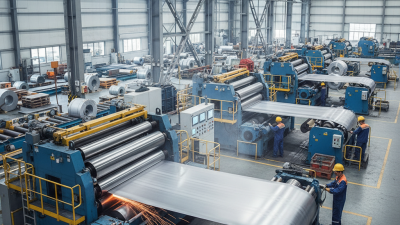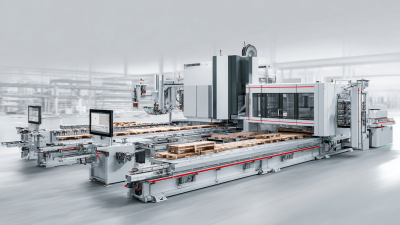

In recent years, the metal processing machine industry has undergone remarkable transformations. According to a market research report by Allied Market Research, the global metal processing machinery market was valued at $125 billion in 2021, expected to reach $190 billion by 2028. This growth highlights the increasing demand for advanced technologies in manufacturing. Innovations in CNC machining and automation are at the forefront of these developments.
Expert John Smith, a noted authority in metalworking technology, emphasizes, "The future of metal processing machines lies in their ability to integrate IoT and AI for enhanced efficiency." This statement reflects the industry's ongoing shift toward smarter machines that contribute to precision and productivity.
Despite these advancements, challenges remain. Many manufacturers still grapple with adapting to rapid technological changes. Some machinery may not fully utilize new capabilities, leading to inefficiencies. As the market evolves, continuous learning and adaptation will be essential for success in the metal processing machine sector.
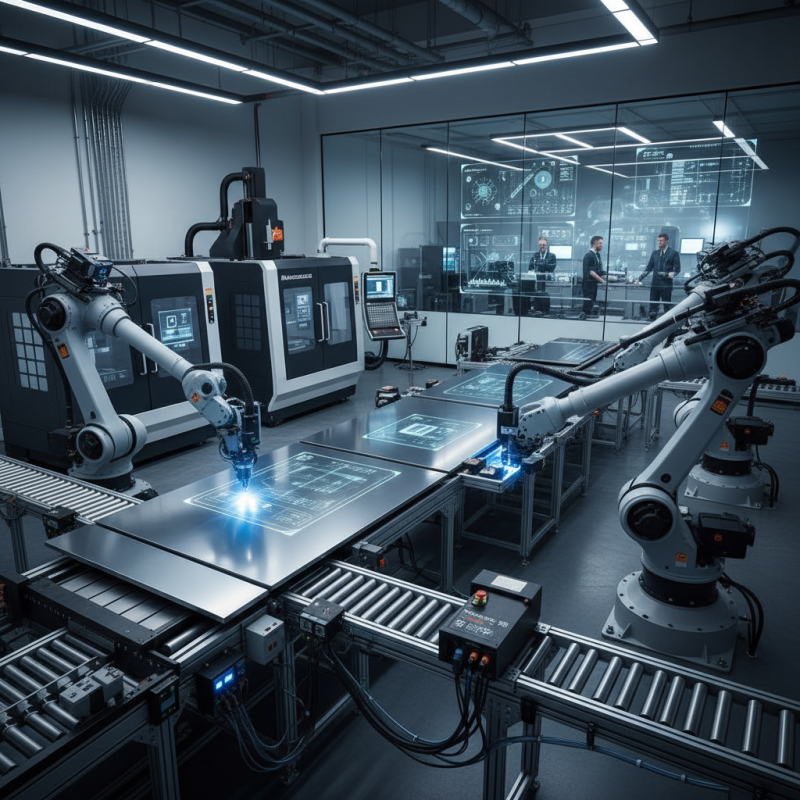
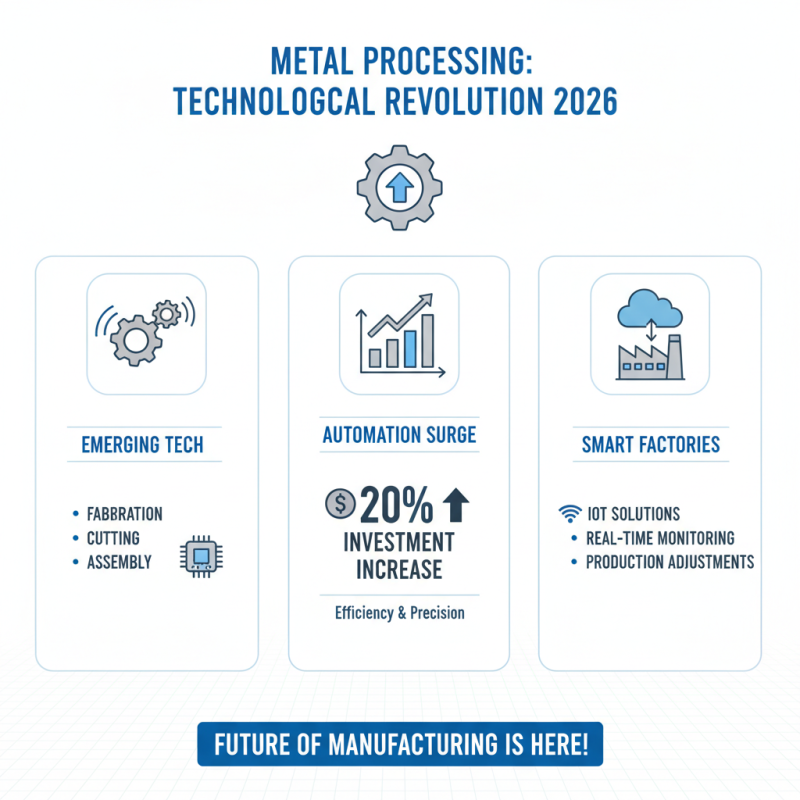
The metal processing industry is on the brink of a technological revolution in 2026. Emerging technologies are reshaping how metal is fabricated, cut, and assembled. Reports indicate that investment in automation will increase by 20% in the coming years. This surge highlights the industry's shift towards efficiency and precision. Manufacturers are keen to adopt smart machinery that integrates IoT solutions. These systems enhance monitoring, allowing real-time adjustments during production.
Laser technology is another focal point for innovation. Studies show that the global laser cutting machine market is projected to reach $5 billion by 2026. This growth suggests a strong preference for precision and versatility. Advanced materials like ultra-thin metals are gaining attention. They require machines that can execute intricate designs without compromising quality. Many companies still struggle to keep pace with these advancements, revealing a pressing need for training and adaptation.
Moreover, the advent of artificial intelligence in predictive maintenance is noteworthy. It can reduce downtime by up to 15%. However, implementing AI systems often presents challenges. Many operators lack the necessary skills, creating a gap in operational efficiency. As the sector evolves, the call for upskilling the workforce becomes increasingly critical. The balance between technology and human expertise will define future success.
As metal manufacturing evolves, key innovations emerge. Automation is at the forefront. Robotics streamline processes, reducing human error. Machines operate with precision. Efficiency climbs as a result. Workers reallocate tasks, focusing on oversight rather than manual labor.
Additive manufacturing is also gaining traction. This technology allows for complex designs that were once impossible. It reduces waste significantly. However, not all manufacturers have adapted quickly. Challenges include equipment costs and training needs. Some are hesitant to fully embrace these changes.
Data analytics and IoT play critical roles. Monitoring equipment in real-time offers valuable insights. Predictive maintenance prevents unexpected breakdowns. Yet, data security remains a concern. Manufacturers must reflect on how to protect their information. Balancing innovation with security requires careful consideration.
Sustainable practices in metal processing are gaining momentum as industries face increasing pressure to reduce their environmental impact. According to a recent report from the International Metalworking Federation, the market for sustainable metal processing technologies is projected to grow by 25% by 2026. This shift encourages companies to adopt practices that minimize waste and energy consumption.
In 2026, innovations in energy-efficient equipment will play a crucial role. Many manufacturers are exploring renewable energy sources to power their operations. For instance, integrating solar panels into processing plants is becoming more common.
However, not all facilities are equipped to make this transition smoothly. Infrastructure challenges and initial investment costs can deter smaller companies from adopting these technologies.
Moreover, the emphasis on recycling scrap metal is increasing. A study from the U.S. Geological Survey indicates that recycled metal usage will rise to 50% in manufacturing by 2026. While this is positive, some processes remain inefficient. The challenge lies in developing methods that enhance the quality of recycled materials, addressing a gap in the current recycling systems.
Automation is transforming metal fabrication and processing by increasing efficiency and precision.
Recent reports indicate that the global market for automation in this sector is expected to grow at a rate of 9% annually until 2026. This rise can be attributed to advancements in robotics and machine learning.
These technologies streamline production lines and reduce human error.
Manufacturers are now investing in automated solutions that perform tasks like welding, cutting, and assembly with minimal supervision.
For instance, automated welding machines can operate continuously, enhancing productivity. Yet, this shift also poses challenges. Workers need new skills to adapt to advanced systems.
There is concern about job displacement and the need for retraining workers.
Tips: Always assess the feasibility of automation projects.
Implement gradual changes to allow team adaptation. Monitor system performance regularly to optimize workflows.
As automation becomes standard, companies must reflect on workforce development and technology integration.
Balancing automation with human labor is crucial for sustainable growth in metal processing.
The future of smart manufacturing in metal processing is bright. AI and IoT integration are driving significant changes. These technologies optimize operations and improve efficiency. For example, AI can predict maintenance needs. IoT connects machines, sharing data in real-time.
Many companies face challenges incorporating these innovations. Not all have the infrastructure to support IoT devices. Training employees is another hurdle. They must understand new technologies and their benefits. Patience is crucial as the workforce adapts.
Tips: Start small. Implement one AI tool at a time. Monitor results before scaling up. Invest in employee training to ease the transition. Keep an open mind about changes. Embrace the learning curve to succeed.
| Innovation/Trend | Description | Key Benefits | Adoption Rate (%) | Expected Growth (2024-2026, %) |
|---|---|---|---|---|
| AI-Driven Quality Control | Utilizing AI algorithms to monitor and enhance quality in metal production | Higher accuracy in defect detection, reducing waste | 65 | 20 |
| IoT-Enabled Machinery | Integration of IoT sensors for real-time monitoring of machines | Improved operational efficiency and predictive maintenance | 70 | 25 |
| Robotics and Automation | Advanced robotic systems for enhanced precision in metalworking | Reduction in labor costs, increased speed of production | 60 | 30 |
| 3D Metal Printing | Use of additive manufacturing techniques for metal parts | Customization, reduction in material waste | 55 | 40 |
| Digital Twin Technology | Creating virtual replicas of physical machines for simulation | Enhanced optimization, scenario testing | 50 | 15 |