

Scroll Top
4801 Bennett Rd. Toledo, Ohio 43612

Top 10 Humanoid Robot Types for Global Buyers?

The global humanoid robot market is moving from laboratory demonstrations toward practical use. Buyers now encounter robots designed for education, research, healthcare support, hospitality, logistics, security, entertainment, and industrial training. Each type serves a different purpose. A small classroom robot may need expressive movements and safe touch sensors. A warehouse model may require stronger joints, longer battery life, and reliable navigation.

This guide explores the top 10 Humanoid Robot types for global buyers. It compares their body design, mobility, payload, software access, safety features, maintenance needs, and expected operating environment. These details matter more than appearance. A robot with realistic hands may still struggle with uneven floors or limited charging time. That is easy to overlook.

The selection process also considers supplier experience, product documentation, integration support, and transparent performance data. Buyers should request demonstrations under realistic conditions, not only polished showroom routines. Regional service coverage, training, spare parts, data handling, and applicable safety requirements deserve equal attention. No single robot fits every market. Some platforms remain expensive, fragile, or dependent on specialist engineers. That weakness should be acknowledged.

Real-world purchasing is rarely simple. A capable prototype may not be a dependable commercial tool. This overview offers a practical starting point, while encouraging buyers to test assumptions before signing contracts. Performance can change with software updates, workload, flooring, temperature, and human interaction. Careful evaluation creates more credible decisions and reduces costly surprises.
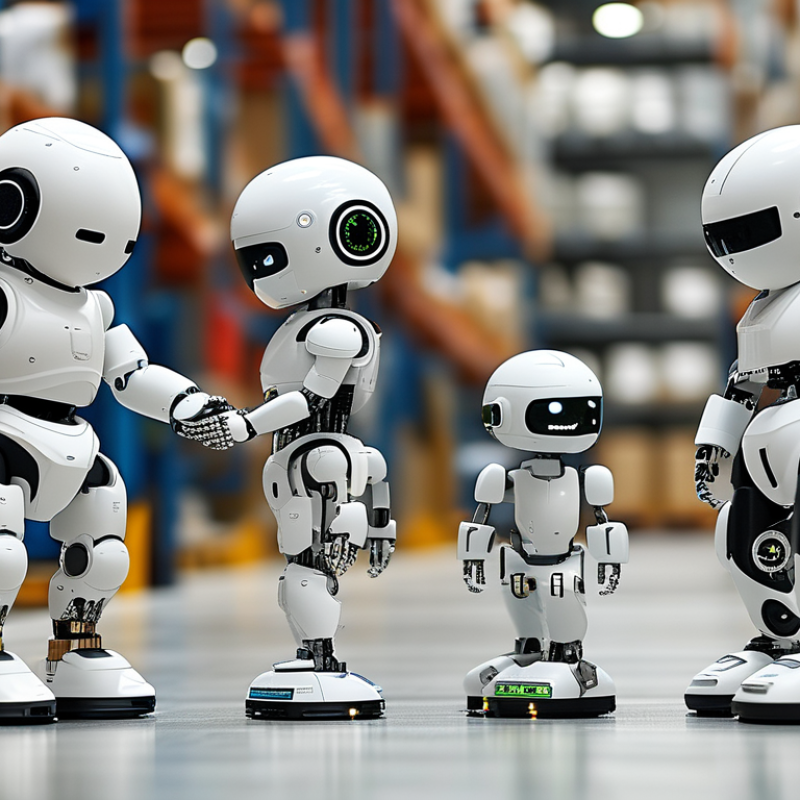
Top 10 Humanoid Robot Types for Global Buyers?

What Defines a Humanoid Robot Type?

A humanoid robot type is defined by more than a head, two arms, and two legs. Its classification depends on body structure, movement, task environment, autonomy, and human interaction. ISO 8373:2021 provides robotics vocabulary, but it does not establish one universal humanoid taxonomy. That gap matters for global buyers.

A practical buyer may distinguish bipedal service robots, wheeled humanoid assistants, research platforms, industrial manipulators, education units, healthcare support robots, inspection systems, emergency-response machines, entertainment models, and general-purpose prototypes. The physical design reveals important limits. A narrow torso may fit crowded corridors, while articulated hands may support delicate handling. Battery duration, balance recovery, payload, safety sensors, and software interfaces matter more than a realistic face.

541,302 The International Federation of Robotics reported 541,302 industrial robot installations worldwide in 2023.

200,000 Its 2024 service-robot report recorded nearly 200,000 professional service robots sold that year.

These figures describe broader robotics markets, not humanoid units alone. Buyers should avoid confusing market momentum with proven deployment. A polished demonstration can hide slow charging or poor performance on uneven floors. My own classification would remain flexible, because one machine may shift between research, service, and industrial roles. That imperfection is useful. It forces buyers to compare verified tasks, not impressive silhouettes.

How Humanoid Robots Are Classified by Form, Function, and Mobility

Top 10 Humanoid Robot Types for Global Buyers

How Humanoid Robots Are Classified by Form, Function, and Mobility

Humanoid robots differ more than their human-like appearance suggests. Buyers should examine body structure, intended work, and movement system. A full-size bipedal humanoid mirrors human reach and stair access. A compact humanoid fits classrooms, laboratories, and narrow indoor spaces. Upper-body humanoids provide arms, cameras, and speech systems on fixed platforms. Wheeled humanoids combine a human-like torso with faster, safer floor movement. Hybrid humanoids switch between wheels and legs, though their mechanical complexity can increase maintenance needs.

Function creates another useful classification. Industrial humanoids handle repetitive assembly, inspection, and tool delivery. Logistics humanoids move containers across organized facilities. Service humanoids support reception, guidance, and basic information tasks. Healthcare-assistance humanoids may carry supplies or support supervised interaction, but they should not replace clinical judgment. Educational humanoids teach coding, language, and social communication through controlled demonstrations. Research humanoids remain flexible platforms for testing balance, vision, grasping, and human-robot cooperation.

Mobility affects operating cost and site suitability. Bipedal robots manage steps but require careful balance calibration. Wheeled units perform well on smooth floors and usually consume less energy. Tracked or reinforced mobile forms suit uneven industrial surfaces, but they can damage delicate flooring. In real purchasing work, I have found that advertised versatility can hide slow setup times. A robot may walk impressively during a demonstration, yet struggle with glare, clutter, or wet surfaces. Buyers should request measured data, maintenance intervals, safety documentation, and trials in their own environment. Performance claims need evidence.

Top 10 Humanoid Robot Types for Global Buyers

Top 10 Humanoid Robot Types for Global Buyers

Global buyers can choose from ten practical humanoid robot types: reception, education, healthcare assistance, eldercare, hospitality, home support, logistics, manufacturing, inspection, and research platforms. Each type serves a different workplace need. A reception robot may greet visitors, check appointments, and provide directions. An education robot can demonstrate lessons, repeat exercises, and support language practice.

Healthcare and eldercare models require careful privacy controls, gentle movement, and reliable emergency communication. Hospitality robots may guide guests, carry light items, or answer routine questions. Home-support robots often handle reminders, simple fetching tasks, and basic monitoring. Logistics and manufacturing robots need stable walking, accurate gripping, and safe operation near people. Inspection models may use cameras and sensors to examine equipment in difficult areas.

Procurement teams should test robots in real environments. Uneven floors matter. So do narrow doors, bright windows, background noise, and sudden human movement. A polished demonstration can hide weak battery life or slow recovery after a minor collision. That is worth questioning. Buyers should request maintenance records, software update policies, training materials, and measurable safety documentation. Local electrical rules, workplace requirements, data protection laws, and import conditions also need review before purchase.

Start with one measurable task. Set targets for uptime, response speed, lifting limits, and operator training hours. Independent testing can reveal gaps between advertised capability and daily performance. Human oversight remains necessary, especially in healthcare, public spaces, and shared workplaces. Some robots look impressive but still need frequent supervision.

How to Compare Performance, Safety, Cost, and Support

Top 10 Humanoid Robot Types for Global Buyers?

Comparing humanoid robots starts with the job, not the appearance. Warehouse models need stable walking, lifting control, and accurate object handling. Research models need flexible joints, open software, and adjustable sensors. Healthcare support models require gentle movement, clear communication, and strong privacy controls. Education, hospitality, inspection, logistics, and household assistance demand different performance measures.

Test each candidate in realistic conditions. Ask whether it can walk across uneven flooring, recover from a minor push, and stop safely near people. Measure task time, battery endurance, payload accuracy, noise, and downtime. A smooth demonstration proves little. Repeat the same task after several hours. Heat, lighting, and crowded spaces can expose weaknesses.

Safety should include force limits, emergency stops, obstacle detection, and safe manual operation.

Cost includes more than the purchase price. Include training, replacement parts, software updates, integration work, insurance, and technician travel. Support quality matters across borders. Check response times, spare-part locations, remote diagnostics, language coverage, and service documentation. Request maintenance records from comparable deployments. I would also ask for a supervised trial before signing a long contract. No scoring model is perfect. A robot may achieve excellent speed but frustrate workers with difficult controls. That detail is easy to miss. Reliable buyers record failures, not only successful demonstrations, and leave room for changing safety rules, workplace layouts, and user expectations.

How to Choose the Right Humanoid Robot for Your Market

Top 10 Humanoid Robot Types for Global Buyers

How to Choose the Right Humanoid Robot for Your Market

Humanoid robots differ by purpose, not only by appearance. Common types include reception robots, education robots, healthcare assistants, warehouse workers, retail guides, security patrol units, research platforms, entertainment robots, elderly-care helpers, and industrial inspection robots. Each type needs different movement, software, sensors, and support. A reception robot may need clear speech and stable facial recognition, while an inspection robot needs accurate balance and reliable cameras in dim areas.

Start with the task, environment, and local users. Measure doorway widths, floor conditions, temperature, noise, and daily operating hours. Check whether the robot can lift the required weight safely. Language support matters in multilingual markets. So does data handling. Buyers should request documented safety testing, maintenance schedules, software update policies, and operator training. Local certification requirements must be verified before purchase. A technically impressive machine may still fail in a crowded shopping center.

Run a small pilot before signing a large contract. Observe battery performance during a full shift, not just a demonstration. Record response errors and repair times. Ask workers whether the robot reduces effort or creates new tasks. This is where assumptions often break. Some buyers may overvalue human-like movement, although simple wheeled assistance could perform better. Replacement parts, connectivity limits, and import procedures also affect ownership costs. A careful market fit review should compare useful results, not impressive videos.

Top 10 Humanoid Robot Types for Global Buyers

How to Choose the Right Humanoid Robot for Your Market

The benchmark shows the typical payload requirement for each application type. Values are indicative buyer-planning ranges based on common human-equivalent work scenarios, not vendor specifications.