

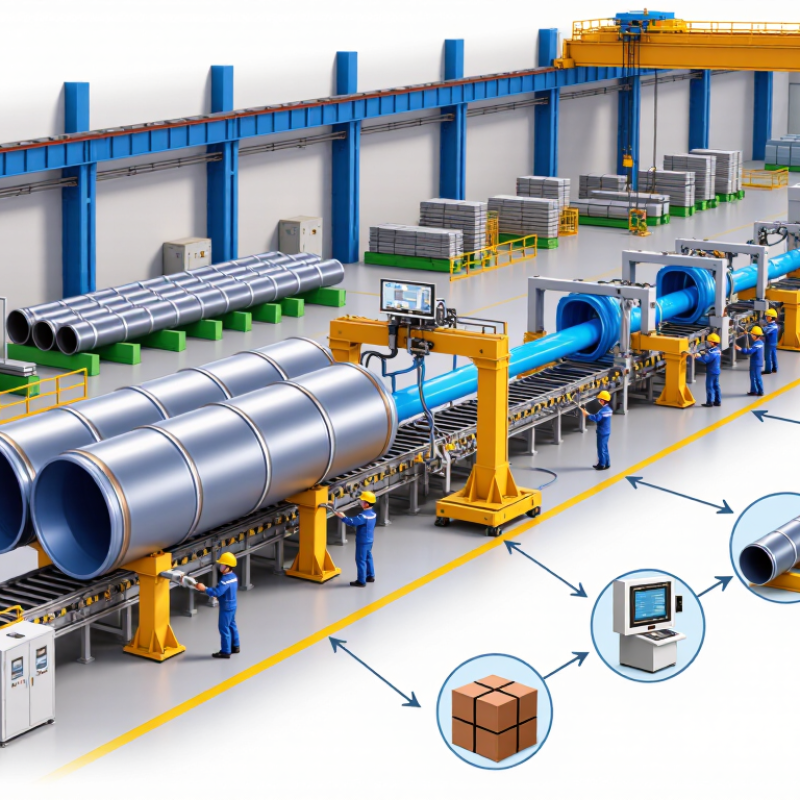
Reliable procurement starts with measurable specifications, not attractive quotations. Buyers should request LSAW pipe grade, outside diameter, wall thickness, pipe length, and dimensional tolerances. API 5L or ISO 3183 may define the steel requirements. ISO 21809-2 addresses external FBE coating for pipeline applications. Typical coating thickness often ranges from 350 to 500 micrometres, but project conditions decide the final value. Ask for holiday-test records, surface-preparation results, adhesion testing, and coating batch traceability. Small gaps in documentation can become large site problems.
Lead time needs a production map. A dependable factory should separate steel-plate sourcing, welding, ultrasonic inspection, hydrostatic testing, coating, and packing. For standard orders, six to ten weeks may be realistic, but plate availability and coating capacity can change it. UNCTAD’s Review of Maritime Transport 2024 states that over 80% of global merchandise trade by volume moves by sea. Therefore, export planning must include vessel schedules, port congestion, container or break-bulk limits, and weather exposure. Request a weekly progress report with inspection hold points.
Export service is more than shipping. It includes mill test certificates, inspection coordination, fumigation documents where required, seaworthy packing, and accurate customs descriptions. Cradles, end caps, and moisture protection should suit long ocean routes. In my experience, buyers sometimes compare only price and nominal delivery. That is incomplete. A cheaper offer may hide weaker traceability or unclear responsibility after loading. Even experienced teams can miss this. A factory’s response quality often reveals its real operating discipline.