

What Are the 2026 Top Extruded Aluminum Profiles?
What Are the 2026 Top Extruded Aluminum Profiles?
The 2026 market for Extruded Aluminum Profiles will focus on performance, efficiency, and measurable sustainability. Buyers will look beyond surface appearance. They will examine alloy strength, dimensional accuracy, thermal performance, corrosion resistance, and recycled content. The leading profiles may include thermal-break systems for windows, lightweight structural sections, solar mounting rails, industrial framing, and custom profiles for electric vehicles. Some choices will be highly specialized.
Heidi Brock, President and CEO of The Aluminum Association, has said, “Aluminum is a material that is critical to our nation’s economy and national security.” Her statement reflects aluminum’s wider industrial importance. Yet it does not automatically make every profile a smart choice. Design details still matter. A thin wall may reduce weight but increase distortion during extrusion. A polished finish may look impressive but hide poor tolerances. That possibility deserves attention.
This guide will compare the most promising Extruded Aluminum Profiles for 2026 through practical criteria. These include strength-to-weight ratio, machinability, finish quality, thermal insulation, production scalability, and end-use value. A solar rail should resist outdoor exposure and installation loads. A window profile should support stable seals and reliable thermal breaks. An industrial frame should assemble cleanly, even after repeated adjustments. Recycled billet can reduce environmental impact, but its chemistry and quality control require verification. The “top” profile is therefore not universal. It depends on the application, operating conditions, budget, and evidence behind the supplier’s claims. Some conclusions may remain imperfect. That is better than pretending every specification fits every project.
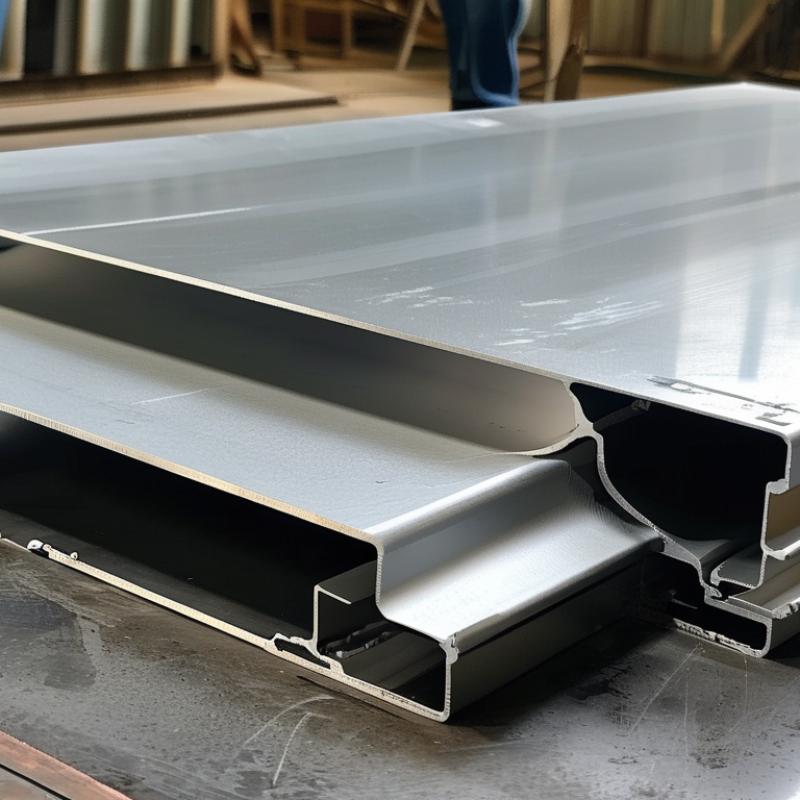
What Makes an Aluminum Profile a Top Choice in 2026?
In 2026, a top extruded aluminum profile is not simply the lightest or brightest option. It fits the job, survives daily use, and arrives with verifiable data. Engineers now compare alloy, temper, wall thickness, dimensional tolerance, and surface treatment together. A strong profile may still fail if its slot geometry causes loose fasteners. Small details matter. During practical assembly, clean cuts, consistent channels, and stable corners can save hours on the shop floor. Profiles for machine frames need stiffness and repeatable tolerances. Architectural sections may prioritize thermal breaks, drainage paths, and weather resistance. One shape cannot serve every project.
Material traceability makes a profile a more reliable choice. Suppliers should provide test reports, batch information, and clear inspection records. Independent testing can confirm tensile strength, coating adhesion, corrosion resistance, and dimensional accuracy. These documents are useful, but field performance matters more. A profile exposed to coastal air needs protection suited to salt and moisture conditions. A poorly specified coating may look excellent on delivery, then fade or blister. That risk is easy to underestimate. No profile is perfect.
Sustainability also influences the 2026 standard. Recycled content, efficient extrusion design, and long service life can reduce environmental impact. Yet recycled input alone does not guarantee quality. Processing control still matters. The best selection balances performance, maintenance, energy use, and total cost over years. I would not choose a profile from a catalog image alone. A sample assembly, inspection data, and application-specific testing reveal much more.
| Rank | Extruded Profile Type | Common Alloy & Temper | Typical Tensile Strength | Typical Yield Strength | Density | Thermal Conductivity | Corrosion Resistance | Best-Fit Applications | Why It Is a Top Choice in 2026 |
|---|---|---|---|---|---|---|---|---|---|
| 1 | Architectural framing profile | 6063-T5 | Approx. 186 MPa | Approx. 145 MPa | Approx. 2.70 g/cm³ | Approx. 200 W/m·K | Very good | Doors, windows, curtain walls, partitions and decorative frames | Excellent surface finish, strong extrudability, low weight and reliable anodizing performance make it suitable for high-volume architectural systems. |
| 2 | Structural T-slot profile | 6061-T6 | Approx. 310 MPa | Approx. 276 MPa | Approx. 2.70 g/cm³ | Approx. 167 W/m·K | Good to very good | Machine guards, workstations, automation frames, equipment bases and modular structures | High strength, good machinability and standardized slot-based assembly support durable, adjustable and reusable designs. |
| 3 | Heavy-duty structural profile | 6082-T6 | Approx. 290 MPa | Approx. 250 MPa | Approx. 2.70 g/cm³ | Approx. 172 W/m·K | Good | Load-bearing frames, transport equipment, industrial platforms and support structures | High mechanical strength and good weldability provide a strong strength-to-weight ratio for demanding structural applications. |
| 4 | Heat-sink and thermal-management profile | 6063-T5 or 6063-T6 | Approx. 186–215 MPa | Approx. 145–175 MPa | Approx. 2.70 g/cm³ | Approx. 200 W/m·K | Very good | LED lighting, power electronics, battery enclosures and control systems | High thermal conductivity and the ability to form thin fins through extrusion help improve heat dissipation without excessive mass. |
| 5 | Precision sliding and guide profile | 6060-T66 | Approx. 190 MPa | Approx. 150 MPa | Approx. 2.70 g/cm³ | Approx. 200 W/m·K | Very good | Linear guides, sliding doors, lightweight machine frames and display systems | Good dimensional consistency, smooth extrusion surfaces and easy machining support compact precision assemblies. |
| 6 | Automotive and transport profile | 6005A-T6 | Approx. 260 MPa | Approx. 240 MPa | Approx. 2.70 g/cm³ | Approx. 180 W/m·K | Good | Vehicle rails, battery trays, crash-management components and transport frames | Combines moderate-to-high strength, weldability and low density for lightweight transportation and electrification projects. |
| 7 | Custom hollow enclosure profile | 6063-T5 or 6061-T6 | Approx. 186–310 MPa | Approx. 145–276 MPa | Approx. 2.70 g/cm³ | Approx. 167–200 W/m·K | Good to very good | Electrical housings, battery covers, protective channels and fluid-carrying sections | Hollow geometry can reduce material use and part count while integrating channels, mounting points and protective walls into one component. |
Technical note: Values are representative minimum or typical values commonly associated with the listed alloys and tempers; actual performance depends on wall thickness, profile geometry, heat treatment and applicable regional standards. Alloy and temper properties should be verified against the relevant material certificate and specifications such as EN 573, EN 755 and EN 12020 before engineering approval.