

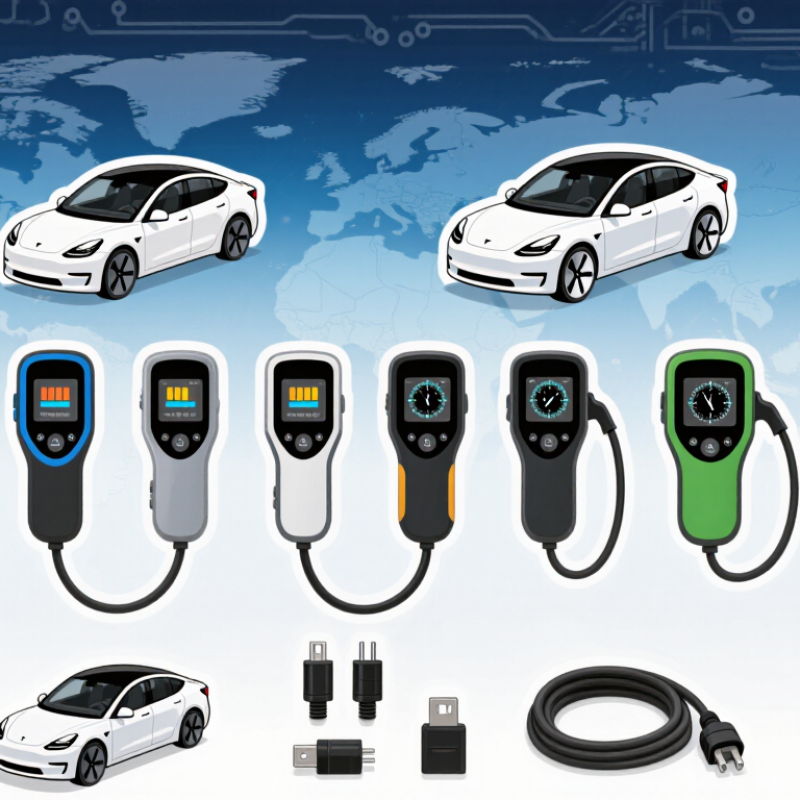
A charger tester should reflect the systems drivers encounter, not just a socket on a lab bench. The International Energy Agency reported that public charging points grew by more than 40% in 2023, while fast chargers grew by 55% (Global EV Outlook 2024). Growth is uneven across regions. European buyers may need Type 2 and CCS2 checks; North American deployments often call for Type 1 or CCS1, while China-focused work may require GB/T support. Connector coverage is only the start.
Match the tester to local supply voltage, frequency, earthing arrangements, and charging protocols. Check whether it can simulate vehicle signals and verify control-pilot behavior, protective conductors, insulation, and residual-current protection. IEC 61851 and IEC 62196 are useful references, but confirm the required test procedures for each market. A tester that handles the plug but misses a regional electrical condition can leave a costly blind spot.
Tips: Build a test matrix for each destination: connector, supply, protocol, and safety checks. Verify updates and calibration support before purchase. Field conditions can still surprise you; a checklist may miss a small but important detail.