

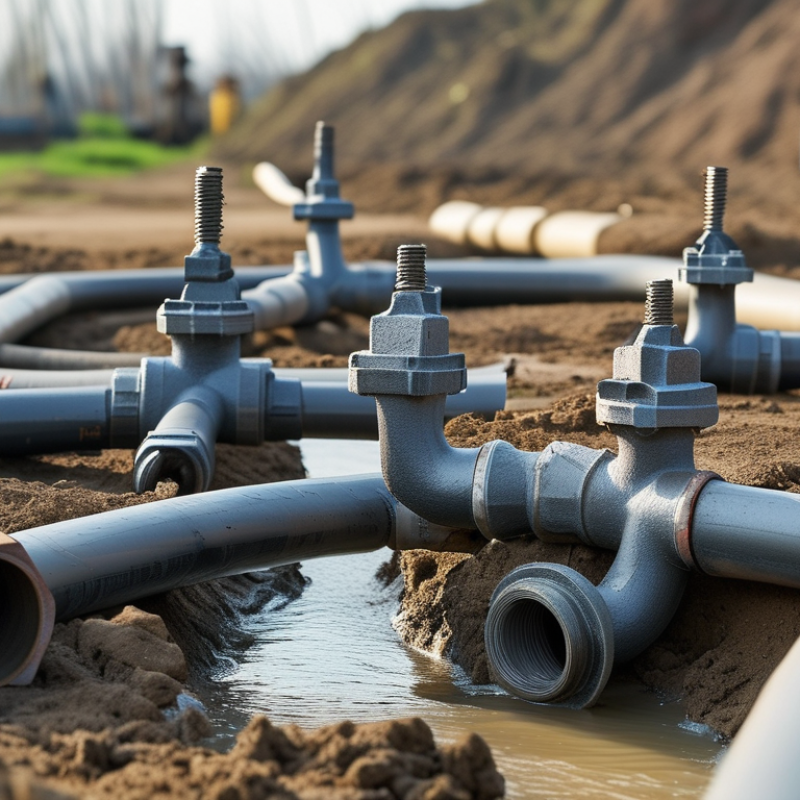
Electrofusion reducing tees connect a smaller branch to a larger polyethylene pipeline. Their role is practical: they create controlled flow divisions without welding separate metal components. Applications include potable water, gas distribution, irrigation, wastewater, and industrial process lines. Grand View Research reports that the global plastic pipes market reached approximately USD 26.61 billion in 2023, with continued growth expected through 2030. This expansion increases demand for dependable joining systems and correctly sized branch fittings.
The industry scope is broader than fitting production. Manufacturers must manage resin quality, embedded heating wires, dimensional accuracy, and fusion-cycle consistency. ASTM F1055 and ISO 21307 provide useful technical references for electrofusion fittings and polyethylene joining procedures. On a worksite, operators usually scrape the pipe surface, check alignment, record voltage and heating time, then protect the joint during cooling. Small errors matter. A tilted tee can create stress at the branch.
Market reports often emphasize volume growth, but installation quality deserves equal attention. A fitting may pass factory testing and still fail after poor site preparation. That assumption is convenient, but incomplete. Reliable suppliers therefore support batch traceability, training, pressure testing, and documented quality control. Data from the International Water Association continues to highlight water-loss reduction as a major infrastructure priority, making durable branch connections commercially important. Yet manufacturers should avoid treating every project alike. Soil movement, pressure cycles, temperature, and operator experience can change the correct specification.