

Scroll Top
4801 Bennett Rd. Toledo, Ohio 43612

2026 Top Artificial Graphite Types for Global Buyers

Artificial Graphite is becoming a strategic material for battery anodes, steelmaking electrodes, semiconductor processing, and advanced thermal systems. Global buyers now face a crowded market. Grades may look similar on paper, yet their performance can differ under heat, pressure, and repeated cycling.

“Graphite is the silent enabler of the energy transition,” says Simon Moores, a widely cited battery-materials analyst and founder of Benchmark Mineral Intelligence. His observation captures the material’s quiet importance. Artificial Graphite rarely appears in the final product, but it often controls conductivity, durability, and process stability.

This guide examines the leading Artificial Graphite types considered by international purchasers in 2026. It covers petroleum-coke graphite, needle-coke graphite, pitch-coke graphite, high-purity graphite, isostatic graphite, electrode-grade graphite, and battery-grade material. Each type serves a different operating environment. Some suit electric-arc furnaces. Others support lithium-ion anodes, crucibles, seals, or precision machining.

The practical details matter. Buyers should compare fixed carbon content, ash level, particle size, bulk density, resistivity, graphitization temperature, and expansion behavior. Supplier consistency matters too. A sample may perform well, while the next shipment falls short.

That risk is real.

No universal ranking fits every buyer. Cost, energy consumption, qualification time, and regional supply can change the final choice. This overview may simplify a complicated market, and that limitation deserves attention. Still, it offers a grounded starting point for comparing Artificial Graphite types, verifying supplier claims, and selecting material according to actual production conditions rather than attractive specifications alone.
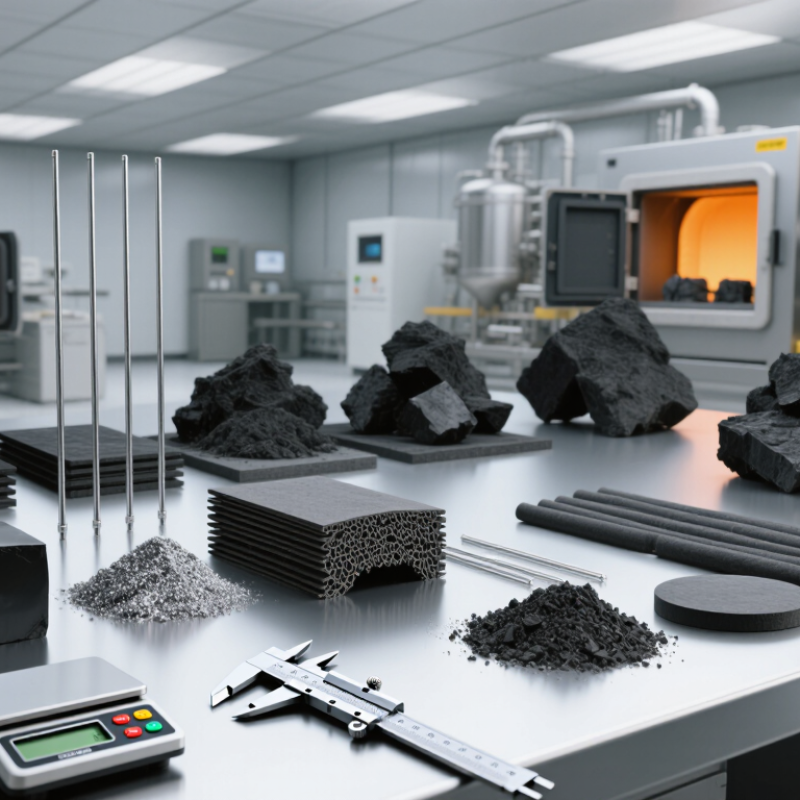
2026 Top Artificial Graphite Types for Global Buyers

Artificial Graphite in 2026: Grades, Uses, and 99.5%+ Carbon Purity

Artificial graphite is gaining attention in 2026 because buyers need consistent carbon performance, not merely low prices. USGS Mineral Commodity Summaries 2025 estimated global natural graphite mine production at 1.6 million metric tons in 2024. This highlights a supply gap that artificial graphite can help balance. It is produced from petroleum coke or needle coke through high-temperature graphitization.

Common grades include standard industrial graphite, high-purity graphite, and battery-grade graphite. Material above 99.5% carbon suits refractories, furnace components, seals, and conductive formulations. Higher grades, often reaching 99.9% or more, support sensitive thermal and electrical applications. Battery anode material requires tighter control of particle size, tap density, surface area, and expansion. Purity alone can mislead.

The International Energy Agency’s Global Critical Minerals Outlook 2024 identifies graphite as a major battery-material demand driver through 2040. Buyers should request ash, sulfur, moisture, and particle-size results with every shipment. A certificate of analysis is useful, but independent testing remains wiser for large contracts. In my experience, inconsistent milling can damage performance even when carbon purity looks excellent. I would also question vague terms such as “battery grade.” They need measurable limits. Not just marketing language. Refractory users may prioritize oxidation resistance, while electrode producers often require controlled resistivity and stable dimensions. Choosing the correct grade depends on the process, not the purity figure alone.

Electrode Graphite: RP, HP, and UHP Types for 22–30 A/cm² Current Density

For 2026 buyers, artificial graphite electrodes remain central to electric arc furnace performance.

RP, HP, and UHP grades serve different current-density windows. RP usually suits lighter melting duties, around 17–24 A/cm². HP commonly covers roughly 20–30 A/cm². UHP is preferred when operation approaches or exceeds 25 A/cm², especially under intensive steelmaking conditions. These ranges vary with electrode diameter, furnace design, cooling, and operating practice.

At 22–30 A/cm², selection becomes more technical.

22 A/cm² A 600 mm electrode carrying 22 A/cm² handles about 62 kA.
30 A/cm² At 30 A/cm², the same diameter carries nearly 85 kA.

Higher current increases thermal stress, oxidation risk, and joint sensitivity. HP can be adequate near 22–25 A/cm², but UHP offers a wider safety margin at the upper end. RP may reduce purchase cost, yet premature breakage can erase that saving quickly. The labels are not magic.

The World Steel Association reported approximately 1.89 billion tonnes of crude steel production in 2024, supporting continued demand for reliable furnace consumables. The U.S. Geological Survey’s Mineral Commodity Summaries 2025 recorded about 1.6 million tonnes of natural graphite mine production in 2024, highlighting the importance of broader graphite supply planning.

Buyers should compare resistivity, bulk density, flexural strength, thermal expansion, and nipple quality, not only the RP, HP, or UHP name. A catalog range can mislead. Real furnace data still matters.

Battery Anode Graphite: 280–360 mAh/g Capacity and 90%+ Efficiency

Artificial graphite remains a practical anode choice for global battery buyers in 2026. Its layered carbon structure supports stable lithium-ion movement and consistent production quality. Commercial grades commonly deliver 280–360 mAh/g reversible capacity, depending on particle design, coating, and testing conditions. The theoretical graphite limit is about 372 mAh/g, according to electrochemical research used in U.S. Department of Energy battery programs.

Efficiency matters during the first charge. Well-processed artificial graphite can achieve more than 90% initial coulombic efficiency, reducing lithium loss and improving usable cell energy. The International Energy Agency’s Global Critical Minerals Outlook 2024 identifies graphite as a major battery-material demand driver through 2030. That pressure favors suppliers with controlled graphitization, low impurity levels, and repeatable batch testing. Ask for actual test curves.

Particle size also changes performance. Smaller particles may shorten diffusion paths, but they can increase surface area and consume more electrolyte. Larger particles may improve packing density, yet they can slow charging. There is no perfect specification. Some published capacity figures also rely on low-rate laboratory tests, not fast-charging conditions. Buyers should compare electrode loading, current density, formation cycles, and temperature before accepting a 360 mAh/g claim. Independent verification remains essential. Real cells can disappoint.

2026 Top Artificial Graphite Types for Global Buyers

Battery Anode Graphite: 280–360 mAh/g Capacity and 90%+ Initial Coulombic Efficiency

The chart compares representative artificial graphite anode categories used in lithium-ion batteries. Practical reversible capacity typically ranges from 280 to 360 mAh/g, while initial coulombic efficiency commonly exceeds 90%. Actual performance varies with particle design, graphitization level, coating, binder system, electrode density, and test conditions.

Specialty Graphite: Isotropic, Nuclear, and Semiconductor Grades Above 2,500°C

2026 Top Artificial Graphite Types for Global Buyers

Specialty graphite begins where ordinary carbon materials lose stability. Isotropic graphite offers uniform strength, low porosity, and predictable thermal expansion. Nuclear grades demand strict impurity control, especially for boron, sulfur, and metallic elements. Semiconductor grades require extreme purity and clean machining. Many components operate above 2,500°C, where small density differences can become costly failures.

The USGS Mineral Commodity Summaries 2025 estimates global natural graphite mine production at approximately 1.6 million metric tons in 2024. However, this figure does not fully represent engineered synthetic graphite capacity. The International Energy Agency reports that graphite refining remains highly concentrated, creating supply and qualification risks for global buyers. In practice, a certificate alone is not enough. Buyers should review ash content, bulk density, grain size, permeability, and outgassing data. A perfect specification can still fail after repeated thermal cycling.

Tips: Request batch-level test results and furnace history. Compare thermal expansion curves, not only maximum temperature ratings. For nuclear and semiconductor use, confirm trace-element limits with independent laboratory testing. Allow time for qualification; this step is often underestimated. Temperature claims may look impressive, but real performance depends on atmosphere, load, heating rate, and surface treatment.

2026 Top Artificial Graphite Types for Global Buyers - Specialty Graphite: Isotropic, Nuclear, and Semiconductor Grades Above 2,500°C
Artificial Graphite Type Typical Buyer Application Purity / Ash Level Bulk Density Open Porosity Flexural Strength Thermal Conductivity Coefficient of Thermal Expansion Recommended Maximum Service Temperature* Key Procurement Considerations
Fine-Grain Isotropic Graphite High-temperature furnace fixtures, electrical-discharge machining electrodes, analytical crucibles, continuous-casting components and precision tooling. Typically 100–500 ppm ash 1.75–1.90 g/cm³ 8–16% 35–80 MPa 80–140 W/m·K 4.0–5.5 × 10⁻⁶/K 2,500–3,000°C in inert gas or vacuum Specify grain size, isotropy, dimensional tolerances, surface finish, machining allowance and resistance to thermal shock.
Ultra-Fine-Grain Isotropic Graphite Semiconductor hot-zone parts, high-temperature susceptors, ion-implantation components, laboratory furnace parts and complex machined assemblies. Typically 20–100 ppm ash 1.80–1.92 g/cm³ 6–12% 45–90 MPa 90–150 W/m·K 3.8–5.2 × 10⁻⁶/K 2,500–3,000°C in controlled atmosphere Prioritize low particle generation, homogeneous microstructure, low permeability, tight machining tolerances and lot-to-lot consistency.
Nuclear-Grade Graphite Reactor-core moderator or reflector components, high-temperature nuclear test assemblies and irradiation research components. Typically 100–1,000 ppm ash; nuclear impurity limits are material-specific 1.70–1.85 g/cm³ 15–25% 20–45 MPa 70–120 W/m·K 3.5–5.0 × 10⁻⁶/K Up to approximately 2,500–3,000°C in inert conditions; reactor limits depend on design Require traceability, isotopic and elemental impurity analysis, irradiation data, dimensional stability, porosity control and qualification documentation.
Semiconductor-Grade Graphite Silicon and compound-semiconductor crystal growth, wafer-processing susceptors, epitaxy parts, heater supports and high-temperature furnace hardware. Typically 5–50 ppm ash before coating 1.75–1.90 g/cm³ 8–15% 35–75 MPa 80–140 W/m·K 4.0–5.5 × 10⁻⁶/K 2,500–3,000°C in vacuum or inert gas Confirm metal contamination limits, particle performance, outgassing, gas permeability, coating compatibility and cleanroom packaging requirements.
Pyrolytic Graphite Thermal-management shields, specialized furnace insulation, X-ray and optical components, and applications requiring directional thermal properties. Typically below 100 ppm ash 2.10–2.25 g/cm³ Usually below 2% 20–60 MPa, orientation-dependent In-plane: 1,000–2,000 W/m·K; through-plane: 5–20 W/m·K Near 0 to 1.0 × 10⁻⁶/K in-plane; strongly anisotropic 2,500–3,000°C in inert gas or vacuum Evaluate orientation, layer structure, thickness uniformity, anisotropic expansion, brittleness and handling damage.
Vibration-Molded Graphite Large furnace components, heating elements, crucibles, thermal-treatment tooling and applications requiring large cross-sections. Typically 200–1,000 ppm ash 1.65–1.85 g/cm³ 12–22% 20–50 MPa 60–110 W/m·K 4.0–6.0 × 10⁻⁶/K 2,500–3,000°C in inert gas or vacuum Compare large-size availability, machining yield, permeability, dimensional stability, thermal shock performance and total cost per finished part.
Isostatically Pressed Graphite Precision semiconductor tooling, high-temperature crucibles, photovoltaic processing equipment, EDM electrodes and demanding furnace assemblies. Typically 50–500 ppm ash; ultra-pure variants can be lower 1.75–1.90 g/cm³ 8–18% 30–80 MPa 70–130 W/m·K 4.0–5.5 × 10⁻⁶/K 2,500–3,000°C in inert gas or vacuum Check uniformity in all directions, grain size, mechanical-property variation, impurity profile, machinability and supply of large near-net shapes.
*Temperature values are typical material capability ranges for vacuum or oxygen-free inert atmospheres. Graphite oxidizes in air at substantially lower temperatures, and actual limits depend on geometry, atmosphere, pressure, heating rate, load, purity and coating. Property ranges are representative industry values and should be confirmed against the supplier’s current technical datasheet and qualification records.

Global Buyer Guide: Compare 97%+ Graphitization, Size, Density, and Cost

2026 Top Artificial Graphite Types for Global Buyers

In 2026, global buyers are comparing artificial graphite by more than carbon content. Graphitization above 97% can indicate strong thermal treatment, but it does not guarantee purity or performance. Ask for the test method, sampling location, and batch date. A furnace-grade product may suit electrodes, while fine powder can serve conductive compounds or thermal parts. Each application needs different evidence.

Particle size strongly affects processing. A 0.5–2 mm fraction may feed automated systems smoothly, while 45-micron powder offers better surface contact. Oversized particles can increase screening waste.

Density also matters. Molded graphite commonly provides stable dimensions, while higher-density grades may resist oxidation and mechanical wear better.

Request bulk density and apparent density separately. They are not interchangeable.

Cost comparisons should include yield, packaging, machining, freight, and rejected material. A cheaper grade may contain wider size variation, creating hidden labor costs. For serious purchasing, compare three sealed samples under the same laboratory conditions.

Check ash, moisture, sulfur, electrical resistivity, density, and graphitization degree. I would not rely on a certificate alone; independent verification is safer for large contracts.

Some buyers focus too heavily on the 97% figure and overlook porosity. That is a mistake worth reviewing. Temperature history can also change results between batches. Ask for recent production data, not only a standard specification sheet.