

Scroll Top
4801 Bennett Rd. Toledo, Ohio 43612

Top 10 Types of Arm Exercise Machines for Gyms

Choosing the right arm equipment can shape training quality, member satisfaction, and gym safety. This guide examines the top 10 types of Arm Exercise Machines used in commercial and private fitness facilities. Each design serves a different purpose, from controlled biceps work to supported triceps pressing.

An Arm Exercise Machine can provide stable resistance, clear movement paths, and adjustable settings for different body sizes. Selectorized machines often suit beginners because weight changes are quick and controlled. Plate-loaded models may appeal to experienced lifters seeking heavier resistance and a more familiar strength-training feel. Cable stations add flexibility, allowing users to perform curls, extensions, rows, and rotational movements. Fit matters. A poorly adjusted seat can shift pressure toward the shoulders or wrists.

The discussion also considers practical details observed in real gym environments. These include frame stability, grip comfort, range of motion, maintenance access, and floor-space requirements. A useful machine should feel smooth at the start and finish of every repetition. It should also support consistent technique when users become tired. That choice matters. No single model suits every athlete, budget, or training goal. Some recommendations remain judgment calls because comfort and biomechanics differ between users. Qualified fitness professionals should assess machine setup, member ability, and manufacturer guidance before regular use. This approach supports safer decisions and more reliable equipment investment.
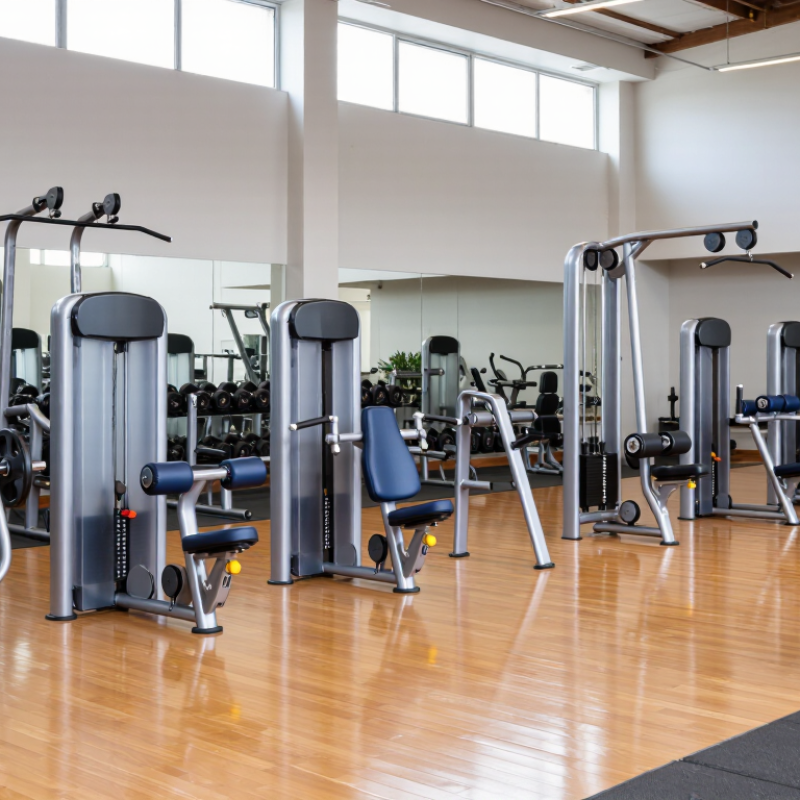
Top 10 Types of Arm Exercise Machines for Gyms

Understanding Arm Exercise Machines and Their Training Functions

Top 10 Types of Arm Exercise Machines for Gyms

Arm exercise machines differ by resistance path, joint position, and required stabilization.

A selectorized biceps curl machine isolates elbow flexion with a guided movement. A preacher curl machine limits shoulder motion and exposes weak points near full extension. For triceps, pushdown stations emphasize elbow extension, while overhead extension machines load the long head in a lengthened position. Assisted dip machines reduce bodyweight demand and help beginners practice pressing strength.

Cable crossover systems and adjustable pulley stations offer freer paths, making them useful for curls, extensions, and unilateral work. Lat pulldown machines train elbow flexion while strengthening the back. Seated row machines add similar pulling volume with strong scapular control. Forearm curl machines target wrist flexors and extensors, which are often neglected. A multi-function arm station can combine several patterns, but convenience may reduce exercise specificity.

The World Health Organization recommends muscle-strengthening activity on at least two days weekly. ACSM’s 2024 Worldwide Survey of Fitness Trends also placed traditional strength training among leading global fitness priorities. These findings support regular resistance training, but machine choice still needs judgment.

A fixed path is not automatically safer. Poor seat height can shift stress toward the wrist or shoulder. In coaching practice, I would check grip alignment, range of motion, and breathing before adding weight.

Small adjustments matter. Some machines also feel impressive while producing limited usable movement. That is worth questioning.

Selectorized Machines for Biceps, Triceps, and Forearms

Top 10 Types of Arm Exercise Machines for Gyms

Selectorized arm machines give gyms controlled resistance for biceps, triceps, and forearms. Common choices include preacher curls, seated curls, triceps extensions, assisted dips, cable pressdowns, wrist curls, and reverse curls. Each machine should offer adjustable seats, clear range-of-motion limits, and smooth weight-stack changes. These details matter when members train during busy hours.

ACSM’s 2025 Worldwide Survey of Fitness Trends ranked traditional strength training fifth globally. The report does not measure arm machines directly, but it confirms strong demand for structured resistance exercise. WHO’s Global Status Report on Physical Activity found that 31% of adults worldwide were insufficiently active in 2020. Therefore, simple equipment can help beginners start with less confusion. The stack also makes progression visible, from a light first set to heavier work.

A common planning mistake is choosing machines by appearance alone. Large frames may waste floor space. Narrow pads may also pressure elbows or wrists. No selectorized machine is perfect. A useful review should include seat fit, handle width, cable alignment, and cleaning access. Staff should watch a short test session, not only read a specification sheet. I would also question whether one machine serves enough users. Sometimes, a compact adjustable cable station supports more arm variations than three specialized units. That trade-off deserves honest measurement, not optimistic guessing.

Cable and Plate-Loaded Systems for Adjustable Arm Workouts

Cable and plate-loaded systems are practical choices for adjustable arm workouts. They let coaches change resistance, grip, and movement direction without replacing the entire station. A cable set at shoulder height can train triceps pressdowns, while a lower pulley supports curls with a steady hand path. Plate-loaded machines offer a different feel, especially for heavier, controlled pressing and curling.

ACSM’s 2025 Worldwide Survey of more than 2,000 fitness professionals places traditional strength training among the leading industry trends. That finding supports investing in equipment that serves beginners and experienced lifters. EuropeActive and Deloitte reported continued growth in European fitness memberships, reaching about 71.6 million in 2023. More members also mean more demand for flexible, space-efficient stations.

Adjustment quality matters. Pin positions should be visible, cables should move smoothly, and handles should fit different hand sizes. I often check whether a user can change settings without leaving the bench. Small detail. Plate storage must stay close, but not obstruct walking paths. The weak point is real: cable systems can feel inconsistent if pulleys are poorly maintained. Plate-loaded machines may also encourage excessive weight. That needs correction. Trainers should record seat height, grip, load, and repetitions, then reassess technique instead of chasing numbers. These systems are not automatically safer or better; their value depends on setup, maintenance, and coaching.

Top 10 Types of Arm Exercise Machines for Gyms - Cable and Plate-Loaded Systems for Adjustable Arm Workouts
Machine Type Primary Resistance System Main Arm Muscles Adjustment Features Typical Resistance Range Approx. Footprint Best Use in a Gym Key Training Benefit
Dual Adjustable Pulley Cable Two independent weight stacks Biceps, triceps, forearms, shoulders Adjustable pulley height, independent arms, multiple cable angles Approximately 2 × 2–20 weight-stack units; commonly adjustable in small increments About 1.5–2.5 m wide × 0.8–1.2 m deep Functional training areas and personal-training zones Supports unilateral, bilateral, vertical, horizontal, and rotational arm exercises
Single Adjustable Cable Column Cable One selectorized weight stack Biceps, triceps, forearms, rear shoulders Height-adjustable pulley, interchangeable handles, adjustable bench compatibility Usually about 60–120 kg of selected stack resistance, depending on the unit About 0.8–1.2 m wide × 0.8–1.2 m deep Small commercial gyms and compact strength areas Offers controlled constant-tension curls, pushdowns, extensions, and rows
Cable Crossover Station Cable Two opposing cable stacks Biceps, triceps, forearms, shoulders, chest Adjustable pulleys on both columns, multiple attachment points Commonly about 60–100 kg per side; resistance varies with pulley ratio About 2.5–3.5 m wide × 0.8–1.2 m deep High-traffic commercial gyms and group training spaces Allows simultaneous or alternating arm work from many angles
Preacher Curl Machine Plate-loaded Lever arm and weight plates Biceps and brachialis Adjustable seat or arm pad, rotating or fixed handles Often accepts standard or Olympic plates; practical loads commonly reach 50–100 kg About 0.8–1.2 m wide × 1.0–1.4 m deep Dedicated arm-training sections Stabilizes the upper arm and limits swinging during curling movements
Seated Biceps Curl Machine Selectorized Cam and weight stack Biceps and brachialis Adjustable seat, elbow pad position, range-of-motion limiter Typically about 40–100 kg of selected stack resistance About 0.9–1.1 m wide × 1.0–1.3 m deep General-purpose commercial strength floors Provides guided resistance and consistent elbow positioning
Triceps Press Machine Selectorized Cam and weight stack Triceps, with secondary shoulder involvement Adjustable seat, handles, chest or back support, range limiter Typically about 40–100 kg of selected stack resistance About 0.9–1.2 m wide × 1.0–1.4 m deep Strength circuits and beginner-friendly resistance areas Provides a stable pressing path and reduces unwanted body movement
Plate-Loaded Arm Press Plate-loaded Independent lever arms Triceps, anterior shoulders, upper chest Adjustable seat, independent handles, start-position adjustment Commonly supports approximately 50–150 kg of plates, depending on the frame About 1.0–1.4 m wide × 1.2–1.6 m deep Heavy strength and performance-training facilities Allows progressive overload with a stable, guided pressing motion
Cable Arm Curl and Extension Station Cable Dedicated upper-body cable mechanism Biceps and triceps Adjustable seat, elbow pad, cable height, interchangeable attachments Usually about 40–90 kg of selected stack resistance About 0.9–1.3 m wide × 1.0–1.4 m deep Gyms seeking a compact, dual-purpose arm station Switches efficiently between curls, pushdowns, and extensions
Forearm and Wrist Curl Machine Plate-loaded Lever arm or plate-loading peg Wrist flexors, wrist extensors, grip muscles Adjustable seat or forearm pad, handle position, range limiter Common working loads range from about 5–40 kg About 0.6–0.9 m wide × 0.7–1.0 m deep Strength, combat-sports, climbing, and rehabilitation areas Isolates wrist and forearm movement with limited shoulder compensation
Cable Rope Pushdown Station Cable High pulley and selectorized stack Triceps, especially the lateral and medial heads Adjustable pulley height, rope or straight-bar attachments, optional support handles Typically about 40–100 kg of selected stack resistance About 0.8–1.2 m wide × 0.8–1.2 m deep Compact gym layouts and accessory-training zones Enables simple, scalable triceps work with a stable vertical cable path

Specialized Machines for Isolation, Strength, and Rehabilitation

Top 10 Types of Arm Exercise Machines for Gyms

Arm machines serve different purposes beyond building bigger muscles. A preacher curl machine supports the upper arm and limits shoulder movement, making biceps training more controlled. A seated triceps extension machine targets elbow extension with a stable torso position. These designs help beginners learn movement patterns and help experienced lifters reduce unnecessary momentum.

Strength-focused gyms may include assisted dip machines, cable stations, and adjustable dual-arm press machines. Each option allows resistance changes without forcing heavy free-weight handling. For isolation, single-arm curl and triceps machines can reveal side-to-side differences. This detail matters. Grip width, seat height, and elbow alignment should match the user’s body, not a fixed assumption. Some machines also support wrist curls, reverse curls, and forearm rotation. Rehabilitation equipment often uses light resistance, smooth pulleys, or hydraulic movement. A qualified professional should select the load after considering pain, range of motion, and medical restrictions.

Tips: Adjust the seat before adding weight. Keep elbows aligned with the machine’s pivot point. Move slowly, especially during rehabilitation. Stop when sharp pain appears. Mild fatigue is normal; joint pain is not. Record range of motion and resistance, because memory can be unreliable. A machine is not automatically safer. Poor setup can still irritate a healing elbow or shoulder. I sometimes think users chase perfect numbers too early. Consistent, comfortable movement usually deserves more attention.

Top 10 Types of Arm Exercise Machines for Gyms

Comparative suitability scores for isolation training, strength development, and rehabilitation support. Ratings use a 1–10 scale based on the machine’s typical movement control, loading potential, and adjustability.

Interpretation: Cable systems and adjustable pulley machines score highly across all three applications, while preacher curl and triceps extension machines provide stronger muscle isolation. Low-load pulley and assisted dip systems are generally more suitable for controlled rehabilitation work.

Choosing the Right Arm Machine for Gym Layouts and User Needs

Selecting among the top 10 arm exercise machines requires more than comparing features. Gym layout and user needs should guide the decision. The main options include biceps curl, preacher curl, triceps extension, dip, cable, assisted dip, multi-station, plate-loaded, selectorized, and functional trainer machines. Each requires different space, access, and supervision.

Measure the floor area before ordering equipment. Leave clear paths around moving arms, seats, and weight stacks. A compact preacher curl machine suits a quiet strength zone. A cable station needs more clearance but supports varied arm angles. Selectorized machines help beginners change resistance quickly. Plate-loaded designs may suit experienced lifters, yet weight storage can create clutter. Adjustable seats and handles improve comfort for users with different heights and mobility levels.

I have seen a machine look perfect on paper, then interrupt busy gym traffic. That mistake is easy to repeat. Place popular triceps and biceps stations near mirrors, but avoid blocking walkways. Check upholstery, adjustment pins, cables, and frame stability during routine inspections. Clear instructions also reduce misuse and waiting time. Accessibility deserves practical testing, not assumptions. Can a shorter member reach the handle? Can a wheelchair user approach safely? I would test these details during peak hours. Sometimes, fewer versatile machines serve members better than ten isolated stations. That choice may disappoint equipment collectors, but it often improves training flow.