

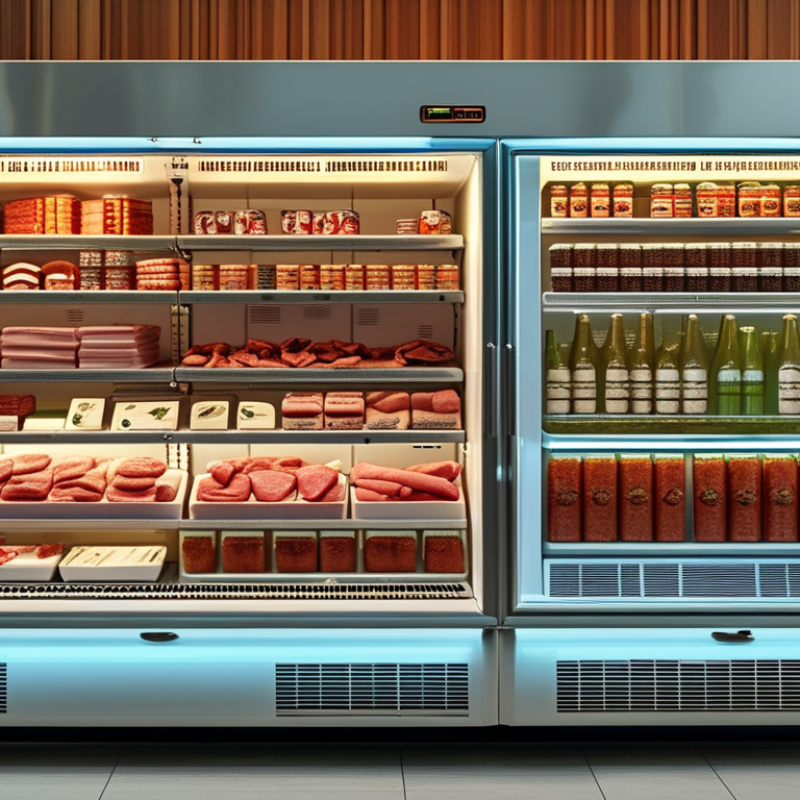
Define the Refrigeration Unit’s Intended Application
Before comparing capacity, define the unit’s working environment. Is it serving a walk-in freezer, a chilled display case, a food truck, or a temperature-sensitive laboratory? Each application demands different air movement, humidity control, defrost strategy, and recovery speed. The FAO’s State of Food and Agriculture 2019 reported that 14% of food is lost between harvest and retail. Poor temperature control can worsen that loss, especially during loading and frequent door opening. Measure product temperature, room temperature, door cycles, and available floor space before selecting equipment.
A freezer holding meat at -18°C needs a different design from a cooler storing fresh vegetables at 2–8°C. Consider peak ambient temperature, cleaning routines, drainage, noise, and service access. The UNEP Global Cooling Watch 2023 reported that cooling demand could more than triple by 2050. Efficiency matters, but it cannot replace correct application matching. Ask an experienced technician to calculate the refrigeration load, rather than relying only on cabinet volume. A perfect choice is rare. I would also review seasonal usage, because a unit sized for holiday demand may cycle inefficiently during quieter weeks.
Record the required temperature range and acceptable fluctuation. Check whether the refrigerant, electrical supply, and safety controls meet local requirements. ASHRAE’s refrigeration guidance emphasizes application-specific design, including airflow, heat gain, and defrost conditions. These details are easy to overlook. They often decide whether food stays stable overnight.