

Scroll Top
4801 Bennett Rd. Toledo, Ohio 43612

10 Tips for Choosing an LED Harness Supplier

Selecting a Led Harness supplier is not merely a price comparison. It is a decision about electrical performance, assembly consistency, and dependable delivery. Small defects matter: a loose terminal, poorly labeled branch, or brittle insulation can disrupt installation and trigger costly rework. The wider shift toward electrified products makes these details more important. The International Energy Agency’s Global EV Outlook 2024 reports that nearly 14 million electric cars were sold worldwide in 2023, representing about 18% of total car sales. This figure does not measure LED harness demand directly, but it shows how quickly electrical systems are expanding across industries.

Good sourcing requires evidence, not polished promises. Ask suppliers for material specifications, sample builds, inspection records, and clear answers about production changes. Check whether their team can explain wire gauge, connector compatibility, environmental protection, and traceability in terms your engineers can verify. Request realistic lead times. Then test a sample in the actual installation, where routing, vibration, and access can expose problems that a drawing misses. The right supplier should welcome that scrutiny.

There is no perfect checklist. A strong audit can still miss a weak process on a busy production line. That is worth remembering. The following ten tips focus on practical checks buyers can use to compare suppliers, reduce avoidable risk, and choose a partner whose capabilities match the product—not just the quotation.
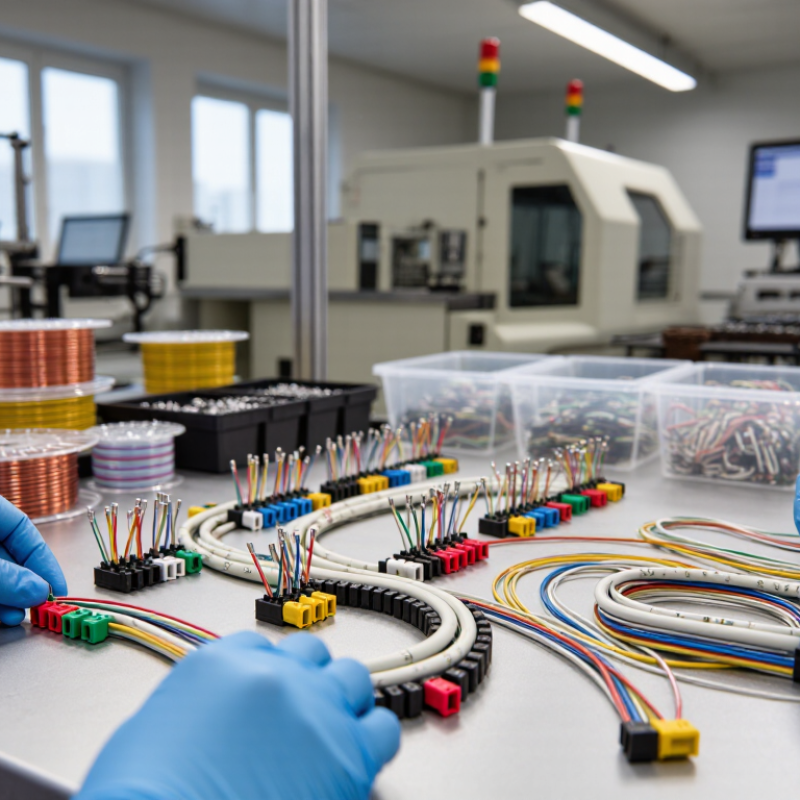
10 Tips for Choosing an LED Harness Supplier

Define Your LED Harness Requirements and Operating Conditions

Before comparing LED harness suppliers, define exactly where the harness will operate. Record voltage, current, temperature, vibration, moisture, and installation space. A harness inside a refrigerated cabinet faces different risks from one mounted near a hot engine.

Measure the route, not just the distance. Note sharp bends, moving parts, connector access, and the minimum bend radius. Include wire gauge, insulation type, connector locking method, and required protection against dust or water.

Small details matter. A loose connector can create flickering lights, heat, or difficult maintenance.

I have found that early prototypes reveal problems that drawings often miss. Ask the supplier for samples tested under realistic conditions, including repeated bending and temperature cycling. Request clear material specifications, inspection records, and test results for continuity, polarity, pull force, and insulation resistance. Also confirm labeling and traceability for every production batch.

Do not describe the environment too generally. “Outdoor use” is incomplete without exposure time, sunlight, rain, salt, and temperature changes.

I once underestimated routing space by a few millimeters, and the finished harness pressed against a sharp bracket. The design worked on paper, but installation became slow and unreliable. Build tolerances into the requirement, and invite the supplier to challenge assumptions before production begins.

Verify Supplier Expertise, Certifications, and Quality Systems

A reliable LED harness supplier should demonstrate more than attractive samples. During factory reviews, I check crimp height, pull-force records, conductor stripping, and terminal alignment. Small defects can cause flickering, heat buildup, or field failures. The ISO Survey 2022 reported 1,265,216 ISO 9001 certificates worldwide. That figure shows quality systems are widespread, but certification alone is not proof.

Tip 1: Verify the certificate number, scope, and expiry date with the issuing body. The scope should cover cable assembly or electrical harness production. Tip 2: Ask for process evidence, not polished presentations. Review incoming inspection logs, first-article reports, calibration records, and corrective-action examples. IPC/WHMA-A-620 provides recognized workmanship requirements for cable and wire harness assemblies. A supplier should explain how operators apply those requirements on the production floor.

Tip 3: Confirm technical experience with your LED voltage, current, connector, sealing, and temperature requirements. Request traceability from a finished harness back to wire, terminals, tooling, and inspection results. Tip 4: Audit the quality system in person or through a qualified third party. Look for labeled bins, controlled work instructions, and real-time defect tracking. One weakness remains easy to miss: suppliers may pass audits while struggling during volume changes. Require a pilot run, sample-based electrical testing, and documented capacity checks before approval. Reliability is demonstrated repeatedly, not promised once.

Verify Supplier Expertise, Certifications, and Quality Systems

Publication years of selected quality and wire-harness standards

Use these editions as a starting point when discussing supplier qualifications. Verify certificate validity, certification scope, and the current applicable edition; requirements depend on your product and industry.

Assess Materials, Manufacturing, and Customization Capabilities

10 Tips for Choosing an LED Harness Supplier

Tip 1: Verify the materials before discussing price. Ask for copper specifications, insulation type, temperature ratings, and flame-resistance test records. The U.S. Department of Energy reports that LEDs use at least 75% less energy and last up to 25 times longer than incandescent lamps. That efficiency still depends on stable connections and effective heat control. I have seen excellent LED modules fail because a small harness connector loosened under vibration. Request samples, not promises. Check wire flexibility, terminal plating, bend radius, and crimp consistency with your own application.

Tip 2: Examine manufacturing discipline. A reliable supplier should show controlled stripping, crimp-height records, continuity testing, and traceable inspection data. IPC/WHMA-A-620 provides widely recognized acceptance criteria for cable and wire harness assemblies. Ask how operators manage mixed orders and replacement materials. Small process gaps become expensive field failures. A perfect audit scorecard is unrealistic, but missing test records should slow the decision.

Tip 3: Test customization capabilities early. Provide drawings, current loads, connector limits, routing space, and environmental conditions. The supplier should offer design feedback rather than simply copy a file. Ask for prototype timing, engineering-change control, and pilot-run reports. The DOE’s Solid-State Lighting R&D reports continue to identify reliability and thermal management as important development priorities. Your harness should reflect those risks. I sometimes approve a supplier too quickly after a clean prototype; production evidence matters more. Require documented validation before volume purchasing.

Compare Testing, Traceability, Lead Times, and Support

Choosing an LED harness supplier requires more than comparing unit prices. On production floors, small quality gaps become costly rework. Ask how each harness is tested, not merely whether testing exists. A reliable supplier should describe continuity checks, insulation tests, connector retention, and visual inspection. Request sample test records with dates, operator identification, and acceptance limits. Better still, observe a sample run. Details matter.

Traceability should follow every harness from incoming wire to packed shipment. Look for lot codes, crimp-tool settings, material records, and inspection results. If a terminal fails, the supplier should identify affected batches quickly. I prefer digital records linked to work orders, although paper systems can work when controlled carefully. This is where many evaluations become too optimistic. A polished audit does not always reflect a busy Tuesday afternoon.

Lead time needs evidence, not a confident promise. Compare quoted production time, approval time, shipping time, and recovery plans for shortages. Ask how capacity changes during seasonal demand. A supplier offering a short lead time may be outsourcing critical steps, creating hidden delays. Support matters after the purchase order. Test response speed with a technical question, then ask who handles drawing changes, failure analysis, and urgent replacements. Clear escalation paths reduce downtime. Still, no supplier predicts every disruption perfectly. Choose one that reports problems early and documents corrective action.

Evaluate Pricing, Risk, and Long-Term Supplier Fit

Choosing an LED harness supplier is not just a unit-price decision. Request itemized quotes covering wire gauge, connector type, testing, packaging, and shipping. Compare the same specifications across suppliers; a cheaper quote may omit strain-relief testing or incoming inspection. Gartner’s 2020 survey found only 21% of supply chain organizations described their networks as highly resilient. That figure is a useful reminder: a low price means little if a single delayed component stops production.

Tip: Ask for sample traceability records, defect data, and a written plan for shortages. Check whether the supplier can identify wire and connector lots, reproduce test results, and notify you before changing materials. Confirm realistic lead times with a small pilot order. Paper plans can look perfect. The first sample may still reveal a loose terminal or uneven crimp.

Tip: Judge long-term fit through communication and process discipline, not promises alone. Review how engineering changes are approved, how production capacity is reserved, and how quality issues are corrected. Discuss payment terms and cost drivers openly, then document agreed thresholds for price changes and delivery performance. A quarterly review can expose small problems early. It may feel overly cautious, but unclear expectations become expensive when volumes rise. Keep a second qualified source where practical, while recognizing that splitting orders also adds coordination work.