
In today’s competitive manufacturing landscape, the choice of equipment significantly impacts productivity and product quality. The three roll mill machine stands out for its ability to meet diverse processing needs. According to a recent market report, the global three roll mill industry is expected to grow at a CAGR of 4.2% over the next five years. This growth indicates a rising recognition of its efficiency and versatility.
A three roll mill machine excels in mixing, grinding, and dispersing materials, making it suitable for industries like paints, inks, and cosmetics. For instance, these mills are known to achieve uniform particle size distributions, enhancing the performance of final products. However, not all machines deliver the same performance. The selection of the right model requires careful consideration of specifications and operational requirements.
Moreover, challenges such as high maintenance costs and the need for operator training should be acknowledged. Investing in a three roll mill machine involves both benefits and potential drawbacks. It is crucial for manufacturers to weigh these factors while making choices. Ultimately, the right equipment can drive innovation and efficiency in production lines.
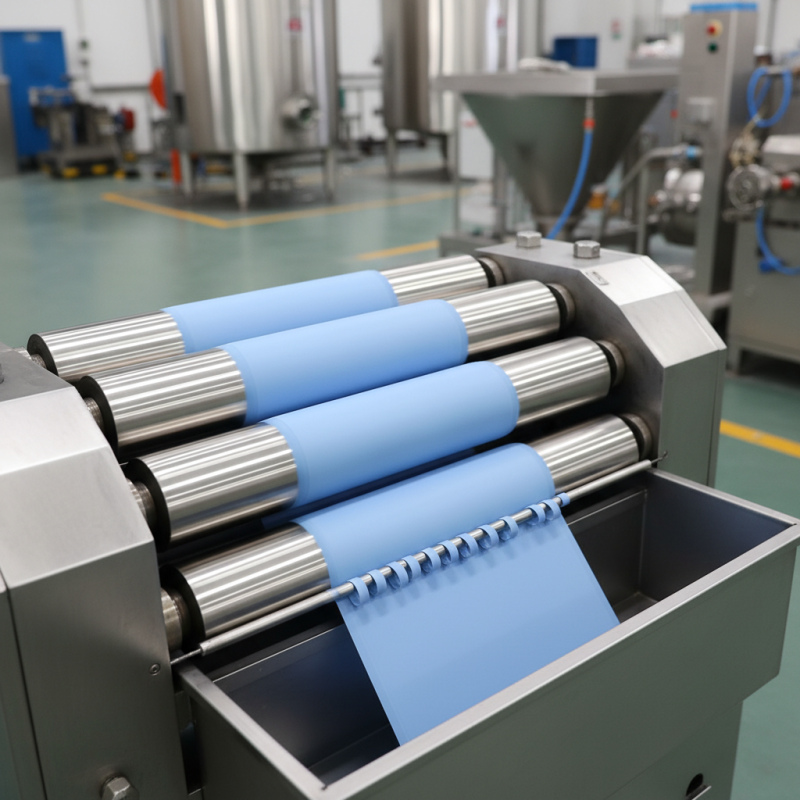
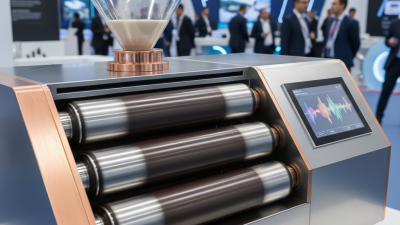
Three roll mills are essential in many manufacturing processes. They consist of three horizontal rollers that rotate in opposite directions. This design facilitates effective dispersion and size reduction of materials. The process is primarily used for paste-like substances in industries including cosmetics, inks, and food.
Understanding how three roll mills function is key. The rollers create shear forces that break apart particles, providing a smooth and uniform product. Operators must monitor settings closely. Even small adjustments can significantly impact the final mix. The choice of roller material is also crucial. Steel, ceramic, or alloy rollers each have unique properties.
Some users report challenges, such as uneven particle distribution. This issue often stems from improper roller spacing or speed settings. Regular maintenance is vital to ensure optimal performance. Keeping the equipment clean and functional can be a learning curve. Continuous training for staff helps mitigate these operational risks.
A three roll mill machine is essential in various manufacturing processes, especially in industries like cosmetics, food, and inks. Its ability to refine materials with precision sets it apart. According to a report by The Freedonia Group, the demand for this equipment is projected to rise by over 4% annually, underscoring its relevance.
Key advantages include excellent particle size reduction and uniform dispersion. The mechanism works through a series of rollers that effectively break down aggregates. This results in a smoother final product. Studies show that these mills can produce particle sizes as small as 20 microns. This level of refinement is critical in enhancing product quality.
However, while the three roll mill offers many benefits, it’s not without challenges. Operating these machines requires skill and care. Misalignment can lead to inconsistencies in texture. Additionally, maintenance is crucial to avoid downtime. Regular checks can prevent costly repairs. Investing time in training operators can ensure better output and longevity of the equipment.
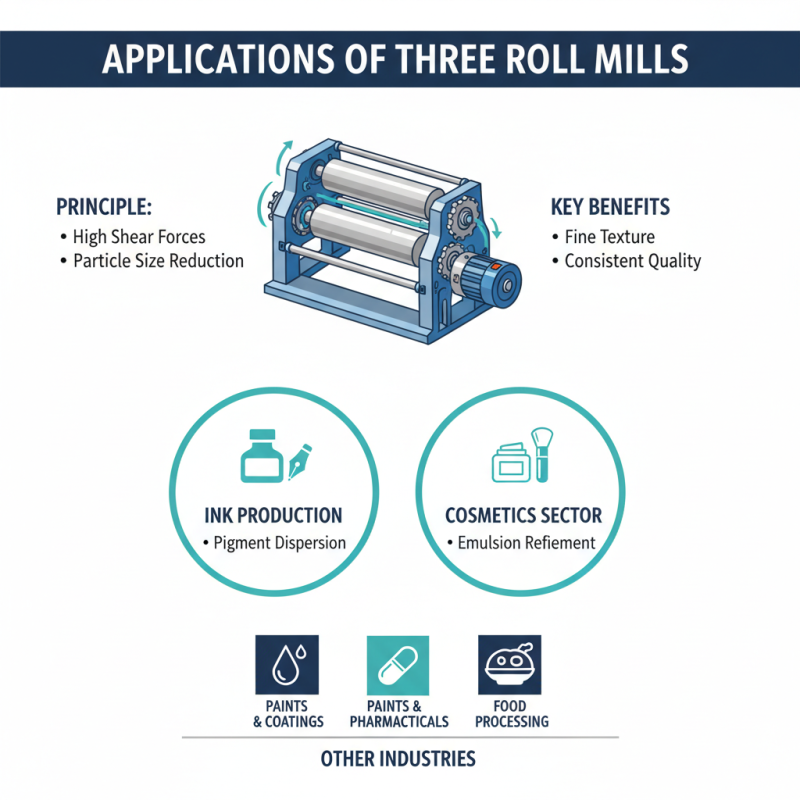
Three roll mills are essential tools in various industries due to their unique capabilities. Their primary function is to refine materials by applying high shear forces. This is particularly valuable in applications such as ink production and the cosmetics sector. In these fields, achieving a fine particle size and consistent texture is crucial.
In the food industry, three roll mills help in the processing of chocolate and other spreadable products. The machines ensure that ingredients are mixed thoroughly. This enhances flavor and texture, leading to a better final product. Similarly, in pharmaceuticals, they are used to create creams and ointments. Here, uniformity and stability are core requirements. However, not all formulations yield ideal results on the first try. Some require several adjustments to perfect the process.
While these mills excel in many areas, challenges remain. For instance, managing temperature is vital in sensitive formulations. If not monitored, it can affect product quality. The learning curve for operators can also be steep. Understanding the machine's nuances takes time. Despite these hurdles, the versatility of three roll mills makes them indispensable across various sectors.
When selecting a three roll mill machine, several critical factors come into play. The first is the purpose of your manufacturing process. Different industries have varying requirements. A good understanding of your material characteristics is essential. This helps in determining the right roller texture and material. For instance, materials such as inks, coatings, and pastes require specific types of roll surfaces for optimal outcomes.
Operational efficiency should be another key consideration. Examine the machine’s capability regarding speed and throughput. The efficiency of the roll pair contributes significantly to the overall productivity. Additionally, maintenance requirements can influence your decision. Machines with simpler designs often require less downtime for maintenance. However, you should consider the trade-off between complexity and functionality. Some advanced models may involve more maintenance but provide better results.
Finally, think about the machine’s size and configuration. Available space in your facility can limit your options. A compact machine may not have all the features you desire. However, a larger model can provide more versatility. Assessing these factors will ensure you choose the best three roll mill machine for your specific needs.
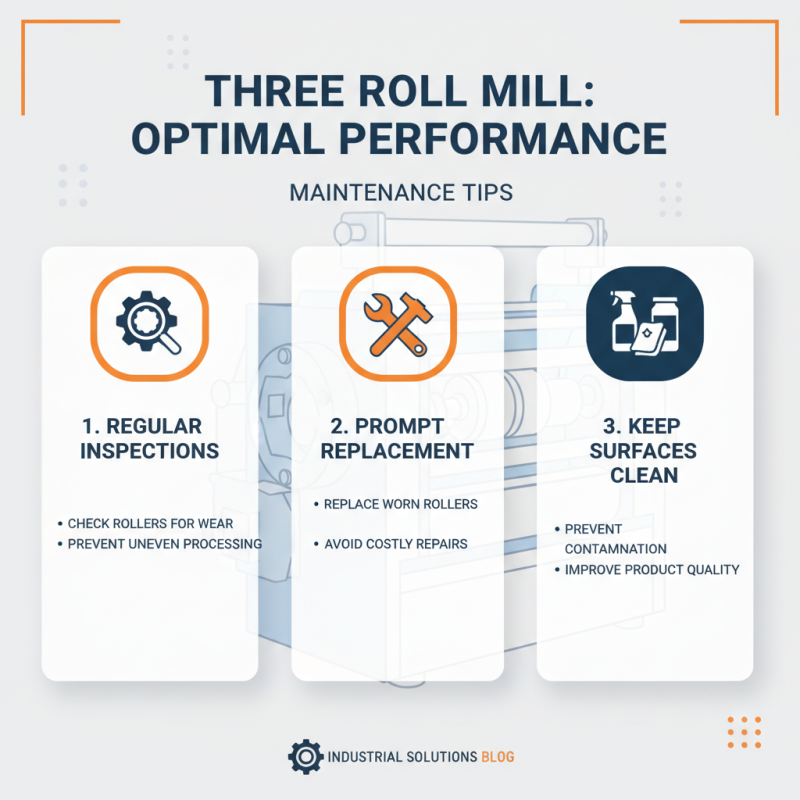
Maintaining a three roll mill is essential for ensuring its optimal performance. Regular inspections are crucial. Check the rollers for wear and tear. Uneven wear can lead to inefficient processing. It's wise to replace worn rollers promptly. This avoids costly repairs in the future. Keep the surfaces clean to prevent contamination. A clean workspace contributes to product quality.
Lubrication plays a vital role in the mill's performance. Use the correct lubricant type according to manufacturer specifications. Insufficient lubrication can cause friction and overheating. Monitor the temperature closely. High temperatures can damage internal components. It’s important to adjust the settings based on the material being processed. Different materials require different roller speeds and pressures.
Employee training is another area to focus on. Ensure that operators are familiar with the machine's functions. They should know how to perform basic troubleshooting. Encouraging a culture of maintenance awareness can lead to better machine longevity. Regular training sessions are beneficial. Invest time in documenting maintenance procedures. This builds a solid foundation for all future operations.