

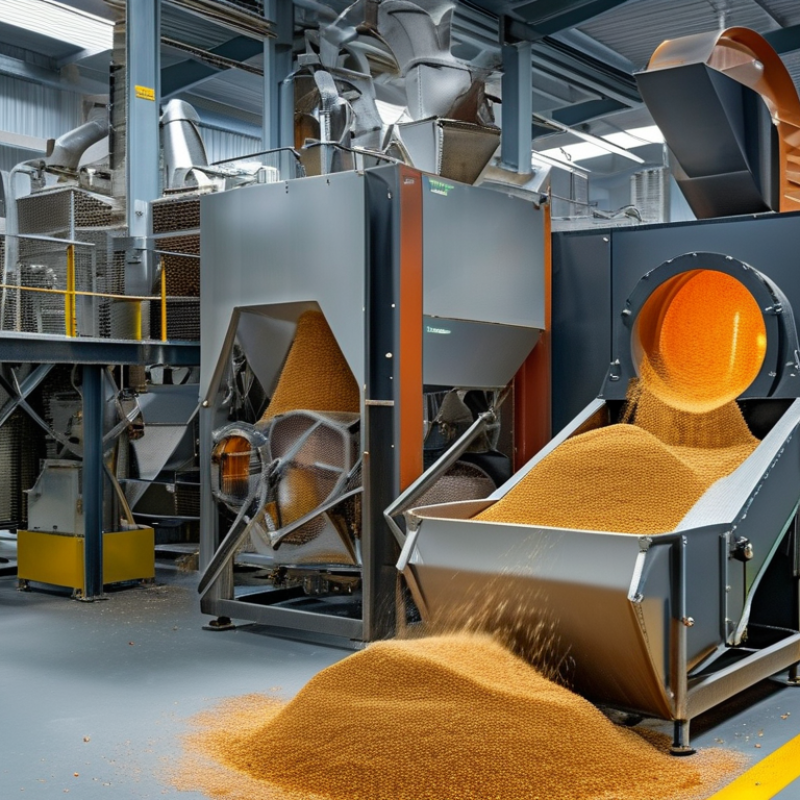
How to Choose the Right Vibratory Dryer?
What a Vibratory Dryer Is and How It Works
A vibratory dryer removes surface moisture while moving material across a perforated deck. Controlled vibration lifts and advances each piece in small, repeated movements. Warm air passes through the product bed and carries moisture away. The process is gentle compared with aggressive mechanical handling. It can reduce sticking, clumping, and uneven drying in many granular or particulate materials.
Drying performance depends on several linked settings. Air temperature affects moisture removal, but excessive heat may damage sensitive products. Vibration amplitude controls movement speed and bed depth. A deeper bed increases capacity, yet it can restrict airflow. Residence time also matters. If material exits too quickly, its core moisture may remain high. If it stays too long, energy use may rise without useful improvement. Operators should check inlet and outlet moisture, air pressure, product temperature, and visible movement during trials. The first setting is rarely perfect. Small changes can produce surprising results.
Tips: Begin with a moderate temperature and a thin product layer. Watch whether particles spread evenly across the deck. Clean the perforations regularly, because blocked openings reduce airflow. Test samples from different discharge points, not just one. Record each adjustment. This makes troubleshooting more reliable, although real production conditions may still require refinement. Surface appearance alone can mislead. Use moisture testing when consistent quality matters.