

Scroll Top
4801 Bennett Rd. Toledo, Ohio 43612

How to Choose Moulded Case Circuit Breakers in 2026?

Choosing Moulded Case Circuit Breakers in 2026 requires more than matching a current rating to a price list. Modern facilities face denser loads, higher fault energy, and tighter continuity expectations. The International Energy Agency’s Electricity 2024 report expects global electricity demand to grow by an average of 3.4% annually through 2026. That growth places greater pressure on distribution equipment, especially in data centers, factories, renewable energy systems, and commercial buildings.

A reliable selection begins with the installation’s real operating conditions. Confirm the system voltage, continuous load, prospective short-circuit current, and available fault level at the installation point. Then compare the breaker’s rated service short-circuit capacity, Ics, with its ultimate breaking capacity, Icu, under IEC 60947-2. For North American projects, UL 489 requirements may also apply. Small details matter. A 400 A breaker in a hot, crowded enclosure may require thermal derating. A long cable run can change protection performance. A motor starting current can trigger an unsuitable thermal-magnetic trip unit.

Protection must coordinate.

Manufacturers’ coordination tables, tested backup combinations, and selective tripping data deserve careful review. Digital trip units can add metering, alarms, and adjustable protection, but they also introduce configuration risks. Schneider Electric, Eaton, ABB, and Siemens publish technical guides that support these evaluations, yet product data should never replace a site-specific study. Field experience shows that many failures begin with incomplete fault calculations or poorly documented settings.

This guide examines practical criteria for 2026, including frame size, trip technology, breaking capacity, accessories, maintenance, and lifecycle cost. No selection method is perfect. Engineers should verify assumptions against current standards, local rules, and actual site measurements before approval.
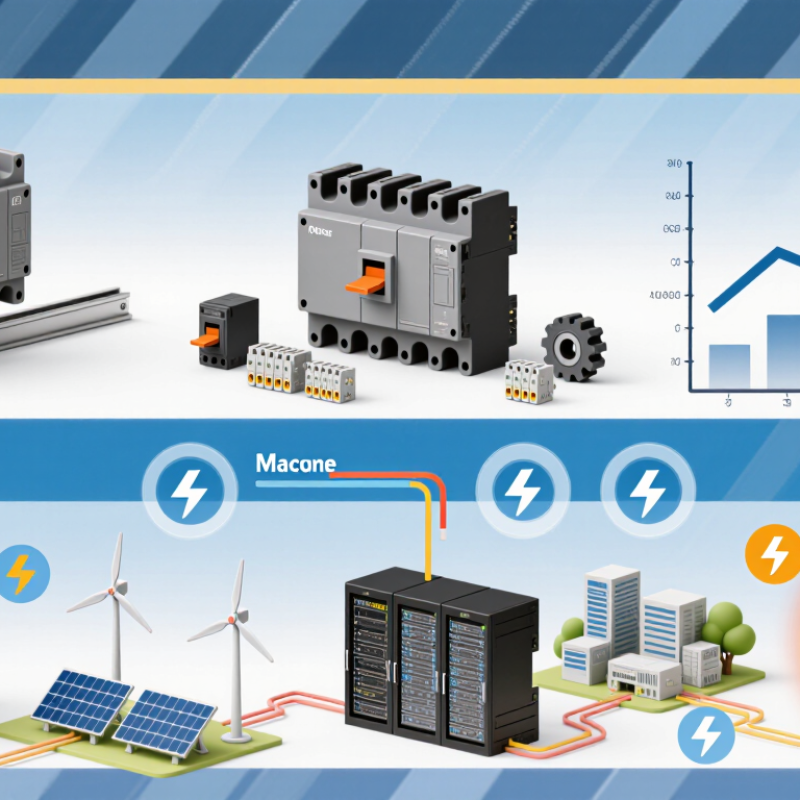
How to Choose Moulded Case Circuit Breakers in 2026?

Define the Circuit’s Operating Conditions and Protection Goals

Before selecting a moulded case circuit breaker, define how the circuit will operate. Record the system voltage, phase, frequency, and expected load. Then check whether the load runs continuously or cycles, and whether motors or transformers create high starting current. A motor may draw several times its normal current during startup. That detail can cause nuisance trips if the breaker’s trip characteristics are poorly matched. Measure the real load where possible; estimates can be optimistic.

Heat matters. Note the enclosure temperature, ventilation, altitude, and nearby equipment that may raise ambient temperatures. Compare these conditions with the breaker manufacturer’s derating guidance. Also determine the prospective short-circuit current at the installation point. The breaker’s interrupting rating must meet or exceed that value. A rating selected from the load current alone is not enough.

Protection goals should cover the conductors and connected equipment, while allowing normal startup and brief overloads where appropriate. Review available long-time, short-time, instantaneous, and ground-fault functions against the application. Check coordination with upstream and downstream devices so a local fault does not unnecessarily shut down an entire panel. A common planning miss is choosing settings before confirming cable size and installation conditions. Recheck those assumptions against current measurements, equipment data, and the project’s protection study.

Match Rated Voltage, Current, and Breaking Capacity to the System

Selecting a moulded case circuit breaker in 2026 starts with system data, not catalogue habit. The IEA’s Electricity 2024 report projects global electricity demand to rise by about 4% annually through 2026. That growth can increase feeder loading, fault levels, and upgrade pressure in compact switchboards. Measure the supply first.

Match rated voltage to the circuit’s actual line-to-line voltage and earthing arrangement. A 400 V system needs a breaker suitable for 400 V service, with insulation coordination checked separately. Choose rated current above the calculated continuous load, but below the cable’s permitted ampacity. Apply temperature, grouping, enclosure, and altitude corrections. A 250 A frame is not automatically a 250 A feeder. Site inspections often reveal hot terminals and underestimated derating.

Breaking capacity needs sharper attention. Use prospective short-circuit current at the installation point. Select an Icu and Ics rating that meets the fault level under IEC 60947-2 test conditions. Do not substitute service current for fault current. A breaker rated at 36 kA may be inadequate beside a transformer delivering 42 kA. Verify selectivity and backup protection with time-current curves. Calculations can be optimistic. Recheck transformer impedance, cable length, and future generation sources before approval. (Source: IEA, Electricity 2024; IEC 60947-2)

Choose Trip Characteristics and Protection Settings

Choose trip characteristics from the actual load profile, not the largest rating that fits the panel. Long-time protection should tolerate normal sustained load while limiting cable heating. Short-time and instantaneous settings must clear faults promptly without tripping during motor starts or transformer energization. Ground-fault protection may also be appropriate, depending on the installation and breaker design. Check the cable’s allowable current, expected fault current, and coordination with downstream devices before setting adjustable trips.

Use measured inrush where possible. A pump starting in a cold basement may draw several times its running current for a brief period. Setting instantaneous pickup too low can cause nuisance trips; setting it too high can delay fault clearing. IEC 60947-2 provides requirements for low-voltage circuit breakers, but it does not replace a site-specific coordination study. NFPA’s analysis of 2015–2019 home fires estimated an annual average of 34,000 fires involving electrical distribution or lighting equipment. That figure is not proof that a different breaker setting would have prevented those fires. It is a reason to verify protection carefully. I would document each setting and revisit it after load changes; that step is easy to miss.

How to Choose MCCB Trip Characteristics and Protection Settings in 2026

Representative adjustable pickup ranges for common MCCB protection functions, shown as multiples of rated current (In).

Long-time pickup protects against sustained overloads, while short-time and instantaneous pickups respond to higher fault currents. These ranges are illustrative, not universal: confirm the trip unit’s adjustment limits, time-current curve, conductor ratings, and coordination requirements before selecting settings.

Verify Standards, Installation Requirements, and Selective Coordination

How to Choose Moulded Case Circuit Breakers in 2026?

Selecting a moulded case circuit breaker starts with standards, not catalogue appearance. Confirm compliance with IEC 60947-2 or the applicable national standard. In North America, verify certification under UL 489 and installation rules under NFPA 70. The device voltage, continuous current, interrupting rating, pole configuration, and trip characteristics must match the system design. A higher ampere rating does not automatically provide safer protection.

Installation conditions deserve equal attention. Check ambient temperature, enclosure ventilation, conductor size, terminal torque, and available short-circuit current at the installation point. The IEA Electricity 2024 report forecasts global electricity demand growth of about 3.4% annually from 2024 to 2026. That growth can increase loading on existing distribution equipment. Derating is easy to overlook. It should not be.

Selective coordination requires more than choosing different breaker ratings. Compare manufacturer time-current curves across overload and short-circuit regions. Confirm that downstream protection clears faults before upstream protection operates. Review instantaneous-trip overlap, cable impedance, and the prospective fault current. NFPA 70 requirements make coordination especially important for emergency and legally required standby systems. Field engineers should verify settings after installation, not rely only on design software. A clean drawing is not proof. I have seen coordination fail because one trip unit retained factory settings. That mistake is small, but its consequences are not. Recheck the study whenever transformer capacity, feeder length, or protection settings change.

Assess Lifecycle Costs, Monitoring Options, and Supplier Support

How to Choose Moulded Case Circuit Breakers in 2026?

A 2026 MCCB selection should examine lifecycle cost, not only purchase price. Installation, testing, thermal losses, replacement parts, and downtime can exceed the initial budget. Uptime Institute’s 2023 Annual Outage Analysis identified power problems as the leading cause of data centre outages. That finding makes dependable protection a financial issue, not merely an electrical one. Ask for tested interrupting capacity, service-life expectations, and documented maintenance intervals.

Monitoring options deserve equal attention. The IEA’s Electricity 2024 report estimated global data-centre electricity use at about 460 TWh in 2022. It could exceed 1,000 TWh by 2026. An MCCB with current, temperature, trip-history, and communication functions can reveal overloads before they become expensive failures. However, more sensors also create configuration work. Data is not diagnosis. A technician still needs to check connections, ambient temperature, and coordination settings.

Supplier support can decide the real cost. Require clear manuals, commissioning guidance, spare-parts availability, firmware policies, and response times. Ask whether remote assistance includes fault interpretation or only basic resets. Support promises often sound impressive. The details matter more. I would also request a sample maintenance record and a realistic replacement timeline. No selection is perfect; monitoring may be unnecessary in a small, stable panel, while skipping it in a critical installation can become an avoidable mistake. Check the proposal against IEC 60947-2 requirements and your site’s actual fault levels.