

Electronic Pouring Sealants are liquid compounds used to protect electronic components inside housings, connectors, and small assemblies. A technician pours or dispenses the material around parts, then allows it to cure. The cured layer can help limit exposure to moisture, dust, vibration, and accidental contact. A small control board sealed in a junction box is one familiar example. Simple idea. The details matter.
These materials may be based on silicone, polyurethane, epoxy, or other chemistries, and they do not behave alike. Some remain flexible; others form a harder, more rigid layer. Selection depends on the components, operating temperature, enclosure design, and whether later repair may be needed. The term itself can be imprecise: not every pourable compound is intended to perform the same sealing or insulation role. Before use, teams should check the manufacturer’s technical data for mixing ratios, cure time, compatibility, and application conditions. Trapped air can leave voids, while excessive heat during curing may affect sensitive parts. Those risks are easy to underestimate. Good process control helps, but it cannot fix a poor material match. This guide explains what Electronic Pouring Sealants are, how they are applied, and which practical factors shape their performance. It also considers a useful question: protection today may make inspection or repair harder tomorrow.
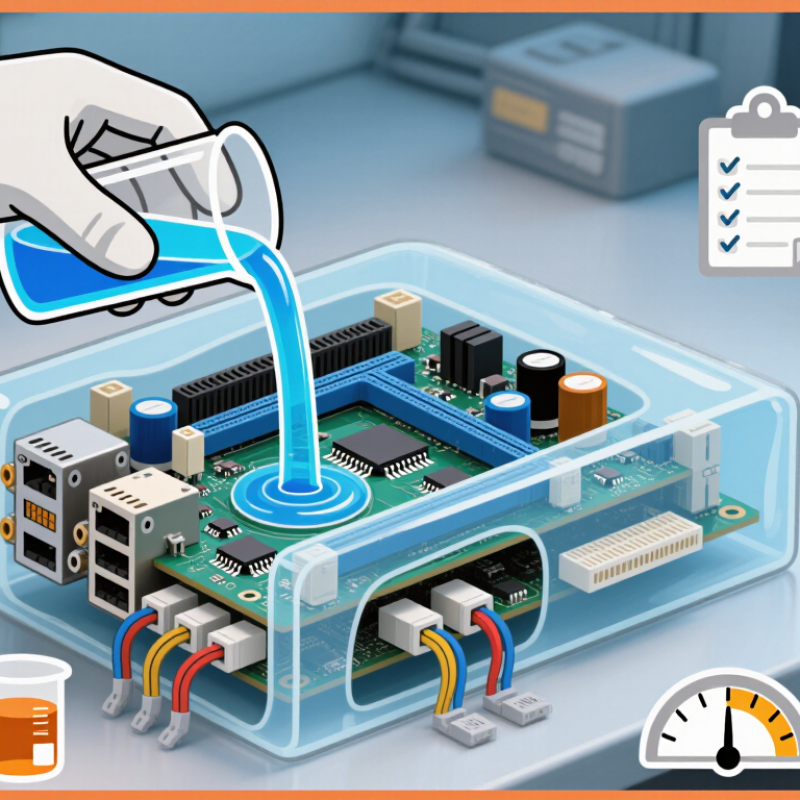
Electronic pouring sealants are liquid or paste-like materials applied around electronic components, then cured into a protective solid or flexible layer. They are often called potting compounds. Their exact properties depend on their chemistry and formulation, so “sealant” does not describe one universal material. Some remain soft and elastic; others become firm.
Their main function is to shield sensitive parts from moisture, dust, vibration, and everyday handling. A compound poured around a circuit board can fill gaps beneath wires and components, limiting movement and reducing exposure to contaminants. Some formulations also provide electrical insulation or help transfer heat toward an enclosure. Small details matter. A poorly mixed batch or trapped air pocket may leave a weak spot.
In practice, installers check the enclosure, component temperatures, and material compatibility before pouring. The compound must reach narrow spaces without damaging heat-sensitive parts, and its cure time affects production schedules. It can be useful in compact devices exposed to damp or bumpy conditions, but it also makes later repairs harder. That trade-off is easy to underestimate. A neat, fully filled enclosure is not proof that the material suits every operating environment.
Electronic pouring sealants protect circuit boards and components from moisture, dust, vibration, and accidental contact. Their performance depends on both the base material and the application. Silicone sealants usually stay flexible and tolerate temperature changes. Epoxy compounds cure into a harder, more rigid layer, which can provide strong support but make later repairs difficult. Polyurethane options offer a balance of flexibility and protection, though moisture during mixing or curing may affect some formulations.
Sealants also come as one-part or two-part products. One-part materials cure through exposure to moisture or heat, depending on their chemistry. Two-part compounds require measured mixing before pouring. Some formulas are designed for heat transfer, flame resistance, or low viscosity, so they can flow around closely spaced components. Check the product’s cure conditions, operating-temperature range, and compatibility with plastics or coatings. A material that works well on one assembly may not suit another.
Tips: Start with clean, dry surfaces and follow the specified mixing ratio. Pour slowly to reduce trapped air, especially around narrow gaps. Check that the compound will not block connectors or cover parts that need servicing. Test a small sample. Do not guess. Cure times can vary with temperature and layer depth, and this part is easy to underestimate.
Electronic pouring sealants are liquid compounds poured around circuit boards, sensors, or cable joints, then cured into a protective layer. They can limit moisture, dust, and chemical contact while supporting components against vibration. Inside a small sensor housing, the cured material may fill the gaps around solder joints and wires. That matters. A trapped air pocket, however, can leave a weak spot, and a rigid compound may stress parts during temperature changes.
Protection depends on the whole assembly, not the sealant alone. IEC 60529 defines the IPX7 immersion test as exposure to water at up to one metre for 30 minutes; passing that test applies to the tested enclosure, not automatically to a potted circuit. IEC 60068-2-14 also provides temperature-change testing methods for equipment, useful when selecting a compound for hot-and-cold service. Engineers should check cure conditions, adhesion, heat dissipation, and compatibility with plastics before production. A sample board can reveal problems early. This step is easy to skip, but a sealed unit that traps heat may fail for reasons the coating cannot fix.
Electronic pouring sealants, often called potting compounds, fill spaces around sensitive components. In sensor modules, they can shield circuit boards and fine solder joints from moisture, dust, and vibration. A small sensor mounted near a pump, for example, may face repeated movement and occasional splashes. The sealant forms a protective barrier. It does not make every enclosure waterproof.
Power supplies and LED assemblies also use poured compounds. Around a transformer or a row of components, the material can reduce movement and help limit exposure to contaminants. Some formulations conduct heat better than others, which matters when sealed parts run warm. Moisture matters. Choosing a compound by the application, rather than by convenience, helps avoid trapped heat or poor adhesion.
In vehicle electronics and industrial control units, potting may protect connectors, circuit boards, or compact control modules against vibration and changing temperatures. Before pouring, technicians typically check material compatibility, dispense volume, and cure conditions. Bubbles can leave weak spots, while a compound that cures too rigidly may stress parts during thermal cycling. A common oversight is forgetting future repair: once fully encapsulated, a failed component can be difficult or impossible to replace. That trade-off deserves attention during design.
Preparation determines whether an electronic sealant protects components or traps defects. Confirm the resin’s compatibility with the circuit board, operating temperature, and enclosure materials. Check the technical data sheet for the mixing ratio, working time, and cure schedule. Keep parts dry and free of dust, oil, and loose solder debris. Measure both components by weight when specified, then mix slowly while scraping the container walls. Bubbles matter.
Pouring should be controlled, not rushed. Use a narrow stream and guide the material around components so it can flow into gaps without dislodging wires. For deep cavities, pour in layers if the product instructions allow. Vacuum degassing can reduce trapped air, but only use it when the sealant’s instructions permit. MarketsandMarkets’ 2023 Potting Compound Market report estimated the market at USD 3.3 billion in 2023 and projected USD 4.5 billion by 2028. That growth reflects broad demand, not proof that one material fits every assembly. A smooth surface can still hide voids; inspect a cured sample before scaling up.
Tips: Warm materials only within the supplier’s stated limits. Record batch, room temperature, mix time, and cure time. Leave a small test coupon beside the assembly. It is easy to overlook, but it can reveal incomplete curing before the finished unit is sealed.
Follow the steps in order. Mixing ratios, degassing requirements, working time, and curing conditions depend on the specific sealant; always check its technical data sheet.
The bars indicate workflow order, not time or quantity. Degassing is included only when specified for the material and application.
