

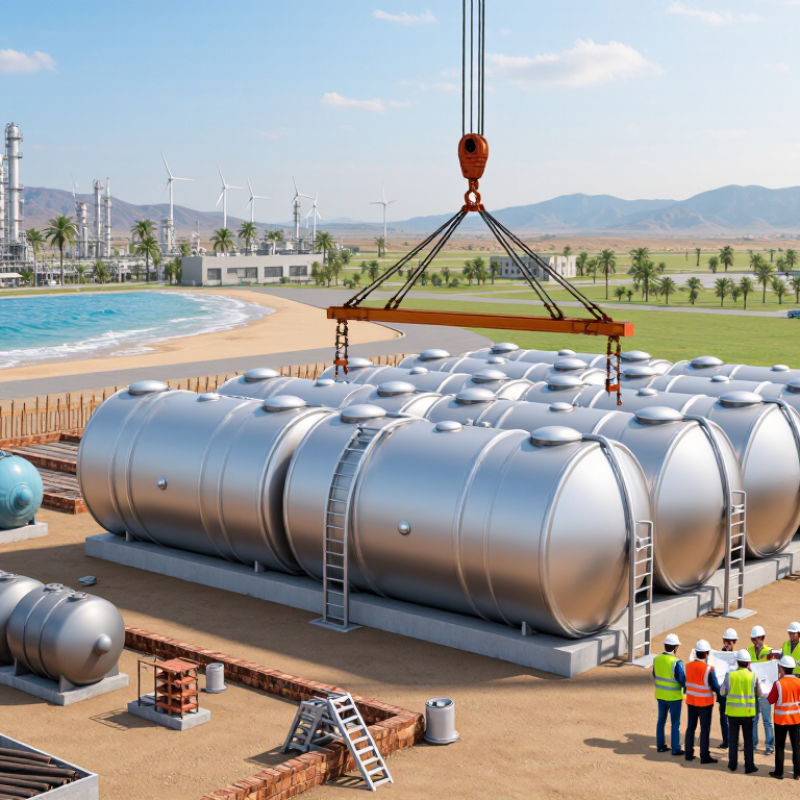
How to Choose SS Steel Water Tanks for Global Projects?
Capacity should reflect real demand, not only the population estimate. The WHO and UNICEF Joint Monitoring Programme reported that 2.2 billion people lacked safely managed drinking water in 2022. This gap makes reliable storage essential. Calculate average daily use, peak demand, emergency reserve, and cleaning downtime. A tank serving a remote clinic may need several smaller chambers, not one large vessel. That detail is easy to miss.
Site conditions can change the specification completely. Check soil bearing capacity, groundwater, wind loads, seismic risk, access roads, and installation temperature. A 500-cubic-meter tank needs stable foundations and safe maintenance access. Coastal air also increases chloride exposure. Stainless steel grade selection must match that risk and the stored water chemistry. Local codes may require seismic anchoring, overflow control, and secondary drainage. Field surveys remain necessary. Drawings alone are insufficient.
Standards should be verified before procurement. For potable applications, NSF/ANSI/CAN 61 evaluates materials that contact drinking water. European projects may reference EN standards, while welded tank designs can follow recognized national codes. Confirm certificates, weld procedures, passivation records, and factory inspection results. Water quality data should include pH, chlorides, hardness, temperature, and disinfectant levels. The World Health Organization recommends risk-based water safety management, not visual inspection alone. A polished surface can still hide poor weld cleaning. That is an uncomfortable lesson, but it matters.