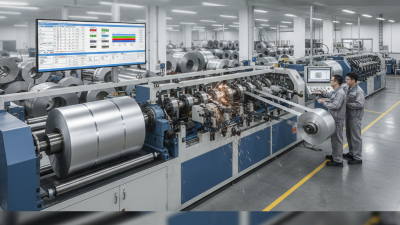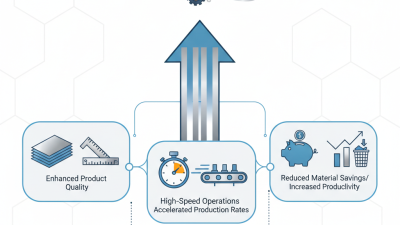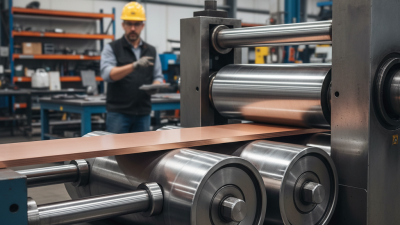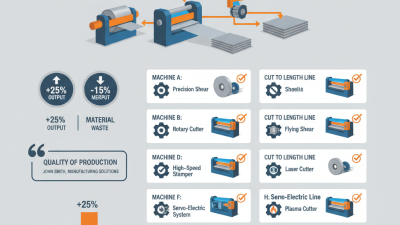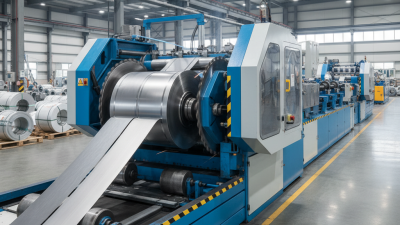

Choosing the right cutting and slitting machine for your business can be challenging. Many factors must be considered, such as materials and production volume. The right machine can enhance efficiency and reduce waste. A high-quality cutting and slitting machine allows for precise cuts, ensuring consistent results.
Understanding your specific needs is essential. Different industries require different capabilities. For instance, the thickness of your material greatly affects the type of machine you choose. Some machines handle thin films, while others work best with thick materials.
Evaluating your production capacity is crucial as well. A machine that is too small may slow down your operations, while one that is too large can lead to inefficiencies. Reflect on your current processes and future needs. Investing in the right cutting and slitting machine can make a significant difference in your productivity and bottom line.
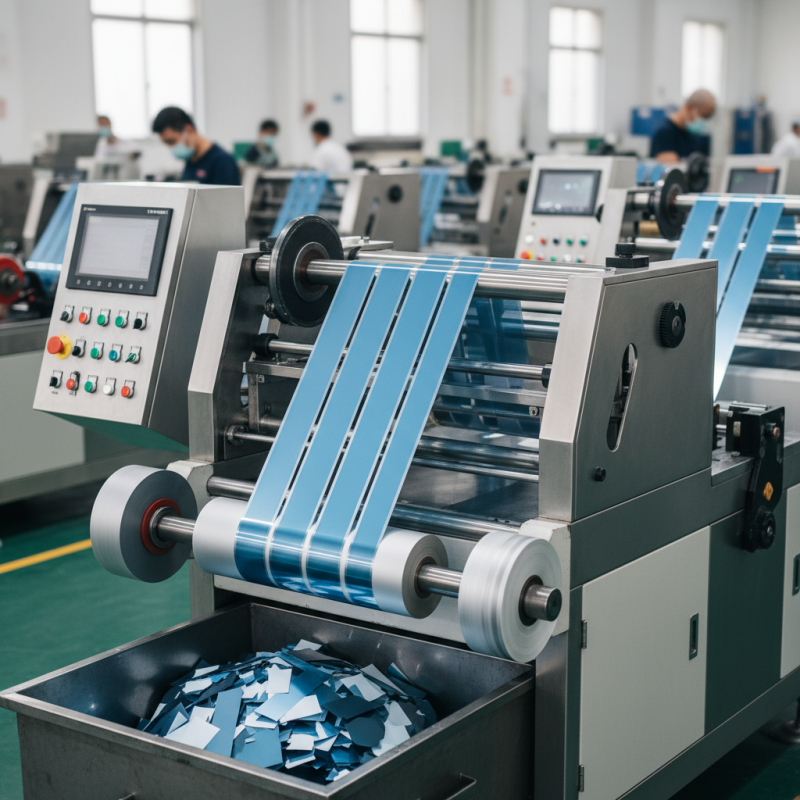
Choosing the right cutting and slitting machine is crucial for operational success. Identifying your business needs is the first step. Different industries have varying requirements. For example, the packaging sector values precision and speed. According to industry analysis, the demand for efficient cutting solutions is expected to grow by 4.5% annually.
Assess your production volume. High-output businesses may require faster machines with advanced features. In contrast, smaller operations might benefit from budget-friendly, manual options. Also, consider the materials you work with. Some machines excel at cutting flexible materials, while others handle rigid substrates better. Choosing the wrong machine can lead to inefficiency and wasted resources.
Moreover, think about your long-term goals. Investing in a machine that meets current needs may not suffice as your business evolves. Industry reports indicate that over 30% of businesses regret underestimating future demands. Future-proof equipment might have a higher initial cost but can save money in the long run. Evaluate your supply chain and maintenance capabilities as well. The right choice should enhance productivity and reduce downtime.
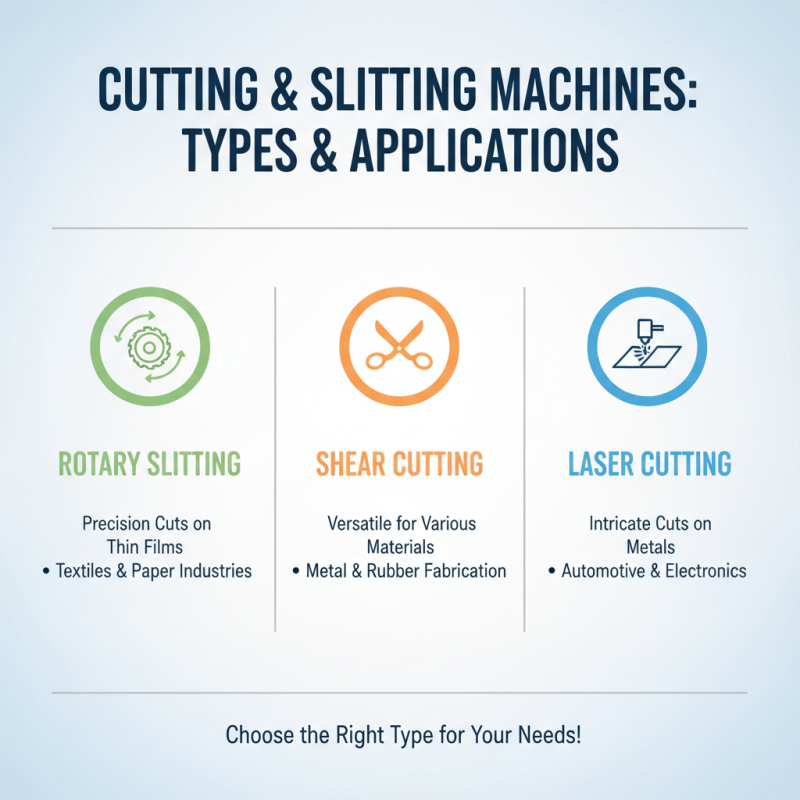
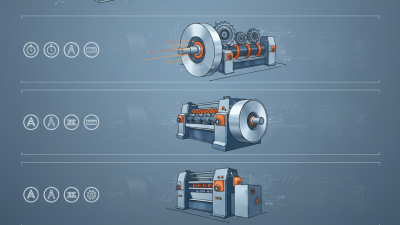
When choosing a cutting and slitting machine, understanding the types available is crucial. There are several variations suited for different materials and applications. Common types include rotary slitting machines, shear cutting machines, and laser cutting devices. Each type serves specific industry needs, whether in textiles, paper, or metal fabrication. For instance, rotary slitting machines excel at precision cuts on thin films, while laser machines offer intricate cuts on metals.
Industry reports suggest that the global market for cutting and slitting machinery is expanding rapidly. A report by XYZ Analysts states that demand for high-speed slitting machines could increase by 20% in the next five years. This indicates a potential shift towards automation and efficiency. Choosing the right machine may significantly impact production output and quality.
Tips: Consider your material's thickness and density before selecting a machine. Some machines may struggle with thicker materials. Additionally, think about the machine’s maintenance needs. Regular upkeep can enhance performance and longevity. Make sure to research and evaluate different options, as not all machines deliver the same value.
When selecting a cutting and slitting machine, several key features must be considered. The machine's cutting accuracy is crucial. High precision reduces waste. It also enhances the quality of the final product. Look for machines that offer adjustable cutting speeds. Flexibility in speed can improve efficiency during operations.
Another important feature is the blade quality. Durable blades can withstand wear and tear. They maintain sharpness longer, which minimizes replacements. It’s wise to evaluate the ease of blade changes. A cumbersome process can slow down production.
Consider the machine’s operational capacity. It should accommodate your production volume. Machines with higher throughput can keep up with demands. Don’t overlook the safety features either. A machine with good safety measures protects operators.
Tips: Always check feedback from other users. Their experiences may reveal hidden flaws. Also, inspect the machine’s maintenance requirements beforehand. Machines requiring frequent upkeep might disrupt operations. Aim for a balance of performance and convenience. Finding the right machine is key for long-term success.
| Feature | Importance | Considerations | Examples/Options |
|---|---|---|---|
| Cutting Width | High | Determine the width of materials you will process | Up to 60 inches |
| Material Type | High | Compatibility with materials like plastic, paper, or metal | Plastic, Aluminum, Cardboard |
| Speed | Medium | Faster machines can increase productivity | 100-300 meters/min |
| Ease of Use | Medium | Look for intuitive controls and automation options | Touchscreen controls |
| Maintenance Needs | High | Regular maintenance can ensure longevity | Self-lubricating parts |
When choosing a cutting and slitting machine, cost and performance must align with your business goals. Understanding your production needs is crucial. Will you be handling large volumes or specialty products? Each requirement impacts the type of machine you should consider.
Tips: Always assess the total cost of ownership. This includes purchase price, maintenance expenses, and energy consumption. A cheaper machine may lead to higher long-term costs if it requires frequent repairs. Balance performance with efficiency. Sometimes, high speed isn't necessary for smaller jobs.
Consider future scalability. Your current needs might evolve. A machine that meets today’s requirements could fall short tomorrow. A machine with versatility may be more cost-effective. Think about the materials you will process. The right machine should handle different thicknesses and material types without sacrificing quality.
Regularly reevaluate your choice. Technology advances quickly, and what works today might not tomorrow. Assessing and adjusting your setup could save money in the long run. Engaging with industry experts can also provide insights that help refine your decision-making.
Maintenance is crucial for the longevity of cutting and slitting machines. Regular maintenance can prevent costly breakdowns.
The 2022 Machinery Maintenance Report indicates that businesses lose an average of
$22,000 annually due to unplanned downtime. Keeping machines in optimal condition can significantly reduce this loss.
Creating a maintenance schedule is essential. It should include routine inspections and part replacements. Over time, blades wear down.
Dull blades can lead to poor cutting quality and increased waste. Research shows that replacing blades at the right intervals can boost efficiency by
15%. However, many businesses overlook this. They often wait too long, risking machinery failure.
Training staff on maintenance procedures is another crucial aspect. Well-trained employees can identify potential issues early.
Shockingly, up to 30% of machine failures stem from operator error. Regular training sessions can mitigate this risk.
Investing in proper support and maintenance practices ensures a smoother operation and extends the lifespan of equipment.