

Scroll Top
4801 Bennett Rd. Toledo, Ohio 43612

How to Choose Cylindrical Cell Assembly Machines in 2026?

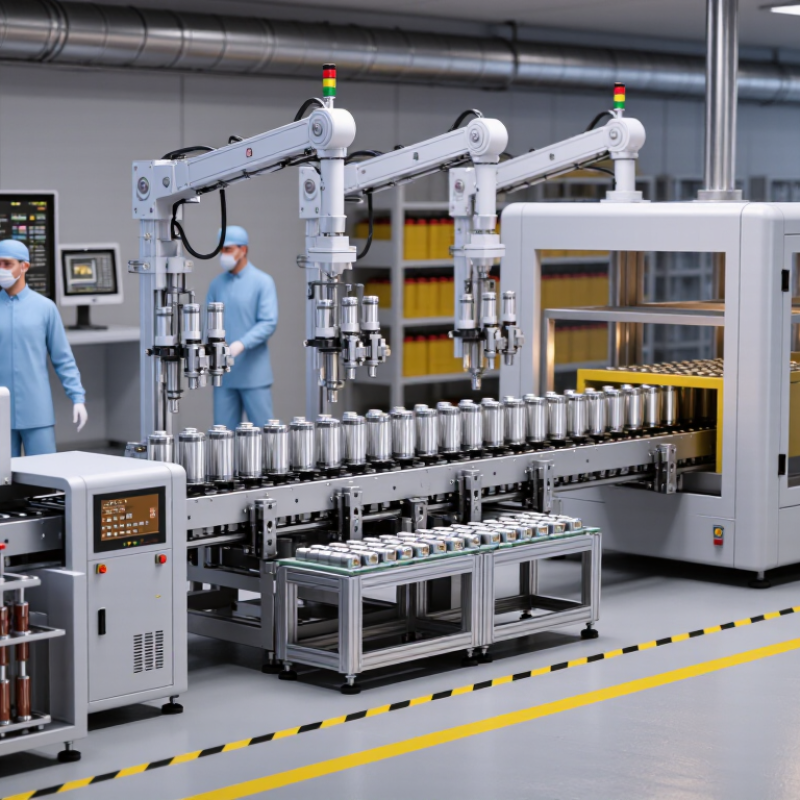
Choosing Cylindrical Cell Assembly Machines in 2026 requires more than comparing advertised speed. The right system must match your cell format, production volume, materials, and quality targets. A 18650 line behaves differently from a 4680 line. Chuck design, tab welding, electrolyte handling, and sealing pressure can change completely.

Elon Musk once said, “The fundamental limiting factor is cell production.” That observation still matters. Equipment availability alone does not create reliable cells. Buyers should examine winding accuracy, laser or ultrasonic welding stability, dry-room compatibility, formation integration, and inspection resolution. Ask for production data, not only impressive demonstrations. Review yield records, changeover time, maintenance logs, and sample cells from comparable projects.

Small details become expensive quickly. A misaligned jelly roll can cause rejected cells, slower lines, and difficult root-cause investigations. Strong suppliers explain their tolerances clearly. They also provide traceability software, operator training, spare-parts planning, and responsive technical support. Safety systems deserve equal attention, especially around solvents, high voltage, heat, and pressure.

No checklist is perfect. Real factories expose weaknesses that brochures hide. A lower-cost machine may appear attractive, yet poor calibration can consume the savings. Request a factory acceptance test using your materials and target specifications. Confirm service coverage before signing. Most importantly, evaluate the complete manufacturing system, rather than one machine in isolation. The best Cylindrical Cell Assembly Machines are not always the fastest. They are the most controllable, maintainable, and suitable for your next production stage.
How to Choose Cylindrical Cell Assembly Machines in 2026?

Define Cell Formats: 18650, 21700, and 4680 Dimensions in Millimeters

How to Choose Cylindrical Cell Assembly Machines in 2026?

Cell dimensions should guide machine selection before speed or automation level. An 18650 cell measures approximately 18 mm in diameter and 65 mm in height. A 21700 cell is about 21 mm by 70 mm. The larger 4680 format measures roughly 46 mm by 80 mm. These figures describe nominal housing dimensions, not complete production tolerances. Terminal height, insulation thickness, vent structure, and sealing allowance can change the actual assembly envelope.

The International Energy Agency reported that global electric-vehicle battery demand exceeded 750 GWh in 2023. That growth increases pressure on stable, repeatable cylindrical cell production. A machine for 18650 cells needs precise feeding, jelly-roll insertion, electrolyte handling, crimping, and leak testing. A 21700 line requires stronger tooling and carefully adjusted alignment. A 4680 system needs wider grippers, higher forming force, and more controlled thermal management. Small errors become expensive.

Machine trials should use real cell components, not only drawings. Measure diameter variation, cap height, and can roundness across several batches. Ask for traceable inspection records and repeatability data. A faster line may perform poorly with mixed tolerances. That is easy to miss. The IEA’s Global EV Outlook 2024 also highlights continuing battery manufacturing expansion, but capacity figures do not guarantee usable yield. I would leave room for manual checks during early production. Perfect automation assumptions often age badly.

Map the Assembly Workflow from Tab Welding to Leak Testing

How to Choose Cylindrical Cell Assembly Machines in 2026?

Map the Assembly Workflow from Tab Welding to Leak Testing

Choosing cylindrical cell assembly machines in 2026 should begin with workflow, not catalog speed. A reliable line connects tab welding, insulation, electrolyte handling, crimping, and leak testing. Each station must protect the next measurement. During factory trials, engineers should inspect weld resistance, tab alignment, and heat marks on every sample. A fast welder is useless if burrs damage insulation later. Small errors travel.

Tips: Ask suppliers to demonstrate a complete cell path using your materials. Measure weld pull strength, camera detection accuracy, seal dimensions, and test repeatability. Check changeover time with an operator, not only an engineer. Keep spare sensors and calibration records nearby. The overlooked detail is often the downtime trigger.

Leak testing needs special attention because visual inspection cannot confirm a hidden seal problem. Compare pressure-decay results with controlled reference samples and record temperature changes. The machine should reject doubtful cells automatically, while preserving traceable test data. One common planning mistake is selecting a tester before defining acceptable leakage limits. That choice may require expensive rework. Review the entire path with production, quality, and maintenance teams. A flexible machine is valuable, but only when its controls match real operating habits.

How to Choose Cylindrical Cell Assembly Machines in 2026?

Mapping the assembly workflow from tab welding to leak testing

The chart shows representative planning ranges for station cycle time per cylindrical cell. Lower and upper values are engineering reference ranges rather than vendor specifications. When selecting equipment, compare the longest cycle-time stage, required parallelization, weld inspection capability, filling accuracy, sealing consistency, leak-test sensitivity, traceability, and future throughput expansion.

Set Throughput Targets Above 60 Cells per Minute for 2026

How to Choose Cylindrical Cell Assembly Machines in 2026?

Set throughput targets above 60 cells per minute for 2026. This target should mean good, tested cells, not theoretical machine speed. The IEA’s Global EV Outlook 2025 reported that electric vehicle battery demand exceeded 1 TWh in 2024. That scale is pressuring manufacturers to improve output without sacrificing inspection quality. A machine rated at 60 cells per minute may deliver less after stoppages, changeovers, and rejected welds. Aim for at least 72 nominal cells per minute. This allows an 83% operating efficiency while maintaining more than 60 acceptable cells per minute.

Watch the details. At 72 cells per minute, each assembly cycle allows only 0.83 seconds. Feeding, alignment, welding, sealing, and inspection must remain synchronized. The machine should record weld energy, force, cell position, and rejection reasons. These records support process validation and faster root-cause analysis. The International Energy Agency also noted strong growth in global battery manufacturing capacity, increasing the need for flexible production equipment. Cylindrical formats may change during a product program, so adjustable tooling matters.

Do not trust speed alone. Ask for a witnessed run using your cells, materials, and inspection limits. Measure sustained good output for several hours. Short demonstrations can hide thermal drift and micro-stoppages. I have seen impressive cycle rates weaken under real feeding conditions. That is the uncomfortable part. A slower line with stable yield may outperform a faster line with constant intervention. Choose equipment that exposes its losses clearly, not machinery that only looks fast on paper.

How to Choose Cylindrical Cell Assembly Machines in 2026? - Set Throughput Targets Above 60 Cells per Minute for 2026
Practical selection benchmarks for high-throughput cylindrical cell assembly lines
Evaluation Dimension Recommended 2026 Target Why It Matters Acceptance Check
Rated throughput Above 60 cells/minute One cell per second is the minimum planning point for a high-volume 2026 line. Verify sustained output during a continuous production run, not only the machine’s short-cycle demonstration.
Good-cell output At least 3,000 good cells/hour at 85% OEE A nominal rate of 60 cells/minute equals 3,600 cells/hour before availability, performance, and quality losses. Calculate good output using measured cycle time, planned stops, minor stops, and first-pass yield.
Cell-format range Support common cylindrical formats from approximately 18 mm to 46 mm diameter, with configurable cell lengths A wider format range improves product flexibility and reduces equipment replacement risk. Check tooling, guides, grippers, recipes, and change parts for every intended cell size.
Indexing and cycle time Effective takt time of 1.0 second per cell or faster A fast, stable indexing system is essential when several assembly operations must be completed within one second. Measure the slowest station, transfer motion, buffer capacity, and recovery behavior after a stoppage.
Welding capability Controlled laser or resistance welding with closed-loop process monitoring Weld consistency directly affects electrical resistance, mechanical integrity, and downstream reliability. Request weld-energy records, current or power monitoring, electrode condition tracking, and traceable alarm data.
Inspection coverage 100% automated inspection for polarity, presence, orientation, dimensions, and critical weld features High-speed assembly requires in-line detection because manual sampling cannot reliably identify every defect. Validate detection capability using known-good and known-defect samples before final acceptance.
First-pass yield At least 98% for the assembly process A high nominal rate loses economic value if excessive rework, scrap, or false rejects reduce good-cell output. Separate process defects from incoming-material defects and report both actual yield and false-reject rate.
Changeover time 30 minutes or less for a qualified format change Short changeovers allow multiple cell formats or product variants without sacrificing excessive production time. Time the complete changeover, including tooling replacement, recipe loading, calibration, and first-piece approval.
Overall equipment effectiveness 85% or higher after ramp-up OEE combines availability, performance, and quality, providing a more realistic capacity indicator than rated speed alone. Use a defined OEE calculation and collect downtime reasons automatically through the machine control system.
Traceability Cell-level or batch-level records linked to process parameters Traceability supports root-cause analysis, quality containment, and compliance reporting. Confirm timestamped records for cell identity, recipe, inspection result, weld data, alarms, and operator actions.
Safety and environmental controls Interlocked guarding, emergency stops, fume extraction, and controlled handling of electrolyte or solvent areas Fast automated equipment must protect personnel while controlling electrical, mechanical, laser, chemical, and fire-related hazards. Review risk assessments, guarding validation, exhaust performance, fire protection, and applicable local regulations.
Expansion capacity Modular stations and at least 15% practical capacity headroom Headroom accommodates future demand, process optimization, and minor performance losses without immediate capital replacement. Confirm available space, spare I/O, robot or feeder capacity, software licensing, and upgrade procedures.
Planning note: A machine rated above 60 cells per minute should be evaluated using sustained good-cell output, first-pass yield, changeover time, and OEE rather than rated speed alone. Actual performance depends on cell format, assembly sequence, incoming material quality, tooling, inspection requirements, and factory operating conditions.

Check Precision, Safety, and IEC 62619 Compliance Requirements

Choosing cylindrical cell assembly machines in 2026 requires more than comparing output rates. Precision determines whether cells remain consistent during high-volume production. Check insertion alignment, tab-welding position, crimping depth, sealing pressure, and torque control. Ask for measured tolerances, not attractive claims. A 0.1 mm shift can affect contact resistance or sealing quality. Use vision systems, force sensors, and automatic rejection for unstable parts. Request sample data from your own cell design.

Safety should be visible in the machine layout. Guards need interlocks, access logs, emergency stops, and controlled restart procedures. The design should manage electrolyte exposure, metal dust, hot surfaces, and abnormal temperature events. Fire detection and isolation deserve practical testing, not paperwork alone. Ask how failed cells are contained and removed. Also inspect grounding, ventilation, maintenance access, and operator training records. These details often reveal weak engineering.

IEC 62619 focuses on safety requirements for industrial lithium secondary cells and batteries. It is not simply a machine certificate. The equipment should support documented process controls, traceability, inspection, and validation evidence linked to the finished battery. Confirm that software records batch numbers, weld results, alarms, recipe changes, and calibration status. A supplier should explain test methods and corrective actions clearly. I would also audit a running line, because a polished demonstration can hide downtime. No system is perfect. Leave room for human review, since automated checks can miss unusual defects.

Compare Automation, OEE, Changeover Time, and Total Ownership Cost

How to Choose Cylindrical Cell Assembly Machines in 2026?

Automation should match your production reality, not an impressive brochure. The International Energy Agency reported global battery demand reached about 750 GWh in 2023. That scale increases pressure on throughput, traceability, and stable quality. However, a highly automated line can still lose money when operators wait for technicians or spare parts. Automation is not automatically better.

Evaluate OEE through its three components: availability, performance, and quality. The OEE Foundation commonly identifies 85% as a world-class reference, although many factories remain near 60%. Treat this carefully. Product mix, ramp-up losses, and inspection rules change the result. Record the last good cell before changeover and the first good cell afterward. Include fixture cleaning, recipe verification, tooling replacement, and safety checks. A five-minute software change may hide thirty minutes of mechanical work. Shorter changeovers matter most when cylindrical formats change frequently.

Build a five-year total ownership cost model. Include purchase price, installation, staffing, electricity, compressed air, consumables, maintenance, software support, scrap, and lost production. BloombergNEF reported an average lithium-ion battery pack price of 115 dollars per kWh in 2024, after a 20% annual decline. Scrap therefore deserves serious attention. My first spreadsheet would have underestimated downtime. It excluded minor stops. That mistake is common. Ask suppliers for logged OEE, changeover records, defect data, and service response assumptions from comparable lines.