

Choosing the right vacuum bowl cutter can transform your kitchen experience. This tool offers precision and efficiency for various food preparations. However, not all vacuum bowl cutters are created equal. Each model has unique features to consider.
When selecting a vacuum bowl cutter, think about your cooking habits. Do you frequently prepare large batches or smaller portions? The size and capacity matter. A machine too small may not serve your needs well. If you have limited kitchen space, a compact model could be ideal.
Additionally, material and durability are essential. Some vacuum bowl cutters use cheaper materials that wear out quickly. Investing in a quality cutter may be costly upfront, but it pays off in the long run. You want a tool that withstands regular use without compromise. Reflect on these details to make an informed choice for your kitchen.
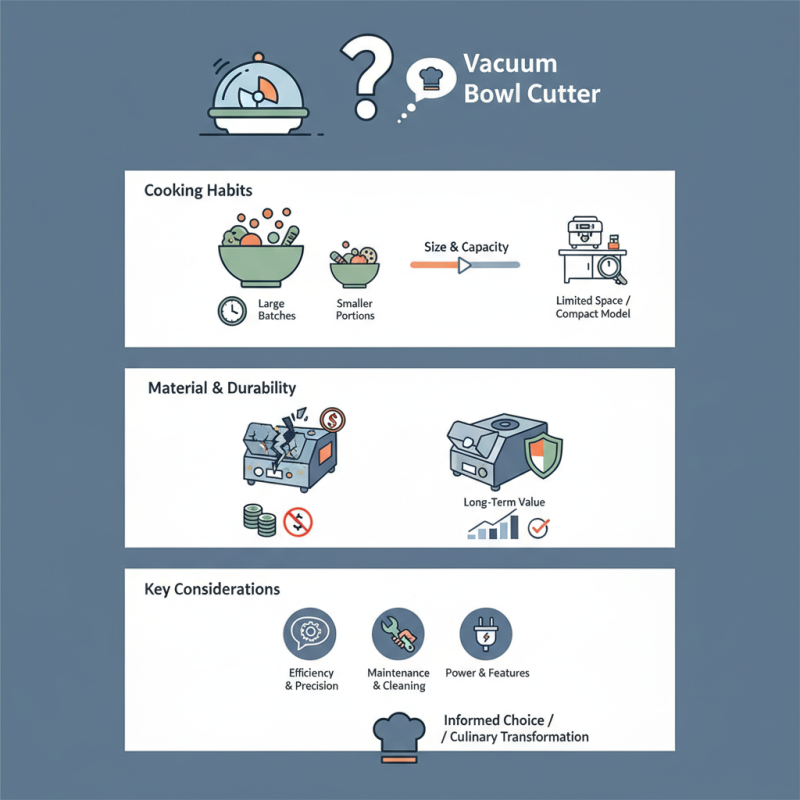
When considering a vacuum bowl cutter for your kitchen, it's essential to understand how it works. These devices use a vacuum-sealed environment to ensure even mixing. The result is a uniform texture, ideal for various food preparations. You can chop or blend ingredients while minimizing air exposure. This method often enhances flavor and freshness.
Choosing the right model can be tricky. Look for features that cater to your cooking style. Some models are more versatile, handling dough and tougher ingredients. Others are specialized, focusing on delicate tasks like emulsifying sauces. Be aware of your kitchen space. Some cutters can occupy considerable room, while others are compact and easy to store.
Maintenance can also be a concern. Regular cleaning of the bowl and blades is necessary. If not taken care of, food residue can linger. This may affect taste and hygiene. Consider your willingness to maintain the machine. A good vacuum bowl cutter should streamline your cooking process but requires your commitment to keep it in top shape.
When selecting a vacuum bowl cutter, key features play a vital role. Look at the size of the bowl. A larger bowl can handle greater volumes of ingredients, but it needs more space. This can be an issue in smaller kitchens. Consider the cutting blade design. Different shapes create various textures in food. Flat blades provide a smooth blend, while curved ones chop coarsely.
Another important feature is the vacuum capability. A strong vacuum ensures that air is removed effectively. This helps in achieving better preservation of flavors and colors. Check the material of the bowl. Stainless steel is durable, but glass allows you to see the mixing process. Ease of cleaning should also be a factor. Some bowls come apart easily, while others can be challenging to clean.
Don’t forget to think about power and speed settings. More options give you control over the cutting process. Too much speed can make it hard to achieve the desired consistency. Consider your cooking style. A machine that is hard to use can lead to frustration. It is essential to reflect on these aspects before making your choice.
This chart illustrates key features to consider when selecting a vacuum bowl cutter, based on their importance ratings. The dimensions include Power, Capacity, Ease of Use, Cleaning, and Price.
When selecting a vacuum bowl cutter, it’s essential to compare different types available. There are three main types to consider: manual, semi-automatic, and fully automatic. Manual cutters require more effort but are often more affordable. Semi-automatic versions strike a balance, offering convenience without a hefty price tag. Fully automatic machines can be expensive but save time and labor.
Tips: Identify your needs. Do you often make large batches? A semi-automatic or fully automatic cutter may suit you best. If you're a hobby chef, a manual option could be perfect. Check the capacity of the bowl. Larger bowls allow for bigger quantities but take up more space.
Material also matters. Stainless steel is durable and easy to clean. Plastic models are lightweight but may not last as long. Look for sturdy lids and easy-to-use interfaces. Your kitchen space is limited; ensure the cutter fits comfortably.
Yet, don’t forget quality issues. Some machines may not perform as expected. Read user reviews and consider the intended use. Are you cutting heavy dough or mixing light ingredients? Each situation may require different features.
When choosing a vacuum bowl cutter, brand reputation and customer reviews are crucial. These factors can provide insight into the product's performance and reliability. Look for brands with a solid history in kitchen appliances. A well-known brand often reflects quality.
Tips: Check for consistency in reviews. If multiple users mention similar issues, take note. Customer feedback can reveal hidden problems or advantages. Sometimes, rave reviews may come from first-time users. Look deeper; analyze the reviews over time.
Pay attention to durability. A vacuum bowl cutter is an investment. Read about the materials used and customer experiences regarding longevity. Some may find that a lower-priced model breaks easily.
Tips: Consider customer service ratings. Good support can make a big difference. If the product fails, how readily can you get help? This aspect is often overlooked. Be ready to reflect on the long-term implications of your choice.
Vacuum bowl cutters are essential for efficient food preparation. To keep your cutter in top shape, regular maintenance is crucial. Start by cleaning the bowl after every use. Food particles can accumulate, leading to bacteria growth. A damp cloth can work wonders for quick clean-ups. For a deeper clean, disassemble the parts and wash them with mild detergent.
