

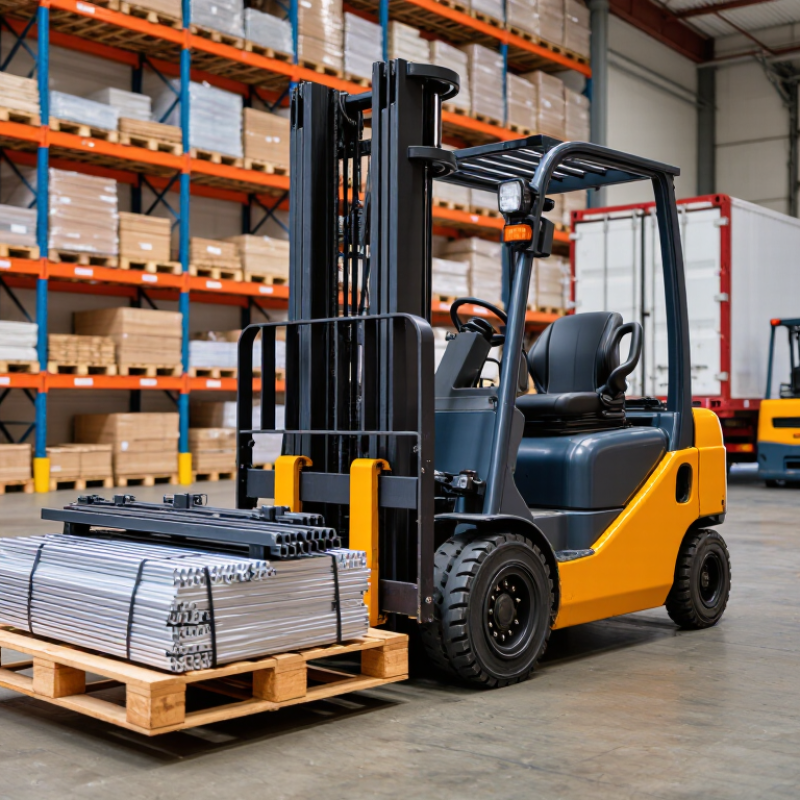
A 3.5t forklift offers a practical balance between lifting strength, maneuverability, and transport flexibility. Its capacity suits palletized machinery, building materials, and dense warehouse loads. Yet capacity alone does not guarantee safe performance.
Visibility matters more than many specifications suggest. A low-profile dashboard, clear mast channels, and a suspended seat help operators manage uneven yards and narrow aisles.
OSHA reports that forklifts cause about 35,000 serious injuries and 62,000 non-serious injuries annually in the United States.
That figure supports choosing stability controls, speed limiting, seat-belt interlocks, and reliable braking systems. ISO 3691-1 also provides a useful safety framework for industrial trucks.
Tire selection should match the environment. Cushion tires reduce turning space indoors, while pneumatic tires absorb rough surfaces at ports, farms, and construction sites.
In cold storage, sealed electrical components and battery heating can protect productivity. In hot or dusty regions, cooling capacity and filtration deserve closer inspection.
Telematics can record impacts, utilization, and maintenance intervals, supporting evidence-based fleet decisions. The World Bank’s 2023 Logistics Performance Index emphasizes reliability and shipment timeliness, so uptime has commercial value.
Still, telematics cannot replace trained operators or site inspections. A 3.5t forklift may perform differently after attachments, ramp work, or uneven loading.
That detail is easy to underestimate.