

Choosing the right cotton candy machine can feel overwhelming, given the variety available on the market. According to the National Confectioners Association, the cotton candy industry has grown by 5% annually over the past three years. This growth indicates that more consumers are seeking this delightful treat at events and parties. Industry expert, Dr. Samuel Reed, emphasizes, “The cotton candy machine you select can significantly affect the quality of your product.”
When selecting a cotton candy machine, consider your needs. For instance, if you plan to use it for large events, a commercial model may suit you best. Conversely, a smaller, home-use machine could suffice for personal gatherings. Many brands claim to offer the best, yet factors such as durability and ease of cleaning often go unnoticed.
It's essential to reflect on your circumstances before purchase. Not every machine produces the same texture or flavor of cotton candy. Some models may even struggle with overheating during extended use. Overall, understanding the specifications and user feedback is crucial for making a well-informed choice in the cotton candy machine market.
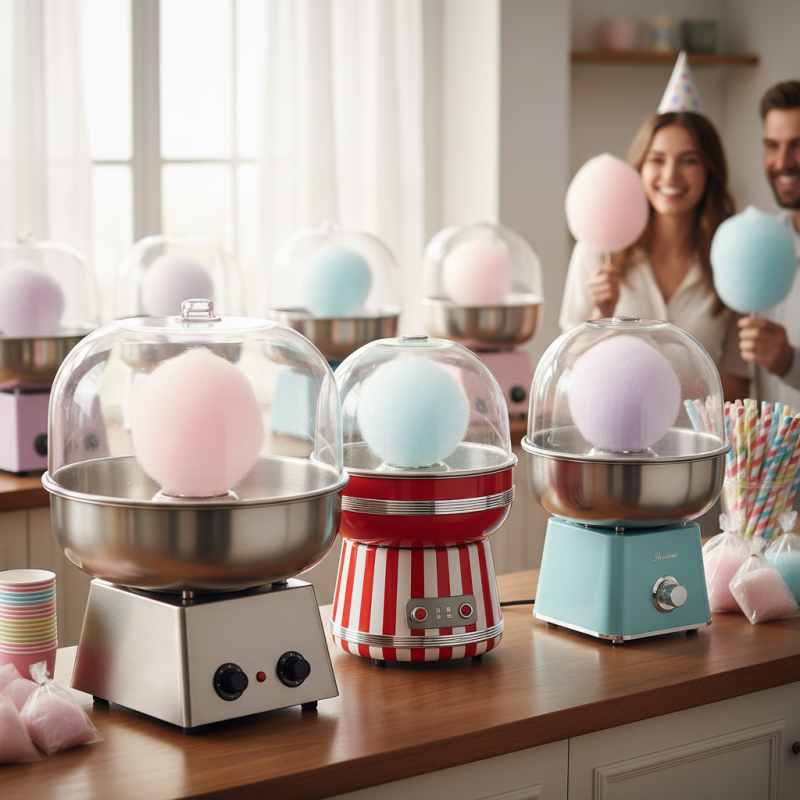
When choosing a cotton candy machine, understanding the types available is crucial. There are several designs to consider, including traditional, counter-top, and commercial machines. Each type serves different needs. Traditional machines are great for nostalgic settings, providing a classic carnival feel. They often feature larger spinning heads and require more space.
Counter-top models are compact and user-friendly. They fit well in homes or small events. These machines are ideal for beginners. They usually come with less complex setups but might not produce cotton candy at the same speed. Commercial machines, on the other hand, are built for high-volume production. They're robust but can be expensive.
Many users overlook the maintenance aspect. A machine that’s easy to clean will save time and effort, especially after a busy event. It's essential to consider whether you want a machine for frequent use or special occasions. Checking user reviews can give insight into reliability. Understanding the pros and cons of each type can lead to a satisfying purchase. Always reflect on your specific needs and preferences. This ensures you invest in a machine that truly meets your expectations.
When selecting a cotton candy machine, consider several key features that can impact your experience. Look for a machine that offers an adjustable temperature control. This feature allows you to customize the fluffiness of the candy. According to a report by the Food Processing Association, consistent temperature management enhances product quality and machine longevity.
The size of the machine's bowl is another crucial factor. A larger bowl can accommodate a greater volume of sugar, allowing for quicker production. Research suggests that machines with a bowl size of 20 inches or more can make an average of 60 cones per hour, making them ideal for larger events. However, larger machines may pose storage issues for small-scale users.
Ease of cleaning also warrants attention. Machines with removable parts simplify maintenance significantly. A survey conducted by the Confectionery Camp found that 70% of users prioritize ease of cleaning when choosing a machine. This consideration can save time and ensure hygiene, especially in busy environments where efficiency is key. Be mindful of these features to find a cotton candy machine that meets your needs effectively.
When choosing a cotton candy machine, evaluating production capacity and speed is essential. Determine how much cotton candy you will need per event. Small gatherings may only need a machine that produces a few cones per minute. Larger parties or events might require faster machines capable of churning out multiple servings quickly.
Consider the machine's maximum output. Some machines can make up to 200 cones an hour, while others may produce only 60. This difference can significantly impact efficiency during busy times. If you're operating in a high-demand environment, speed will be a game-changer.
Tips: Look for machines that are easy to clean. A clean machine ensures that the cotton candy keeps its fresh taste. Additionally, check user reviews for real-life performance insights. Sometimes, manufacturers’ claims do not reflect actual usage. Also, consider noise levels during operation. A loud machine can be distracting in a social setting. Ensure it fits your atmosphere. Aim for a balance between speed and user experience.
| Machine Model | Production Capacity (Servings/Hour) | Heating Time (Minutes) | Weight (lbs) | Power (Watts) | Price Range (USD) |
|---|---|---|---|---|---|
| Model A | 60 | 5 | 15 | 500 | 150 - 250 |
| Model B | 120 | 4 | 12 | 650 | 200 - 300 |
| Model C | 90 | 6 | 18 | 800 | 250 - 400 |
| Model D | 75 | 5 | 14 | 450 | 120 - 220 |
| Model E | 100 | 3 | 10 | 700 | 180 - 320 |
When choosing a cotton candy machine, maintenance is a key consideration. Regular cleaning is essential. Sugar residue can build up and affect performance. Choose a model with removable parts for easy access. This simplicity will help you keep the machine in top condition. A user-friendly design can make the maintenance process less daunting.
Ease of use is another important aspect. Look for machines with clear instructions. Some people may struggle with complex setups. A well-designed machine should minimize this. Consider how the machine operates. Is it easy to load sugar? Does it distribute evenly? Users appreciate smooth operations. Feedback from others can guide your choice.
Sometimes, even the best machines require adjustments. For instance, humidity can impact cotton candy quality. Experimentation may be necessary to achieve perfection. Reflecting on your personal experience can offer valuable insights. Don't overlook the importance of practice. Mastering the craft takes time, but the rewards are delicious.
When choosing a cotton candy machine, cost vs. benefits plays a crucial role. Many machines range from $20 to $500. A lower-priced machine often lacks durability or efficiency. Reports indicate that cheaper models may produce less cotton candy. You might find that investing a bit more can yield better quality and output.
Consider the features you need. Some machines can create larger batches, appealing to larger events. A model that produces 100 servings per hour may suit a busy concession stand. In contrast, a basic model may only produce 30 servings. The initial cost difference could be worth it, based on these performance metrics.
Another essential factor is maintenance. Affordable machines might require more frequent repairs. A study from industry experts emphasizes that reliable machines save long-term costs. They also ensure consistent product quality, essential for customer satisfaction. Evaluating these costs with potential profits can help clarify your best choice. Expensive machines may seem intimidating initially, but they can lead to profitable returns.
