

Scroll Top
4801 Bennett Rd. Toledo, Ohio 43612

Why Choose the Best Well Control Box for Your Needs?

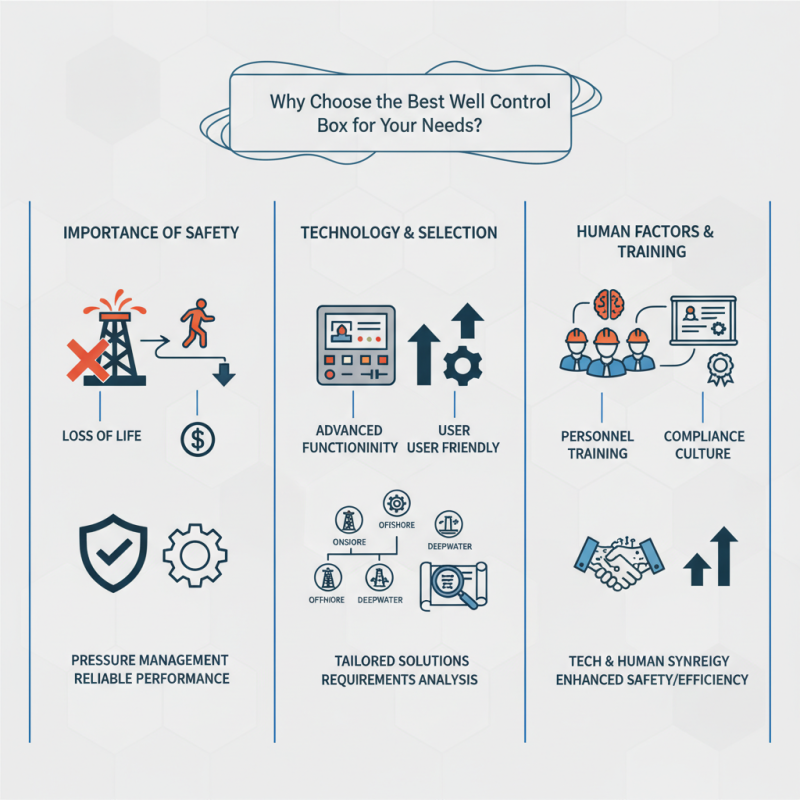
In the oil and gas industry, safety is paramount. Well Control Boxes serve as essential tools in managing well pressures and preventing blowouts. According to a report by the International Association of Drilling Contractors (IADC), blowouts can lead to catastrophic events, causing loss of life and significant financial repercussions. This underscores the importance of selecting the right Well Control Box for specific operational needs.

A well-designed Well Control Box ensures effective pressure regulation and reliable performance under high-stress conditions. Recent technological advancements have improved their functionality, making them more user-friendly. However, not every box is suited for every situation. Each operation has unique challenges that demand tailored solutions. Choosing the best Well Control Box requires more than just brand recognition; it demands analysis of specific requirements and industry standards.

Many companies overlook the importance of ongoing training for personnel in using Well Control Boxes effectively. This can lead to errors that compromise safety. Investing in the best equipment is only part of the solution; creating a culture of compliance and continuous learning is equally vital. Balancing technology and human factors can enhance overall safety and operational efficiency.
Why Choose the Best Well Control Box for Your Needs?

Understanding Well Control Boxes: An Overview of Their Importance

Well control boxes play a vital role in the oil and gas industry. They are essential safety devices designed to manage pressures in drilling operations. Proper use of these boxes can prevent blowouts, which can lead to severe accidents. Understanding their function is crucial for anyone involved in well operations.

These boxes act as a safeguarding mechanism, enabling real-time monitoring of pressure changes. Operators can take immediate action if a situation arises. The accuracy and reliability of well control boxes cannot be overstated. A failure in this system could result in catastrophic consequences. Regular maintenance and proper training for personnel are necessary to ensure effectiveness.

However, reliance on technology can sometimes lead to complacency. Overconfidence in equipment may cause operators to overlook critical manual checks. It's essential to meld technology with human oversight to mitigate risks. Creating a culture that prioritizes safety and diligence is vital for success. Balancing trust in machinery with human intuition helps prevent disasters.

Key Features to Consider When Choosing a Well Control Box

When selecting a well control box, it’s essential to focus on key features that ensure safety and performance. A well control box should exhibit robust reliability. Recent industry reports indicate that over 70% of drilling incidents stem from inadequate well control systems. Ensuring your box meets industry standards can save lives and resources.

Another critical aspect is the system’s ease of use. Operators need intuitive interfaces. Complex setups can lead to errors during high-pressure situations. Data shows that about 65% of operators prefer systems that allow quick training and operation. Look for features that reduce the learning curve, such as clear labeling and straightforward controls.

Furthermore, consider the durability of the well control box. Equipment should withstand extreme conditions. Studies reveal that wear and tear can lead to operational failures in 38% of cases. Therefore, investing in high-quality materials and construction is vital. Take time to evaluate these attributes before making a decision. Ultimately, the right selection can mitigate risks and enhance efficiency in well operations.

Well Control Box Key Features Comparison

This chart illustrates the importance level of key features to consider when choosing a well control box, rated on a scale of 1 to 10. Pressure control is the most critical feature, followed by automatic shutdown and user-friendly interfaces.

Assessing Your Specific Needs for Effective Well Control Solutions

When it comes to well control solutions, understanding your specific needs is essential. Different operations require different tools. The size and type of the well can drastically change the approach you should take. Knowing whether you deal with shallow wells or deeper ones impacts the equipment you need. Each scenario demands unique specifications to ensure safety and effectiveness.

Identifying your operational environment also plays a critical role. Factors like temperature, pressure, and potential hazards influence the selection of a well control box. For instance, equipment designed for harsh conditions must be durable and reliable. Assessing local regulations and safety standards is also vital. You should ensure compliance while optimizing performance.

Consider the team that will use this equipment. Their training and experience matter. Sometimes, equipment is only as good as the people operating it. Ensure that your team is properly educated on the features and best practices. Reflecting on past experiences can provide insights into what works. Rely on the expertise gathered over time to make informed decisions about your well control solutions.

Why Choose the Best Well Control Box for Your Needs? - Assessing Your Specific Needs for Effective Well Control Solutions

Dimension Description Importance Recommended Feature
Pressure Rating The maximum pressure the well control box can handle. Critical for safety and effectiveness in high-pressure environments. At least 5000 psi capability.
Size and Weight Dimensions and weight specifications of the well control box. Affects portability and installation ease. Compact design for easy transport.
Control Options Types of controls available (manual, automatic). Impacts operational efficiency and user assistance. Integrated automation for minimal manual handling.
Material Construction Quality and type of materials used in manufacturing. Influences durability and resistance to harsh environments. Weather-resistant materials like stainless steel.
Compliance Standards Adherence to industry regulations and safety standards. Essential for legal operations and ensuring safety. Certifications like API, ISO.

Comparing Different Types of Well Control Boxes on the Market

When exploring well control boxes, understanding their types becomes essential. Each type emphasizes different functionalities. Some focus on pressure control, while others prioritize flow prevention. Knowing the distinction helps operators choose according to their specific needs.

In addition to functionality, the design of well control boxes varies greatly. For instance, portable models offer flexibility, allowing easy transport. In contrast, stationary boxes may provide enhanced stability. Users must weigh the pros and cons of each design. A portable unit might be convenient but lack robustness. It’s crucial to assess working conditions before making a decision.

The complexity of features also adds to the decision-making process. Some boxes come with advanced monitoring systems. Others, however, may lack such technology, leading to challenges in real-time response. It’s vital to consider both features and usability. Complicated systems might overload inexperienced teams, but simpler models can limit operational capability. Balancing advanced features with team expertise is fundamental in achieving effective well control.

Maintenance and Safety Tips for Optimal Well Control Box Performance

The maintenance of a well control box is crucial for optimal performance. Regular inspections help identify potential issues early. It's recommended to check the hydraulic fluid levels monthly. Low fluid levels can lead to system failure. According to industry reports, 30% of unexpected failures stem from poor maintenance practices.

Safety is also a primary consideration. Always ensure that the control system's seals are intact. A compromised seal can lead to pressure losses and hazardous situations. Research indicates that over 25% of safety incidents occur due to equipment neglect. Operators must be trained to respond to alarms effectively. Ignoring alarm signals can result in catastrophic outcomes.

Operating conditions can affect the performance of a well control box. High temperatures and excessive dust can reduce efficiency. Regular cleaning can mitigate these effects. Some operators overlook the importance of environmental factors. Awareness and adaptability are key. Regular audits can help improve performance but are often skipped due to time constraints.