

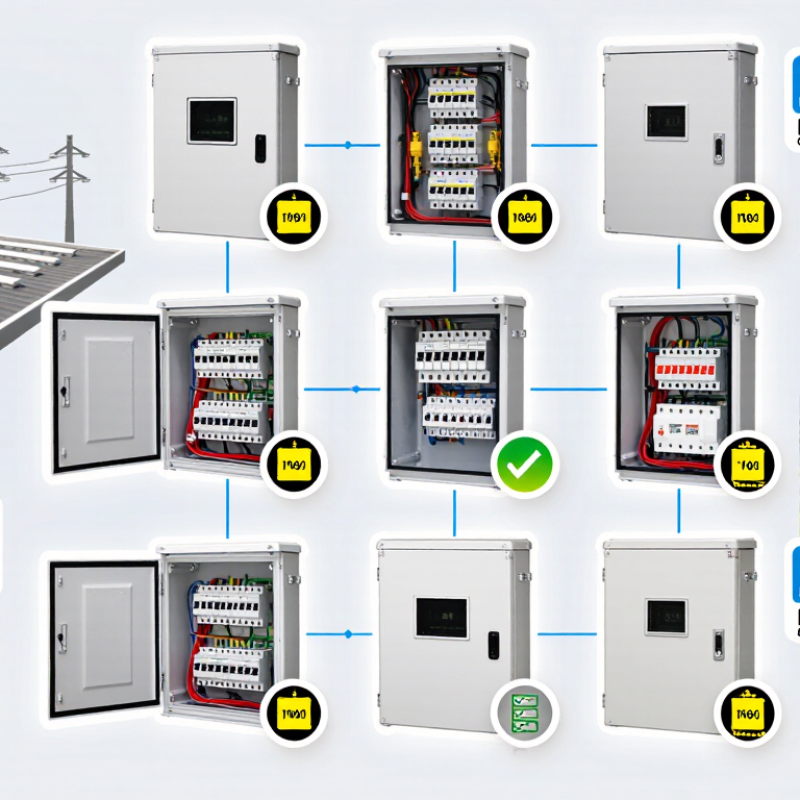
Selecting a Chinese solar combiner supplier requires more than comparing unit prices. IRENA’s Renewable Capacity Statistics 2024 recorded 345.5 GW of new solar capacity worldwide in 2023. That scale increases pressure on component reliability, documentation, and delivery discipline.
Ask suppliers for recent factory audit records, production photographs, and traceable test reports. Confirm compliance with IEC 61439-2, IEC 62548, and the project’s required ingress protection rating. Examine fuse holders, surge protection, cable glands, copper bars, and enclosure materials. Small details matter. Request samples before signing a large order. Check terminal tightness, labeling, wiring space, and thermal performance under realistic current loads. A polished catalogue proves very little.
The IEA PVPS Trends 2024 report estimated global photovoltaic capacity exceeded 1.6 terawatts by the end of 2023. Your supplier should therefore demonstrate repeatable quality, not only attractive pricing. Review incoming-material controls, serial-number tracking, warranty procedures, and spare-part availability. Ask how failures are investigated and reported. Factory video calls help, but independent inspection is stronger. Delivery estimates can also be optimistic; require a production schedule with inspection milestones and defined corrective actions. A low quotation may hide weaker surge protection or thinner conductors. I have seen procurement teams overlook these points. That mistake is expensive. Compare at least three technically equivalent offers, and record every assumption before approval.