

China Best VTOL Drone Price for Global Buyers?
China Best Vtol Drone Price for Global Buyers? This question sounds simple, yet the answer depends on the mission. A compact mapping VTOL drone may cost far less than a long-range industrial platform. Payload, flight endurance, camera quality, battery chemistry, and ground-control software can change the final figure sharply. A low factory quote may exclude batteries, spare propellers, training, shipping, and technical support.
Aerospace analyst Richard Aboulafia offers a useful reminder: “Price is only one part of the value equation.” That principle fits the Vtol Drone Price market closely. Buyers should compare complete operating costs, not only the number shown on a supplier’s webpage. A drone priced at 8,000 dollars may need a costly thermal camera upgrade. Another priced at 12,000 dollars may already include dual batteries, a case, and basic support.
Real buying experience also exposes uncomfortable details. Product pages can be unclear. Battery endurance is often measured in calm, ideal conditions. Wind, cold weather, and a heavy payload reduce practical flight time. Some comparisons remain imperfect. Specifications may not use the same testing standards.
This guide examines Chinese VTOL drone pricing for global buyers. It considers entry-level, professional, and specialized systems. It also reviews payload capacity, range, after-sales service, import planning, and pilot training. The goal is not to promote the cheapest option. It is to help buyers identify dependable value, realistic performance, and avoidable costs before placing an order.
VTOL Drone Classes in China: Multirotor, Fixed-Wing, and Hybrid Designs
China Best VTOL Drone Price for Global Buyers?
VTOL Drone Classes in China: Multirotor, Fixed-Wing, and Hybrid Designs
China’s VTOL drone market covers three practical classes: multirotor, fixed-wing, and hybrid designs. Each class serves different missions, budgets, and operating conditions.
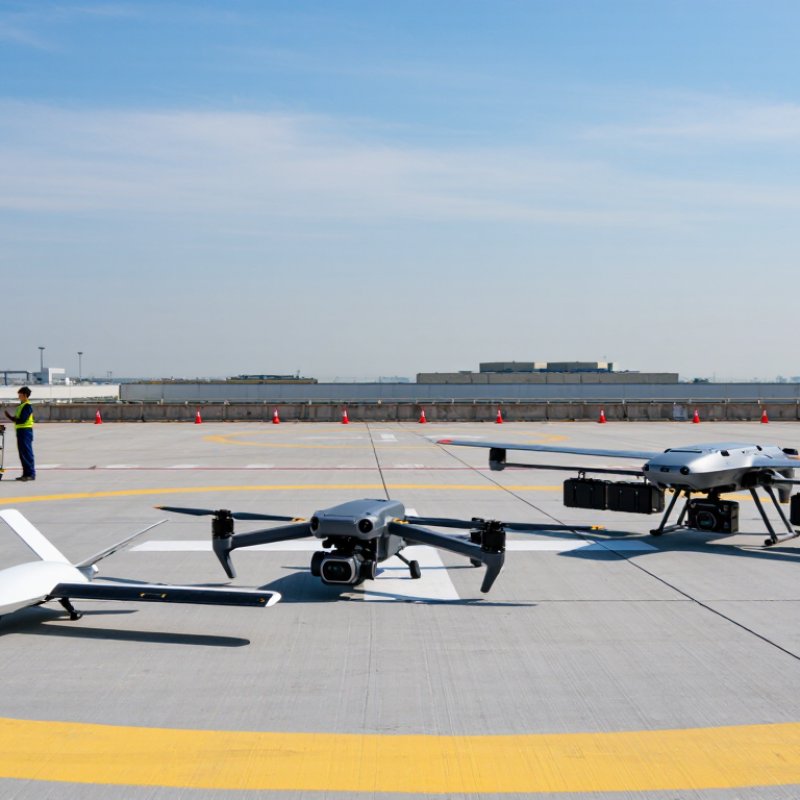
Multirotor Drones can rise vertically from a small concrete pad. They suit inspection, mapping, and short-range observation. Their exposed propellers and limited flight time remain important weaknesses. Fixed-wing VTOL drones travel farther and use less energy during cruise. However, they need careful route planning and a safe recovery area. Hybrid designs combine vertical takeoff with efficient forward flight. This balance supports longer surveys, though the structure is usually more complex.
For global buyers, price should include batteries, ground controls, training, spare parts, and lawful flight support. A low factory quotation may exclude these details. That can distort the real purchase cost. Technical teams should check payload capacity, wind tolerance, navigation accuracy, and operating temperature. Ask for test records, maintenance intervals, and clear warranty terms.
Our comparisons are not perfect. Local testing may not match coastal wind, mountain air, or humid climates. Requesting sample flight data from similar environments is wiser than trusting impressive brochures. A reliable supplier should explain limitations openly, not promise unlimited endurance. For many buyers, a slightly higher initial price may reduce downtime and replacement costs.
China Best VTOL Drone Price for Global Buyers? - VTOL Drone Classes in China: Multirotor, Fixed-Wing, and Hybrid Designs
Indicative specifications and China export-market price ranges for commonly offered civilian and industrial VTOL drone configurations.
| VTOL Drone Class | Typical Configuration | Typical Maximum Take-Off Weight | Typical Flight Endurance | Typical Payload Capacity | Typical Operational Range | Primary Propulsion | Indicative China Export Price | Common Applications | Main Buying Considerations |
|---|---|---|---|---|---|---|---|---|---|
| Multirotor VTOL | Four-, six-, or eight-rotor configuration with vertical lift and hover capability | 1–25 kg | 20–60 minutes | 0.5–10 kg | 2–20 km from the control station, depending on regulations and radio system | Electric battery | US$800–US$15,000 | Inspection, mapping, security patrols, aerial photography, agriculture, and delivery trials | Excellent low-speed control and precise hovering; endurance and payload decrease as operating weight increases |
| Small Fixed-Wing VTOL | Fixed-wing aircraft with separate lift rotors or tilt-rotor propulsion for vertical take-off and landing | 5–25 kg | 1.5–5 hours | 1–5 kg | 50–300 km, subject to battery, airspace, and communications limits | Electric battery, usually with multiple lift motors and one or more cruise motors | US$8,000–US$35,000 | Land surveying, corridor inspection, environmental monitoring, agriculture, and photogrammetry | Longer endurance than a multirotor; requires adequate launch-area planning, flight planning, and recovery procedures |
| Medium Fixed-Wing VTOL | Efficient fixed-wing airframe with dedicated vertical lift system and higher-capacity payload bay | 25–100 kg | 3–12 hours | 5–20 kg | 150–1,000 km theoretical mission distance, depending on fuel, battery, antenna, and local rules | Gasoline engine, hybrid-electric system, or high-capacity battery system | US$35,000–US$120,000 | Large-area surveying, pipeline and power-line inspection, forestry, coastal monitoring, and logistics research | Higher acquisition and maintenance requirements; fuel systems, propulsion integration, and regulatory approval need careful review |
| Hybrid VTOL UAV | Vertical lift rotors combined with a conventional fixed-wing cruise section; lift and cruise systems operate separately | 10–150 kg | 2–10 hours | 2–30 kg | 100–1,000 km, depending on the mission profile and communications architecture | Hybrid-electric, gasoline-electric, or battery-electric propulsion | US$20,000–US$250,000 | Long-range inspection, emergency response, mapping, maritime observation, and remote-area operations | Combines runway-free operation with efficient cruise flight; transition control, redundancy, training, and maintenance are important |
| Tilt-Rotor VTOL | Propellers or nacelles rotate between vertical-lift and forward-flight positions | 10–100 kg | 2–8 hours | 2–20 kg | 100–800 km, subject to configuration, weather, and communications conditions | Electric, gasoline, or hybrid-electric propulsion | US$30,000–US$180,000 | Long-distance inspection, mapping, surveillance, and operations from restricted launch sites | Efficient cruise performance with VTOL capability; transition software, mechanical complexity, and component reliability are critical |
| Heavy-Lift Multirotor VTOL | Eight-rotor or redundant multi-rotor platform designed for high-payload hovering | 25–150 kg | 10–40 minutes | 10–50 kg | 2–15 km for typical working missions | High-voltage electric battery or hybrid-electric propulsion | US$25,000–US$150,000 | Industrial lifting, firefighting support, cargo testing, specialized imaging, and agricultural spraying | Strong hover and lifting performance; battery safety, motor redundancy, ground handling, and local operating permissions are essential |
Price basis: The ranges are indicative budget figures for a standard aircraft system or airframe package sourced from the Chinese export market. Final quotations vary according to payload sensors, flight-control software, communication equipment, batteries, ground-control stations, spare parts, training, testing, packaging, shipping, insurance, import duties, taxes, and certification requirements. Performance values are typical planning ranges rather than guaranteed specifications and should be confirmed through a formal supplier quotation and acceptance test.