

Scroll Top
4801 Bennett Rd. Toledo, Ohio 43612

China Best Turn Mill CNC Machine Manufacturer?

Choosing the China best Turn-Mill Cnc Machine manufacturer requires more than comparing prices or polished websites. A reliable supplier should demonstrate engineering experience, stable production, and clear quality controls. The right Turn-Mill Cnc Machine must match your material, part size, tolerance, and daily production volume.

Look closely at the factory’s technical evidence. Ask for machining samples, spindle specifications, live-tool performance, and documented inspection procedures. A serious manufacturer can explain positioning accuracy, repeatability, thermal control, and service response without hiding behind vague promises. Factory visits can reveal practical details, such as organized assembly areas, calibrated measuring equipment, and technicians testing finished machines on the shop floor. Claims need proof.

Customer references also matter. Speak with users who machine similar components, especially parts requiring turning and milling in one setup. Their experience may reveal maintenance needs, software limitations, or training quality that brochures rarely mention. Fit matters more.

However, no supplier is perfect. Even experienced manufacturers may have weaknesses in communication, delivery coordination, or after-sales coverage. A careful buyer should record these risks before signing a contract. Certifications are useful, but they do not replace process verification or transparent communication. The best decision comes from comparing technical capability, total ownership cost, customization support, and long-term reliability. This article examines practical criteria for identifying a capable Chinese Turn-Mill Cnc Machine manufacturer, while recognizing that “best” depends on your application, expectations, and evidence.
China Best Turn Mill CNC Machine Manufacturer?

Turn-Mill CNC Machines: Functions, Configurations, and 5-Axis Capability

China Best Turn Mill CNC Machine Manufacturer?

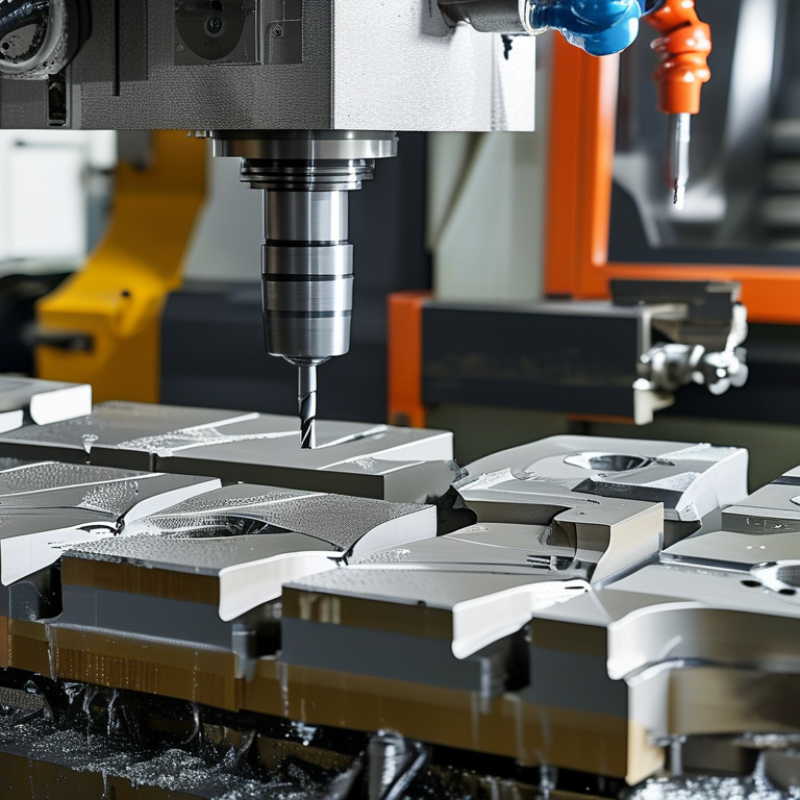
A turn-mill CNC machine combines turning, milling, drilling, and tapping in one setup. This reduces repositioning errors and protects tight relationships between diameters, holes, and keyways. Typical configurations include a main spindle, sub-spindle, live tooling, and a Y-axis. A B-axis milling head adds angular machining for complex features. Some models also include automatic tool measurement and in-process probing.

Five-axis capability needs careful interpretation. A machine may offer three linear axes and two rotary axes, yet operate mainly through 3+2 positioning. That differs from true simultaneous five-axis interpolation. For turbine-like surfaces, angled ports, or off-center drilling, simultaneous motion can improve access and reduce fixtures. However, it demands stronger control software, accurate kinematic calibration, and disciplined toolpath verification.

In practical shop testing, I would inspect chip control, thermal stability, spindle torque, and tool-change repeatability. Cut a sample part with deep bores, cross-holes, and milled flats. Measure it after warm-up, not only during the first cycle. Ask the manufacturer for service response times, training details, and documented inspection results. A polished demonstration can hide limitations. I have seen impressive specifications fail when coolant delivery was weak or the sub-spindle lacked rigidity. The best choice depends on part geometry, batch size, material, and operator skill—not just the number of axes.

China’s Turn-Mill Industry: Export Scale, Accuracy, and Production Capacity

China Best Turn Mill CNC Machine Manufacturer?

China’s turn-mill industry has grown through broad supplier networks, skilled labor, and strong domestic demand. Gardner Intelligence’s 2023 World Machine Tool Survey placed China first in machine-tool production and consumption for 2022. It reported production near US$27 billion and consumption near US$31 billion. These figures cover machine tools generally, not turn-mill centers alone. Still, they show substantial manufacturing depth. UN Comtrade’s 2023 HS 8458 data also placed China among the leading exporters of metal-cutting lathes. However, HS 8458 includes several machine types. Export value alone cannot prove turn-mill expertise.

Accuracy needs stricter evidence. ISO 230-2 evaluates positioning accuracy and repeatability, while thermal drift, spindle runout, and tool changes affect real production results. A capable factory should provide inspection records, laser-interferometer results, and sample parts with measured tolerances. Capacity is not quality. Many Chinese plants can support batch production, quick component sourcing, and flexible customization. Their advantage is often visible on the shop floor: automated tool magazines, bar feeders, probing systems, and multiple shifts. Yet delivery promises may overlook commissioning time, operator training, and after-sales support. I would compare tested cycle times, rejected-part rates, and service response before choosing a supplier. The data is encouraging, but the evidence still needs checking.

How to Compare Manufacturers Using ±0.005 mm Accuracy and 10,000 rpm Spindles

China Best Turn Mill CNC Machine Manufacturer? Compare Accuracy and Spindle Speed

Choosing a turn-mill CNC manufacturer requires more than reading ±0.005 mm on a brochure. ISO 230-2:2014 defines test methods for positioning accuracy and repeatability. Ask for the complete inspection chart, including axis travel, temperature, load, and measurement equipment. A quoted ±0.005 mm may describe repeatability, not finished-part accuracy. Those are different claims. In shop trials, I check a turned diameter, a milled slot, and the same feature after several hours. Thermal drift often exposes weak machine design.

A 10,000 rpm spindle equals about 166.7 revolutions per second. That speed helps small cutters, but it does not guarantee productive machining. Request spindle power curves, balancing records, runout measurements, and cutting samples in the intended material. The International Organization for Standardization’s ISO 230-3 framework supports evaluating thermal effects, while ballbar testing can reveal circular interpolation errors. A serious manufacturer should provide dated test data, not only marketing tolerances.

AMT’s U.S. Manufacturing Technology Orders reports track machine-tool demand by value, units, and region, showing why service capability matters alongside specifications. Compare installation training, spare-parts response, remote diagnostics, and technician availability. I once trusted a clean accuracy table too quickly. The machine performed well cold, then missed a bore after production warmed the enclosure. That mistake still matters. Ask for a witnessed acceptance test, repeat the test after thermal stabilization, and inspect actual parts under calibrated measurement equipment.

China Best Turn Mill CNC Machine Manufacturer? - How to Compare Manufacturers Using ±0.005 mm Accuracy and 10,000 rpm Spindles

Evaluation Dimension Recommended Benchmark What to Compare Documents or Tests to Request Priority
Positioning Accuracy Approximately ±0.005 mm or better under specified test conditions Check whether the figure refers to positioning accuracy, repeatability, or machining tolerance. These are different measurements and should not be treated as equivalent. Machine acceptance report, laser interferometer results, test conditions, axis travel length, ambient temperature, and measurement standard. Critical
Repeatability Consistent bidirectional repeatability suitable for the intended component tolerance Compare repeatability for linear axes and turret positioning, not only the headline accuracy value. Bidirectional repeatability test data, ball-bar results, and inspection records from sample parts. Critical
Spindle Speed Up to 10,000 rpm for high-speed turning and milling applications Verify whether 10,000 rpm is the maximum speed, the continuous operating speed, or an optional configuration. Higher speed is not automatically better for every material. Spindle specification sheet, speed-torque curve, continuous-duty rating, balancing grade, and thermal test results. Critical
Spindle Torque Torque matched to the workpiece material, diameter, and cutting-tool requirements A high-rpm spindle may have limited torque at low speed. Compare the torque curve rather than rpm alone. Published torque-power chart, motor rating, drive type, and cutting trial using the target material. Critical
Turning and Milling Capability Synchronized turning, live tooling, and interpolated milling on the required axes Confirm whether the machine can complete the required operations in one setup, including drilling, tapping, face milling, slotting, and contour milling. Axis configuration, live-tool specification, C-axis and Y-axis details, sample programs, and finished-part demonstrations. Critical
Thermal Stability Stable dimensional performance during extended production cycles Compare spindle cooling, thermal compensation, machine warm-up procedures, and structural control of heat deformation. Thermal growth test, warm-up protocol, cooling-system specification, and dimensional inspection after continuous operation. High
Machine Rigidity Rigid bed, guideways, spindle housing, and turret structure for stable cutting Evaluate vibration control, heavy-cutting capability, surface finish, and tool-life consistency at the required material-removal rate. Machine weight, bed construction, guideway design, cutting-force test, surface-finish sample, and vibration data. High
Control System and Data Connectivity Reliable CNC control with program storage, diagnostics, and common industrial connectivity Check support for tool management, probing, remote diagnostics, Ethernet data transfer, and production monitoring. Controller specification, software options, communication protocols, cybersecurity functions, and demonstration of the required workflow. High
Automation Readiness Compatibility with bar feeders, parts catchers, robots, probing, and automatic tool management Compare interface availability, loading access, workholding options, chip handling, and integration responsibility. Automation layout, interface list, I/O documentation, cycle-time study, and integration quotation. High
Work Envelope Capacity exceeding the largest planned workpiece with adequate tool clearance Review maximum turning diameter, turning length, bar capacity, chuck size, axis travel, and interference zones. Detailed machine layout, dimensional drawings, chuck and collet specifications, and a full-scale workholding simulation. Critical
Cycle-Time Capability Repeatable cycle time validated with the actual part program Compare rapid traverse, tool-change time, indexing time, acceleration, chip evacuation, and non-cutting time. Recorded machining video, NC program, cycle-time breakdown, tool list, and sample-part production report. High
Quality Management Documented production and inspection processes based on recognized quality practices Assess incoming inspection, process control, final inspection, traceability, calibration, and nonconformance handling. Quality certificate scope, inspection plan, calibration records, process-control documents, and sample inspection report. High
Factory Acceptance Testing Formal FAT before shipment using agreed technical criteria The acceptance test should verify geometry, accuracy, repeatability, spindle performance, safety functions, and sample machining. Signed FAT protocol, measurement equipment list, test-part drawing, deviation limits, and corrective-action procedure. Critical
After-Sales Support Defined response times, spare-parts process, remote support, and commissioning assistance Compare service coverage, technician availability, training, troubleshooting procedures, and escalation channels. Service-level agreement, spare-parts list, warranty terms, training plan, and support response-time commitments. Critical
Total Cost of Ownership Transparent five-year cost model rather than purchase price alone Include machine price, tooling, installation, energy, maintenance, coolant, spare parts, software, training, and downtime risk. Itemized quotation, energy estimate, maintenance schedule, consumables list, warranty exclusions, and estimated annual operating cost. Critical
Note: Accuracy and spindle-speed figures should be evaluated together with test conditions, machine configuration, workpiece material, tooling, thermal state, and the manufacturer’s formal acceptance criteria.

Quality Verification: ISO 9001, CE Certification, and 24-Month Warranty Terms

China Best Turn Mill CNC Machine Manufacturer?

Quality verification should begin with evidence, not attractive photographs. An ISO 9001 certificate shows that documented quality processes exist. It does not automatically prove machining accuracy. Check the certificate number, validity period, covered factory, and production scope. The issuing body should be independently verifiable. Ask for inspection records, calibration reports, and recent test-cut results. A finished part should show stable tolerances, clean threading, and consistent surface quality.

CE certification addresses applicable European safety and conformity requirements. It is important, but it is not a complete performance guarantee. Review the declaration of conformity, safety documentation, emergency-stop testing, and electrical components. Factory acceptance testing can reveal practical weaknesses. Observe spindle vibration, turret indexing, chip evacuation, and control response. Small details matter. Some suppliers provide polished documents but limited production evidence. That deserves careful questioning.

A 24-month warranty offers useful protection when its terms are precise. Confirm whether it covers the spindle, servo motors, control system, turret, and labor. Check response times, replacement-part delivery, travel costs, and exclusions for consumables or improper operation. Request these conditions in the contract. Warranty language can be vague. My own verification preference is simple: compare documents with the actual machine, then run a demanding sample job. No certificate replaces hands-on inspection, and no warranty fixes unclear responsibilities.

China Best Turn Mill CNC Machine Manufacturer? Quality Verification Overview

This chart compares commonly referenced verification periods for a turn-mill CNC machine supplier. ISO 9001 certification is generally assessed on a three-year cycle with periodic surveillance audits. CE compliance does not have a universal expiration period; its validity depends on the applicable EU requirements, product changes, and the supporting technical documentation. The warranty reference shown here is 24 months.

Total Cost Analysis: Cycle Time, Tool Life, Energy Use, and ROI Metrics

China Best Turn Mill CNC Machine Manufacturer?

Total Cost Analysis: Cycle Time, Tool Life, Energy Use, and ROI Metrics

Choosing a turn-mill CNC machine in China should begin with measurable cost, not brochure claims. In production trials, record cycle time from first spindle movement to finished part. A 42-second component becomes 1,143 parts across a 10-hour shift, before loading delays. Measure actual changeover time, too. A machine saving eight seconds per part may outperform a cheaper machine with slower indexing. Small details matter.

Tool life needs equal attention. Track inserts by material, cutting speed, and edge count. If one insert lasts 180 parts instead of 120, replacement labor and downtime fall sharply. Yet longer life is not always better. A dull edge can raise burrs and inspection costs. Ask for sample records, cutting data, and dimensional results from comparable workpieces. Practical evidence beats polished promises.

Energy analysis should include spindle load, coolant pumps, standby hours, and compressed air. A power meter gives better evidence than rated consumption. Multiply kilowatt-hours by local electricity rates, then add tooling, maintenance, labor, and rejected parts. ROI should use conservative utilization, not an ideal three-shift schedule. A reliable manufacturer should provide service response times, training details, and realistic maintenance intervals. A 20 percent cycle-time gain may disappear if setup work remains manual. This is where many estimates become optimistic. Recheck them with a pilot batch, operator feedback, and twelve months of service records.