

Scroll Top
4801 Bennett Rd. Toledo, Ohio 43612

What Is the Best Mud Bricks Machine in China?

Choosing the best Mud Bricks Machine in China requires more than comparing prices or polished factory photographs. The right equipment must match local soil, moisture content, brick dimensions, production volume, and available power. A machine that performs well in northern China may struggle with wetter soil in coastal regions. Field conditions matter.

This guide examines practical factors behind a reliable purchase. It considers forming pressure, hydraulic stability, cycle speed, mold durability, energy use, and daily maintenance. It also reviews manufacturer experience, factory inspection, testing records, spare-parts support, and operator training. These details often reveal more than a sales brochure. A dependable supplier should explain performance limits clearly, not promise unrealistic output.

Real production testing is essential. Ask for sample bricks made with your soil mixture. Check their edges, density, drying behavior, and resistance to handling. Small differences become costly over thousands of bricks. Still, no machine is perfect. Some published capacity figures may reflect ideal materials and experienced operators. That limitation deserves attention.

The best Mud Bricks Machine is therefore not a universal model. It is the machine that delivers consistent bricks under your actual working conditions. This article compares suitable Chinese options through practical evidence, technical judgment, and supplier credibility. It also highlights questions buyers often overlook before signing an order. Careful evaluation can reduce downtime, wasted soil, and disappointing production results.

What Is the Best Mud Bricks Machine in China?

How to Define the Best Mud Brick Machine: Soil, Size, and Output

What Is the Best Mud Bricks Machine in China?

The best mud brick machine is the one that suits your soil, required brick size, and daily production target. A machine with impressive output figures may still perform poorly if the soil contains too much clay or coarse gravel. Test several buckets of local soil before choosing. Add water gradually, press a few sample bricks, and check whether their edges hold after drying. Simple tests reveal more than a brochure can.

Soil consistency matters. Sandy soil may need a different mix from sticky clay, and moisture can change between seasons. Ask suppliers what soil range their machine can handle, and request a trial using your own material. Watch how evenly bricks eject from the mold. Look for cracked corners, sticking, or inconsistent dimensions. Small defects add up.

Brick size affects the mold, pressure, and handling process. Confirm dimensions against your building plan, then consider how many workers can move the bricks safely. Output should be measured in usable bricks, not just theoretical cycles per hour. Ask how long the machine can run, and what routine maintenance involves. A slower line may be the wiser choice. I would not trust a single test batch, though; real production conditions can be less tidy. Test again.

Machine Types in China: Manual, Hydraulic, and Fully Automatic Presses

What Is the Best Mud Bricks Machine in China?

In China, the best mud bricks machine depends on soil, budget, and daily production needs.

Manual presses suit small projects and remote sites. An operator fills the mold, pulls a lever, and releases one brick at a time. The process is simple and easy to repair. However, pressure can vary between workers. One brick may feel dense, while the next shows soft edges or small cracks. Manual production also demands steady labor and careful moisture control.

Hydraulic presses use a pump and cylinder to apply stronger, more repeatable pressure. They usually produce denser bricks with cleaner corners. An operator still needs to prepare the soil mix and remove finished bricks carefully. A pressure gauge helps during testing, but it does not replace practical inspection.

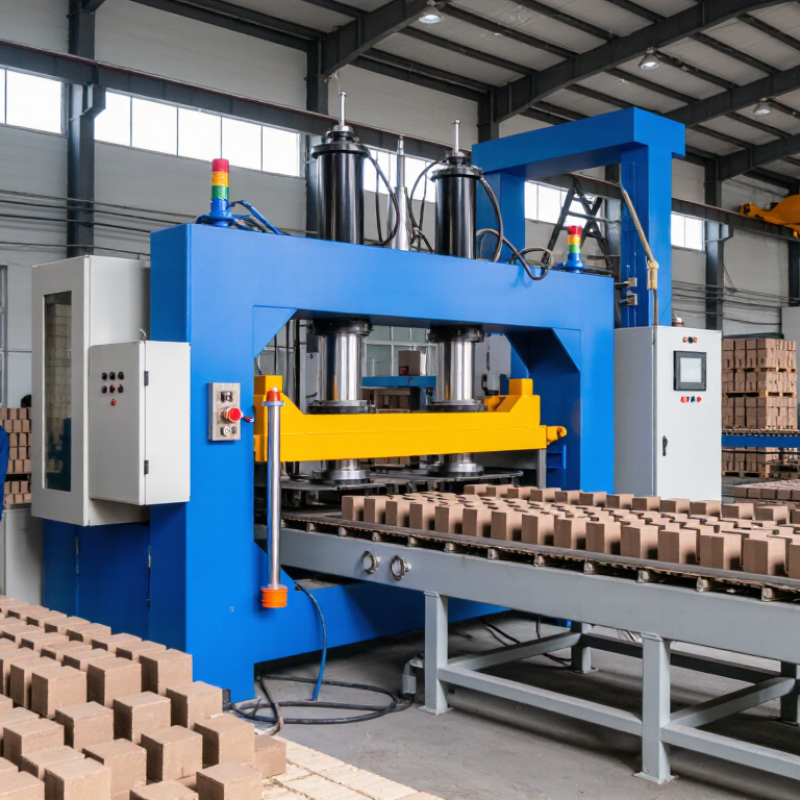
Fully automatic presses connect mixing, feeding, molding, and stacking systems. They can support larger projects and reduce repetitive labor. They also require stable electricity, trained technicians, and regular cleaning around sensors and molds.

Production speed is only one purchasing factor. Check the frame welds, mold material, hydraulic seals, control cabinet, and emergency stop system. Ask for a test using local soil, not imported sample material. The result may change after rain or seasonal drying.

No machine is perfect. I would rather accept a slower press with stable bricks than chase impressive output numbers. Spare parts, service response, and clear operating instructions often matter more after installation.

Industry Benchmarks: 1,000–10,000 Blocks per Day and 2–10 MPa Strength

What Is the Best Mud Bricks Machine in China?

A suitable mud brick machine should match the project, not only the advertised output. Small construction teams often need 1,000 to 3,000 blocks per day. Medium operations may target 5,000 to 10,000 blocks daily. These figures usually assume steady material feeding, trained workers, and limited machine downtime. Field reality differs. Moisture content, soil grading, mold changes, and curing space can reduce production noticeably.

Strength is equally important. Basic earth blocks may reach about 2 MPa after proper curing, while engineered soil mixtures can approach 10 MPa. Cement or lime stabilization may improve strength, but it also changes cost and environmental performance. A practical test uses local soil, measured moisture, and several sample batches. Inspectors should check cracking, edge damage, density, and compressive strength after curing. Appearance alone is unreliable.

I would compare machines through verified trial data rather than catalogue numbers. Ask for cycle time, motor capacity, mold life, spare-part access, and operator requirements. My early production estimates were too optimistic because I ignored cleaning and material preparation. That mistake matters. A machine producing 10,000 blocks on paper may deliver far less on a dusty site. The best choice is the model that consistently meets the required daily volume and strength with local materials, manageable labor, and documented testing.

What Is the Best Mud Bricks Machine in China? - Industry Benchmarks: 1,000–10,000 Blocks per Day and 2–10 MPa Strength

Machine Category Typical Output
(Blocks/Day)
Typical Strength
(MPa)
Approx. Cycle Time
(Seconds)
Pressing Force
(Metric Tons)
Installed Power
(kW)
Best-Fit Application Key Evaluation Point
Manual or Basic Hydraulic Press 1,000–2,000 2–4 25–40 20–60 5–15 Small farms, pilot projects, and low-volume construction Low investment, but higher labor input and less consistent output
Semi-Automatic Hydraulic Press 2,000–4,000 3–6 15–25 50–120 10–25 Small commercial projects and community housing A practical balance between labor requirements, cost, and production stability
Automatic Hydraulic Production Line 4,000–7,000 4–8 10–18 80–160 18–40 Regular commercial production and standardized building projects Higher consistency, reduced manual handling, and better mold-change flexibility
High-Output Automatic Line 7,000–10,000 6–10 8–15 120–250 30–60 Large-scale production, infrastructure, and high-volume housing Best suited to operators with reliable raw materials, curing space, and technical staff
Benchmark notes: Output estimates assume an approximately 8-hour production day, one standard mold configuration, stable material feeding, and normal operating efficiency. Actual compressive strength depends on soil grading, moisture content, clay proportion, sand or aggregate grading, stabilizer dosage, compaction pressure, and curing conditions. Strength values should be verified through laboratory testing of the finished blocks.

Technical Checks: 8–12% Moisture, 10–25 MPa Pressure, and Mold Accuracy

What Is the Best Mud Bricks Machine in China?

A reliable mud brick machine should pass three technical checks: moisture, pressure, and mold accuracy. CRATerre’s compressed earth block guidance shows that soil behavior changes sharply with water content. For many soil mixes, 8–12% moisture is a practical starting range. However, this is not a universal recipe. Clay percentage, sand grading, and stabilizer content can shift the target.

Moisture must be tested, not guessed by hand. Oven-dry testing provides better control than a simple squeeze test. The forming system should also maintain 10–25 MPa pressure across repeated cycles. This figure describes compaction pressure, not final block strength.

UN-Habitat technical guidance recommends local soil testing before production. A pressure gauge needs regular calibration. Small errors become visible quickly.

Mold accuracy matters more than many buyers expect. A 0.5 mm dimensional error can create uneven joints and unstable stacking. Check mold length, width, and corner squareness with calibrated tools. Inspect the first blocks after every mold adjustment. A clean machine can still produce weak bricks. That is the uncomfortable part.

Operators should record moisture, pressure, cycle time, and block dimensions. Records reveal patterns that visual inspection misses. The best selection is not the machine with the highest pressure. It is the machine that holds stable settings during ordinary production, not only during a factory demonstration.

China Supplier Selection: Standards, After-Sales Support, and Total Cost

Choosing the best mud bricks machine in China requires more than comparing headline prices. Supplier standards matter first. Ask for documented material testing, machine drawings, electrical specifications, and production samples. A serious supplier should explain pressure, mold size, cycle time, and expected brick strength. Request a live factory video or an independent inspection. Photos alone can mislead.

After-sales support often decides whether a project stays productive. Confirm installation guidance, operator training, warranty terms, and spare-parts availability in writing. Ask how quickly technicians respond across different time zones. Wear parts should have clear item numbers and replacement instructions. A useful supplier may provide remote commissioning, but remote help cannot repair every problem. Plan for local technical support when possible.

Total cost includes more than the machine invoice. Calculate shipping, customs, installation, power upgrades, molds, oil, packaging, and routine maintenance. Compare energy use per production cycle, not only motor size. A low initial price may become expensive after repeated mold failures or delayed parts. Ask for a three-year ownership estimate with realistic production assumptions. Still, estimates are imperfect. Soil moisture changes, and new operators make mistakes. I would test local soil before signing a large order. A small trial batch can reveal cracks, sticking, or uneven compaction. That evidence is often more valuable than a polished quotation.