

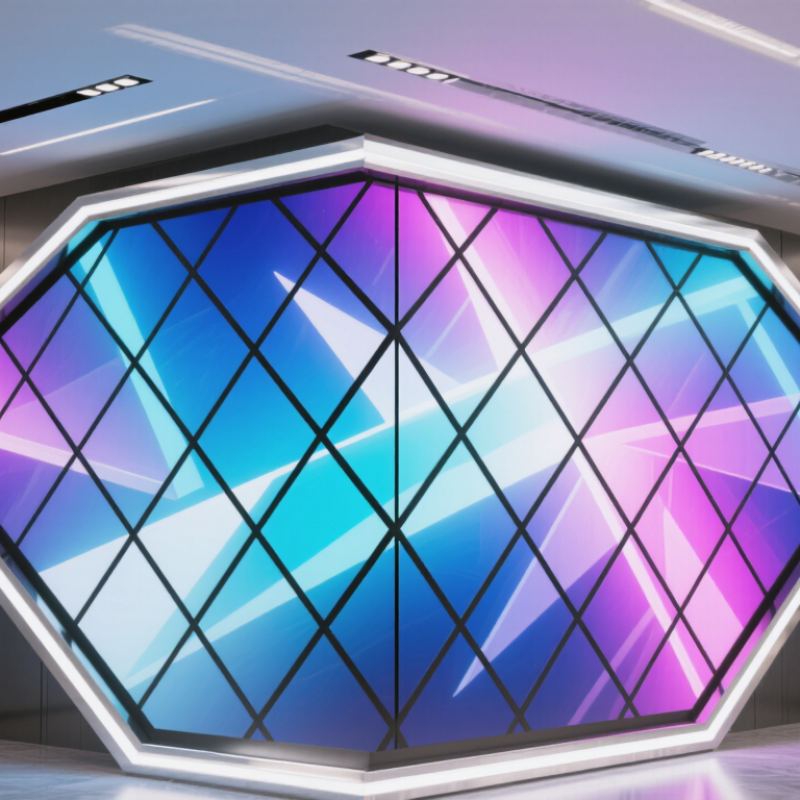
A diamond LED display uses angled panels or modules to create a faceted surface, rather than a conventional flat rectangle. The “diamond” describes the visual geometry, not a single technical standard. Some designs use rhombus-shaped modules; others arrange standard rectangular modules at an angle. That difference affects seams, mounting, and how smoothly images cross each facet.
Module size and pixel pitch determine how the display looks up close. Pixel pitch is the distance between neighboring LED pixels, measured in millimeters. A tighter pitch can preserve fine text and detail at short viewing distances, but it usually raises cost and processing demands. For a lobby viewed from several meters away, a wider pitch may look clean enough. Check the intended content, viewing distance, brightness, and refresh behavior before choosing. Tiny text is unforgiving.
A “best” display in 2026 depends on the room and installation, not the shape alone. Ask for a scale drawing showing module edges, pixel layout, and service access. Request close-up photos or a physical sample; rendered images can hide visible seams. Also confirm how replacement modules match in color and brightness. One practical detail is easy to overlook: angled surfaces can reflect light differently. I would test a sample under the venue’s actual lighting. Even then, the final image may feel less seamless than expected. That’s worth admitting.