

Global packaging demand is becoming more automated, measurable, and regionally diverse. Smithers’ The Future of Corrugated Packaging to 2028 reports continued growth in corrugated packaging value and volume worldwide. FEFCO statistics also show Europe producing tens of billions of square metres of corrugated board each year. These figures signal sustained pressure on converters, distributors, and contract packers. They need reliable equipment, not impressive brochures.
This 2026 guide examines the best Corrugated Box Feeder Machine options for global buyers. It focuses on practical performance. Key factors include feeding accuracy, board-size flexibility, changeover time, dust control, energy use, and operator safety. PMMI research on packaging automation highlights the growing importance of connected controls, labor efficiency, and predictive maintenance. Those priorities are visible on a real factory floor. A feeder may process 150 boxes per minute, yet poor alignment can still create costly downstream stoppages.
Numbers need careful interpretation. Supplier speeds often reflect ideal materials, skilled operators, and short runs. Actual output can fall with warped sheets, recycled board, humidity, or frequent size changes. That matters.
Our comparison therefore considers tested specifications, service coverage, spare-parts access, documentation, and total ownership cost. It also reflects buyer experience across different production environments, from compact regional plants to high-volume export facilities. Installation quality remains an overlooked variable. A well-designed machine can underperform without stable infeed conditions, correct calibration, and trained maintenance staff. The strongest choice is not always the fastest model. It is the feeder that delivers dependable output, manageable maintenance, and measurable value across its working life.
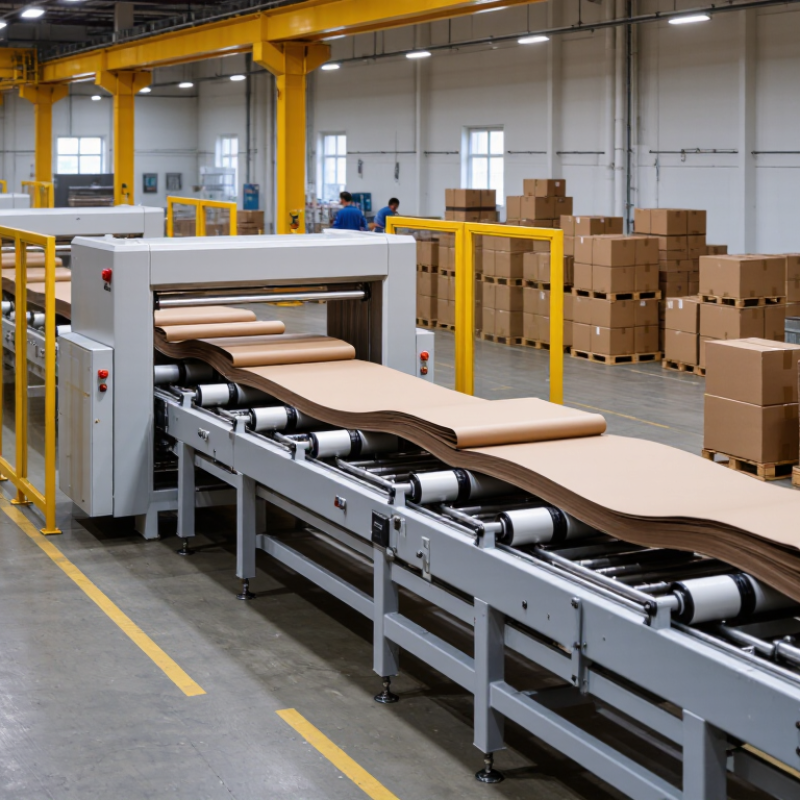
Corrugated box feeder machines move flat cartons into a production line with controlled timing. They separate stacked blanks, lift one sheet, and deliver it toward printing, folding, or gluing equipment. A typical feeder uses vacuum suction, belts, rollers, and adjustable guides. These parts reduce manual feeding and help maintain a steady flow. Small changes matter. If carton blanks overlap, the machine can cause jams, print shifts, or damaged edges.
For global buyers, the practical value lies in consistency rather than speed alone. Operators can set feeding width, suction strength, belt pressure, and gap distance for different board sizes. Sensors may detect double sheets, empty trays, or abnormal movement before the next unit receives material. This protects downstream equipment and limits avoidable waste. Still, automation is not magic. Warped board, excessive dust, or uneven stacking can confuse even a well-adjusted feeder.
From production experience, the best evaluation begins with real samples, not a brochure specification. Buyers should test thin and heavy corrugated board, varied flute profiles, and short production runs. Ask how quickly guides can be changed and how easily operators can clean the suction path. Maintenance access is often overlooked. A reliable machine should offer stable feeding, clear controls, replaceable wear parts, and documented safety procedures. Yet performance depends on installation, board quality, and operator training. That limitation deserves honest attention.
2026 Best Corrugated Box Feeder Machines for Global Buyers
Main Feeder Types and Their Operating Mechanisms
Corrugated box feeders usually use friction, vacuum, or rotary systems. Friction feeders separate blanks with belts and controlled pressure. They suit stable board stacks and medium-speed production. Vacuum feeders lift each sheet through suction cups, then transfer it onto a conveyor. They handle warped, dusty, or lightweight corrugated blanks more reliably. Rotary feeders use timed rollers, lugs, or grippers. Their synchronized motion supports high-speed printing, folding, and die-cutting lines.
Servo-driven feeders provide accurate length control and rapid format changes. Sensors detect double sheets, skewed blanks, and gaps between boards. A pneumatic side guide then corrects alignment before processing. Operators should inspect belt wear, suction filters, and feeder pressure every shift. Small adjustments matter. Poor settings can crush flutes or create overlapping blanks.
Smithers valued the global corrugated packaging market at approximately 205 billion US dollars in 2024. That scale increases demand for dependable feeding accuracy, not merely faster machines. FEFCO reported Europe’s paper packaging recycling rate at about 82% in 2023, highlighting the industry’s material efficiency focus. However, these figures describe packaging markets, not feeder performance. Buyers should question broad supplier claims and test their own board grades, humidity conditions, and stack heights before selecting equipment. A feeder that performs perfectly in a showroom may behave differently beside a dusty converting line.
Main feeder types and their operating mechanisms
The chart shows representative planning ranges for corrugated-board feed rates. Actual performance depends on blank size, flute profile, board stiffness, pile preparation, feeder setup, and downstream equipment.
2026 Best Corrugated Box Feeder Machines for Global Buyers
How to Compare Speed, Accuracy, and Material Compatibility
A feeder’s advertised speed is only a starting point. Test its stable output with your actual box blanks, not sample stock. A machine rated at 200 sheets per minute may slow sharply with heavy corrugated board. Check feeding speed, changeover time, and stoppage frequency together. A fast line is useless when operators constantly clear misfeeds.
Accuracy requires more than precise timing. Examine blank alignment, sensor response, and repeated placement during long production runs. Ask for measured error rates, not general claims. In practical trials, inspect every hundred pieces and record skew, double feeds, and damaged edges. Small errors become expensive downstream. They also reveal weaknesses that a short demonstration can hide.
Material compatibility deserves equal attention. Compare performance across single-wall, double-wall, recycled, coated, and moisture-affected boards. Flute height, board stiffness, surface dust, and inconsistent thickness can change feeding behavior. Adjustable guides and pressure controls usually improve flexibility, but they may require skilled setup. That is an operational cost. Buyers should also verify available electrical specifications, safety documentation, spare parts, and remote service for their region. A machine can perform well in a controlled factory and disappoint in a humid warehouse. No test is perfect. Repeat trials before approving the purchase.
Global buyers choosing a corrugated box feeder machine should examine standards, power, and service together. A machine may run smoothly during testing but fail after installation if voltage or frequency differs. Check whether your site uses 380V, 400V, or 415V, and confirm 50Hz or 60Hz compatibility. Electrical cabinets should include clear labeling, emergency stops, protective guarding, and documentation aligned with applicable regional requirements. Ask for test records, wiring diagrams, and safety instructions before placing an order.
From practical purchasing experience, feeding accuracy depends on more than machine speed. Board thickness, sheet moisture, flute type, and stacking height can change performance. Request samples using your actual corrugated sheets. Measure feeding stability during continuous operation, not only during a short demonstration. A realistic trial may reveal dust buildup or occasional misalignment. That is useful information, not a failure to hide. Service quality also matters. Confirm response times, remote troubleshooting, spare-part availability, installation guidance, and operator training. A reliable supplier should explain limitations clearly.
Tips: Prepare your plant’s power details and sample boards before discussions. Keep critical sensors and belts available locally when possible. Ask how service works across time zones. Do not choose the fastest machine automatically; stable feeding may protect output better. Mistakes happen. Plan for them.
2026 Best Corrugated Box Feeder Machines for Global Buyers
Selecting a corrugated box feeder starts with your production line, not the machine catalogue. Measure board width, flute type, blank thickness, and daily output before comparing models. A feeder should match the folder-gluer, printer, or die-cutter without forcing operators to slow the line. In practical trials, stable feeding matters more than impressive peak speed. A machine rated for 12,000 sheets per hour may perform poorly with warped board or mixed sizes. Ask for test results using your actual material. Small differences become costly during long shifts.
Check adjustment range, sensor accuracy, changeover time, and access for cleaning. Tool-free guides can reduce setup errors, but they may feel less rigid on heavy board. Servo control can improve consistency, although it increases technical complexity. Review electrical standards, guarding, emergency stops, and documentation for your destination market. Reliable suppliers should provide installation guidance, spare-parts lists, and measurable service response times. Do not accept vague claims. Request sample data, maintenance intervals, and references from comparable production environments.
Tips: Track jams by cause for two weeks. Inspect suction cups, belts, and guide rails daily. Keep a few spare wear parts nearby. Train operators to adjust gradually, because hurried corrections often create double feeds. Leave space around the feeder for inspection and cleaning. This is easy to overlook. Also, confirm local voltage and compressed-air requirements before shipment; a small mismatch can delay commissioning and weaken an otherwise sound investment.
| Feeder Type | Typical Application | Compatible Corrugated Board | Typical Blank Size Range | Typical Working Speed | Feeding Accuracy | Typical Stack Capacity | Changeover Method | Main Advantages | Key Limitations | Best Production-Line Fit |
|---|---|---|---|---|---|---|---|---|---|---|
| Friction Feeder | General-purpose feeding of flat carton blanks, printed sheets, and pre-cut corrugated components. | Single-wall corrugated board; commonly used for E, B, and C flute sheets when the surface is reasonably uniform. | Approximately 100 × 150 mm to 600 × 800 mm, depending on machine configuration. | About 60–180 pieces/minute. | Typically within ±1–2 mm after correct guide and belt adjustment. | Commonly 300–800 mm of stacked material. | Manual handwheel or tool-assisted adjustment; suitable for frequent but moderate product changes. | Simple construction, lower initial cost, easy operation, and broad suitability for standard carton blanks. | Performance can decline with dusty, warped, glossy, or highly variable sheets; friction settings must be controlled carefully. | Mixed-SKU packaging lines with medium production volumes and standard board quality. |
| Vacuum Feeder | High-reliability separation and transfer of corrugated blanks with difficult surfaces or variable stiffness. | Single-wall and selected double-wall corrugated board, including heavier or less uniform sheets. | Approximately 150 × 200 mm to 800 × 1,200 mm, subject to vacuum-head and conveyor design. | About 80–250 pieces/minute. | Typically within ±1 mm under stable vacuum and board conditions. | Commonly 400–1,000 mm of stacked material. | Adjustable vacuum zones, suction-head position, side guides, and conveyor timing. | Reliable sheet separation, reduced double-feeding risk, and good handling of heavier or slightly uneven blanks. | Higher energy use, greater maintenance requirements, and sensitivity to dust, leaks, and insufficient air filtration. | High-volume lines requiring consistent feeding of heavier, coated, or less easily separated blanks. |
| Servo Feeder | Synchronised feeding into die-cutting, folder-gluing, printing, laminating, or inspection equipment. | Single-wall and double-wall corrugated board, provided the infeed conveyor and servo torque are correctly sized. | Approximately 200 × 300 mm to 1,200 × 2,000 mm. | About 100–300 pieces/minute, depending on blank size, pitch, and downstream process. | Typically within ±0.5–1 mm when correctly calibrated. | Commonly 500–1,200 mm of stacked material. | Recipe-based adjustment through a touchscreen, with electronic positioning and stored job parameters. | Fast repeat setup, precise synchronization, programmable acceleration, and improved control of variable feed lengths. | Higher purchase price, more complex controls, and greater dependence on encoder, motor, and software maintenance. | Automated production lines where registration, repeatability, and rapid job recall are priorities. |
| Rotary Feeder | Continuous feeding of pre-cut blanks or sheets into high-speed converting equipment. | Flat single-wall and selected double-wall corrugated sheets with consistent dimensions and edge quality. | Approximately 300 × 400 mm to 1,600 × 2,800 mm. | About 150–350 pieces/minute, depending on sheet size and line design. | Typically within ±1–2 mm at rated operating conditions. | Commonly 600–1,500 mm of stacked material. | Mechanical or servo-assisted adjustment of grippers, guides, timing, and sheet pitch. | Continuous operation, high productivity, stable sheet transfer, and good integration with large converting lines. | Less suitable for very small blanks, severely warped board, or frequent unplanned product changes. | Large-format, high-output lines with long production runs and stable blank specifications. |
| Belt-Type Feeder | Gentle transport of printed, laminated, coated, or surface-sensitive corrugated components. | Single-wall corrugated board and coated or printed sheets where surface marking must be minimized. | Approximately 150 × 200 mm to 1,000 × 1,500 mm. | About 50–180 pieces/minute. | Typically within ±1–2 mm, depending on belt condition and sheet alignment. | Commonly 300–900 mm of stacked material. | Manual or semi-automatic guide and belt-speed adjustment. | Low surface scuffing, smooth transport, simple operation, and good compatibility with printed materials. | Lower maximum speed than some vacuum or rotary systems; belt wear can affect consistency. | Print-sensitive packaging lines and operations prioritizing product appearance. |
| Sheet Separator with Infeed Conveyor | Separation and controlled delivery of stacked sheets to an existing converting or inspection machine. | Single-wall and double-wall corrugated sheets, including heavier board when the separator is properly rated. | Approximately 300 × 400 mm to 1,800 × 3,000 mm. | About 40–150 sheets/minute. | Typically within ±1–3 mm, depending on stack condition and conveyor alignment. | Commonly 500–1,500 mm of stacked material. | Manual adjustment of side guides, separator fingers, roller pressure, and conveyor height. | Flexible integration, useful for large sheets, and suitable for upgrading manual or semi-automatic lines. | Usually requires more floor space and may need operator attention when board moisture, warp, or stack quality changes. | Line upgrades where a separate sheet-handling module is required before downstream processing. |
| Robotic or Gantry Feeder | Flexible loading and picking of different blank formats, pallets, or mixed production batches. | Single-wall and double-wall corrugated board, subject to gripper payload and vacuum tooling limits. | Approximately 200 × 300 mm to 1,500 × 2,500 mm. | About 20–120 picks/minute, depending on payload, travel distance, and stacking pattern. | Typically within ±1–3 mm after vision or position calibration. | Usually pallet-based; stack height commonly 600–1,500 mm. | Program-based recipe change, tooling adjustment, and optional vision-system setup. | High flexibility, reduced manual lifting, pallet-to-line automation, and suitability for many product formats. | Higher integration cost, greater programming requirements, and generally lower cycle speed than dedicated feeders. | High-mix, low-to-medium-volume production where labor reduction and flexibility are more important than peak speed. |
