

In the bustling world of warehouses and distribution centers, safety remains a top priority. The Forklift Collision Detection System plays a crucial role in preventing accidents. As operations grow, so does the complexity of potential hazards. Workers and machinery often find themselves in close proximity. This environment requires innovative solutions.
Recent advancements have led to significant improvements in collision detection technology. Systems now use sensors, cameras, and advanced algorithms. These innovations enhance real-time monitoring and awareness. However, the challenge remains to achieve seamless integration with existing systems. Many operators still rely on outdated technologies. This creates a gap in safety standards and efficiency.
As we approach 2026, several promising concepts emerge in the market. New designs promise better accuracy and reduced false alarms. Yet, some systems still struggle to adapt to imperfect conditions. This raises questions about their reliability. Evaluating these systems will be essential for future safety protocols. The journey toward the ideal Forklift Collision Detection System continues. Each improvement brings us one step closer to a safer working environment.
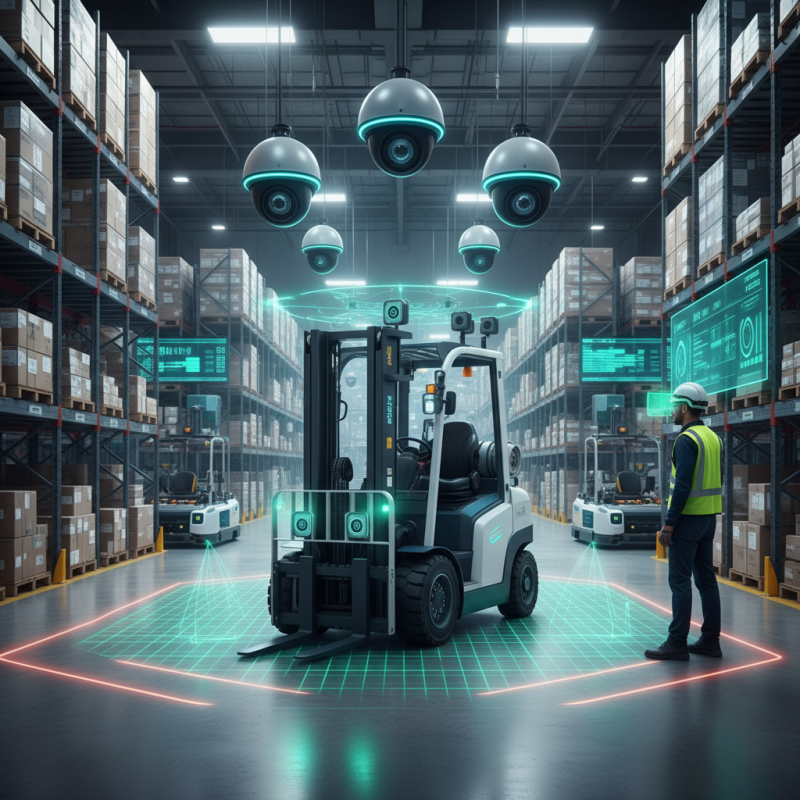
Forklift safety remains a pressing issue in many industries. Each year, thousands of workplace accidents occur. Operators face constant risks when navigating crowded environments. One primary concern is visibility. Many operators struggle to see pedestrians or obstacles. Some facilities lack proper signage to alert them.
Another challenge is the training of personnel. Often, operators do not receive adequate education on safety protocols. Consequently, mistakes can lead to costly injuries. Workers might not know how to use safety features effectively. Regular safety drills are also often overlooked.
Despite advances in technology, gaps remain. Collision detection systems are not always foolproof. They rely heavily on sensors, which can fail or be obstructed. These issues underscore the need for continuous improvement. More awareness and proactive measures can help mitigate risks in the future.
| Innovation Type | Technology Used | Key Features | Current Challenges |
|---|---|---|---|
| Sensor Integration | LiDAR | High precision detection, real-time obstacle tracking | High cost of implementation, complex calibration |
| Camera Systems | 360-Degree Cameras | Comprehensive visual coverage, night vision capabilities | Data overload, limited range in adverse conditions |
| AI-Powered Solutions | Machine Learning Algorithms | Predictive analytics, adaptive learning | Need for continuous data input, requiring extensive training |
| Alert Systems | Auditory and Visual Alerts | Instant feedback for operators, enhances awareness | May cause alarm fatigue, potential distractions |
| Telematics | GPS and RFID | Location tracking, performance analytics | Reliance on connectivity, privacy concerns |
The world of forklift collision detection technologies is rapidly evolving. Innovative systems are being developed to enhance safety in warehouses and industrial settings. These advancements focus on reducing accidents and increasing operational efficiency.
Existing technologies include light sensors and cameras. These devices help detect obstacles in a forklift's path. They work by sending signals, triggering alarms, or stopping the vehicle completely. However, some systems can struggle in low-light conditions or when obstacles are too close. This can lead to false alarms or missed detections.
Another approach involves integration with facility management software. By leveraging data, these systems analyze patterns and predict potential collisions. They aim to provide proactive measures. Still, there’s room for improvement. The cost of implementing such technology can be a barrier for smaller businesses. The challenge remains to balance safety with budget constraints.
Forklift collision detection systems are evolving rapidly. Innovative sensor technologies play a crucial role in improving workplace safety. Studies show that over 80% of workplace accidents involve forklifts. These incidents often lead to severe injuries and costly damages. Developing advanced sensors can reduce such accidents substantially.
Lidar and radar systems are gaining popularity. Lidar creates a 3D map of the environment, allowing forklifts to detect obstacles more accurately. Radar can function in harsh conditions, detecting objects even in bad weather. These sensors work together, providing a comprehensive safety net for operators. Yet, some companies still rely on outdated systems, which may not provide adequate protection.
Moreover, camera-based systems offer additional features. They can identify people and track movements in real-time. Some systems include artificial intelligence to improve detection accuracy. However, integrating these technologies can be challenging and costly. Not every company can afford high-tech upgrades. Therefore, finding a balance between cost and safety remains a concern for many operators.
In 2026, the landscape of forklift collision detection is evolving rapidly. Integrating artificial intelligence and machine learning is driving innovations that enhance safety alerts. Sensors now gather real-time data from the environment. AI algorithms process this information, identifying potential hazards before they escalate. These systems learn from every incident, improving their predictive capabilities over time.
For instance, a forklift nearing a crowded aisle can receive alerts based on proximity to pedestrians. It can slow down or even stop autonomously if needed. However, not all scenarios are predictable. Some collisions still occur, highlighting the need for continuous refinement in these technologies. Would a slight modification in algorithms have prevented a specific incident? These reflective questions are crucial for ongoing improvements.
Implementing AI doesn't guarantee perfection. Human error remains a significant factor in many workplace accidents. It's important to understand that technology should enhance, not replace, vigilance. Training operators to work alongside these smart systems can create a more harmonious and safer environment. The balance between human intuition and machine intelligence is a challenge yet to be fully realized.
In recent years, the logistics and warehousing sectors have seen a surge in technological advancements. Forklift collision detection systems are at the forefront of these innovations. According to a report by the Occupational Safety and Health Administration (OSHA), nearly 100,000 forklift-related injuries occur annually in the U.S. alone. This statistic underlines the urgent need for improved safety measures and smarter systems.
Emerging technologies like LiDAR and advanced sensor systems are becoming essential in collision prevention. These systems can detect obstacles and reduce the risk of accidents. Studies indicate that companies adopting such technologies experience a significant decrease in workplace injuries. However, the integration of these systems poses challenges. Many businesses still rely on outdated equipment. This reluctance can hinder progress and reflects a broader need for industry shift.
As we move towards 2026, the importance of industry-wide adoption cannot be overstated. Data from market research shows that around 70% of companies express interest in upgrading their safety technologies. Yet, many lack the resources or knowledge to implement these changes effectively.
Investing in employee training and system installation can yield substantial benefits. Nonetheless, the journey toward comprehensive collision detection and prevention is fraught with obstacles that require serious attention.
