

2026 Best Lighted Toggle Switches for Global Buyers
Choosing the right Lighted Toggle Switch can improve visibility, control, and equipment safety in demanding environments. Global buyers need more than a bright indicator. They must assess voltage, current capacity, circuit function, terminal design, mounting size, and environmental protection. A switch that performs well in a dry workshop may fail inside a vibrating vehicle or humid control panel.
This 2026 guide examines leading lighted toggle switches for international purchasing decisions. It considers practical installation details, including panel-hole measurements, wire compatibility, contact materials, and illumination colors. It also reviews AC and DC applications, momentary and maintained actions, IP ratings, and expected service life. Reliable manufacturers should provide clear datasheets, test reports, quality controls, and traceable product information. Regional certification requirements can differ, so buyers should confirm compliance before ordering large quantities.
Small details matter. A loose terminal can create heat. A dim lamp can slow nighttime inspection. Some advertised ratings also depend on temperature, load type, or switching frequency. This is easy to miss. Our comparisons combine published specifications with real-world selection experience, while recognizing that laboratory results cannot represent every installation. Buyers should verify samples under their own operating conditions and consult qualified electrical professionals when necessary. The best choice is not always the cheapest or brightest model. It is the switch that matches the application, supply system, installation environment, and long-term maintenance plan.
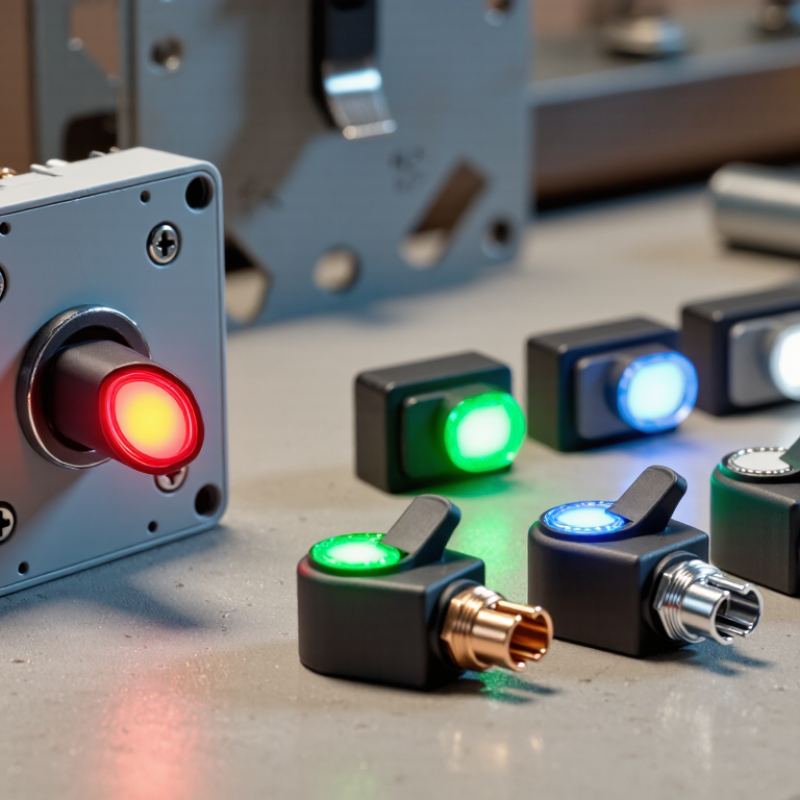
Key Features of Lighted Toggle Switches for Global Buyers
For global buyers, a lighted toggle switch must offer more than a glowing actuator. The indicator should remain visible under factory lighting, inside a dark control cabinet, and through protective gloves. A 12 V or 24 V LED option usually fits common control systems, but buyers should verify voltage tolerance and polarity. According to MarketsandMarkets, the industrial automation market is projected to grow from about USD 205.9 billion in 2022 to USD 395.1 billion by 2029. That expansion increases demand for clear, dependable operator controls.
Ingress protection deserves careful attention. IEC 60529 defines IP65 as dust-tight protection with resistance to water jets. This rating may suit outdoor panels, but only when the complete assembly meets it. The switch alone is not enough. Check the panel seal, mounting nut, gasket, and cable entry. IEC 60947-5-1 also provides requirements for low-voltage control and switching devices, including electrical endurance and contact performance. These details matter when a toggle controls motors, heaters, or warning circuits.
Material choice affects service life. Nickel-plated metal handles resist frequent handling, while reinforced thermoplastics reduce weight and cost. Contact ratings should include both resistive and inductive loads. LED brightness can also become excessive at night. I have seen operators cover indicators with tape, which creates a new maintenance risk. A dimmable or color-coded indicator may be better. Still, color meanings should be documented, not assumed.
2026 Best Lighted Toggle Switches for Global Buyers - Key Features of Lighted Toggle Switches for Global Buyers
| Switch Configuration | Best-Fit Application | Contact Arrangement | Typical Electrical Rating | Illumination Options | Common Lamp Voltage | Terminal Style | Panel Cutout / Mounting | Environmental Protection | Operating Temperature | Typical Compliance | Global-Buyer Considerations |
|---|---|---|---|---|---|---|---|---|---|---|---|
| SPST ON/OFF, Single Pole | Basic power indication, control panels, lighting equipment | Single circuit; maintained ON/OFF | Typically 10–20 A at 125–250 VAC; lower ratings may apply for DC loads | LED or neon; red, green, amber, blue, white | 6, 12, 24, 110/120, or 220/230 VAC/DC, depending on lamp type | Screw, solder, quick-connect, or PCB pins | Usually round 12–20 mm mounting hole; threaded bushing and nut | Unsealed to IP65/IP67 when a sealed version and suitable panel gasket are used | Approximately −20°C to +85°C | UL/IEC-recognized versions; RoHS and REACH declarations commonly available | Cost-effective general-purpose choice; confirm AC/DC load type and lamp voltage. |
| SPST ON/OFF, Sealed | Outdoor controls, marine equipment, agricultural machinery | Single circuit; maintained ON/OFF | Commonly 10–20 A at 12–250 VAC/DC, subject to load and approval | Panel or tip illumination; LED is preferred for low power and long life | 12 or 24 VDC; other voltages available by configuration | Sealed quick-connect terminals or wire leads | Commonly 12–20 mm threaded panel mounting | Often IP67 or IP68 at the front when correctly installed | Approximately −40°C to +85°C | IP test reports; RoHS/REACH; regional safety approvals vary | Check whether the stated IP rating applies only to the panel front and requires a gasket. |
| SPDT ON-ON, Single Pole | Selecting between two circuits, operating modes, or signal paths | One common terminal switches between two outputs | Typically 10–15 A at 125–250 VAC; verify DC derating | Independent or circuit-dependent LED indication | 6–24 VDC or 110/120–220/230 VAC options | Solder lugs, quick-connect tabs, or screw terminals | Usually 12–20 mm round hole | Typically IP40–IP67, depending on actuator and seal design | Approximately −20°C to +85°C | IEC-based electrical ratings; RoHS commonly available | Useful where two operating states are required without a center-off position. |
| SPDT ON-OFF-ON | Forward/reverse selection, dual-speed equipment, mode selection | One common terminal with two outputs and a center OFF position | Commonly 10–15 A at 125–250 VAC; motor loads need special review | Three-position LED or neon indication | 12/24 VDC or mains-voltage illumination options | Quick-connect, solder, or screw terminals | Usually 12–20 mm round mounting hole | IP54–IP67 versions available | Approximately −25°C to +85°C | IEC/UL-style ratings depend on construction and market | Confirm switching sequence, center-off function, and motor inrush capability. |
| DPST ON/OFF, Double Pole | Disconnecting two conductors or controlling two synchronized circuits | Two independent poles operated together | Typically 10–20 A at 125–250 VAC, depending on approval | Single-window or dual-pole LED indication | 12/24 VDC or 110/120–220/230 VAC | Four or more quick-connect, solder, or screw terminals | Generally 12–20 mm panel hole | IP40–IP67, depending on sealing design | Approximately −20°C to +85°C | Regional approvals and creepage requirements should be checked | Consider this type when simultaneous isolation of two lines is required. |
| DPDT ON-ON | Polarity reversal, two-circuit transfer, complex mode selection | Two poles, each switching between two outputs | Often 6–15 A at 125–250 VAC; DC and motor ratings may be lower | LED status light or separately wired indicators | 12/24 VDC and selected AC lamp voltages | Six terminals, commonly solder lugs or quick-connect tabs | Usually 12–20 mm threaded bushing | Typically IP40–IP67 | Approximately −20°C to +85°C | Confirm contact spacing, dielectric strength, and required approval marking | Best for multi-circuit switching; wiring diagrams are essential for safe installation. |
| Momentary ON, Spring-Return | Starter circuits, reset functions, horns, test controls | Returns to normal position when released | Typically 3–15 A at 125–250 VAC; control-current versions also common | LED indicator can show active command or energized circuit | 6, 12, 24 VDC or selected AC voltages | Solder, PCB, quick-connect, or wire-lead terminals | Commonly 12–19 mm panel hole | IP40–IP67, depending on sealed construction | Approximately −25°C to +85°C | Electrical approval depends on switching and mounting configuration | Select the correct momentary direction and verify actuator return force. |
| Heavy-Duty Metal Toggle | Industrial machinery, transport equipment, high-vibration panels | SPST, SPDT, DPST, or DPDT configurations | Commonly 15–25 A at 125–250 VAC; confirm exact resistive and inductive ratings | LED or neon lamp behind a boot, bezel, or translucent actuator | 12/24 VDC or mains-voltage lamp modules | Screw terminals, solder lugs, or high-temperature quick-connects | Usually 12–20 mm threaded metal bushing | IP65–IP67 with sealing boot or gasket; vibration resistance varies | Approximately −40°C to +105°C for selected constructions | Look for documented vibration, dielectric, flammability, and ingress testing | Choose for mechanical durability, but verify panel thickness, torque, and grounding requirements. |