

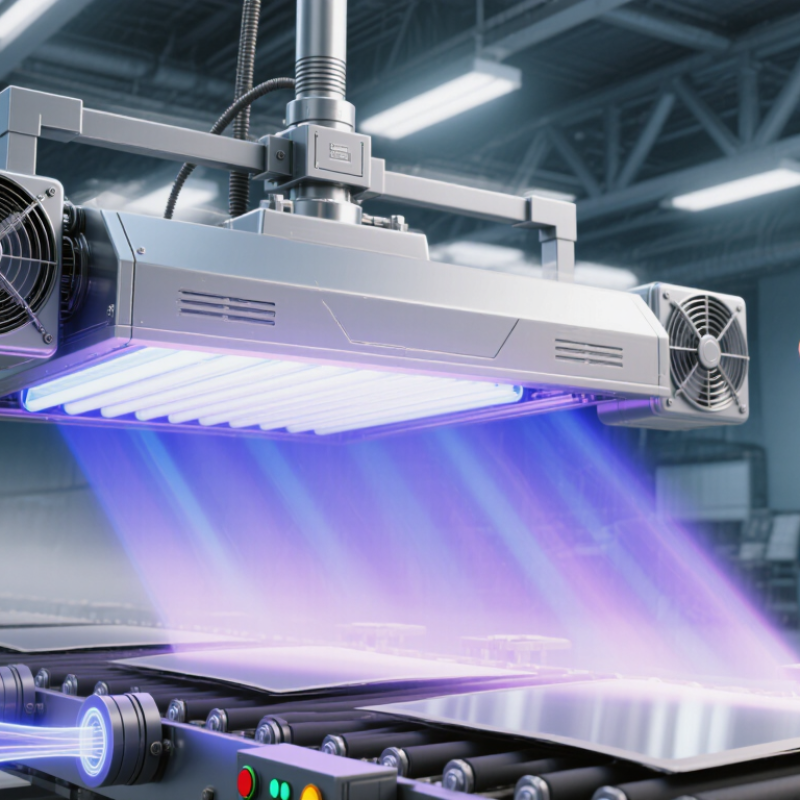
Choosing the best air-cooled UV lamp in 2026 depends on wavelength, exposure distance, operating hours, and maintenance access. Airflow matters.
Mercury lamps remain a practical choice for broad UV output and established curing processes. Their spectrum supports many coatings, inks, and adhesives. However, the lamp needs warm-up time and regular replacement. A dusty reflector can reduce intensity noticeably. Operators should also monitor housing temperature, cooling fan noise, and lamp-hour records. Mercury technology may offer lower initial costs, but disposal requirements demand careful planning.
Metal-halide lamps provide stronger output in selected UV ranges. They can improve curing depth for thicker or highly pigmented materials. In practical production settings, this advantage is useful when surface curing looks acceptable, but the inner layer remains soft. Metal-halide systems usually create more heat, so airflow design becomes critical. Improper cooling can shorten lamp life. Results can vary with formulation, which buyers sometimes underestimate.
UV-LED systems offer instant start-up, lower heat transfer, and long service life. Their focused wavelengths can reduce energy waste when the material matches the available spectrum. Yet LED output may be less forgiving across different formulations. A coating that cures well under one wavelength may remain tacky under another. Check irradiance at the work surface, not only the rated electrical power. Also inspect fan filters and LED module spacing. The comparison is not perfectly simple; lower energy use does not always mean better curing or lower total cost.